 English
 Le français
 Türkçe

Power, speed, voltage and mounting dimensions are determined by the load itself in both cases; nothing changes there. What changes is which cost item the decision should weigh most: on a machine that turns two hours a day the purchase price and simple installation come first, while on a machine running three shifts the energy bill, thermal endurance and the effect of a failure on production become decisive.
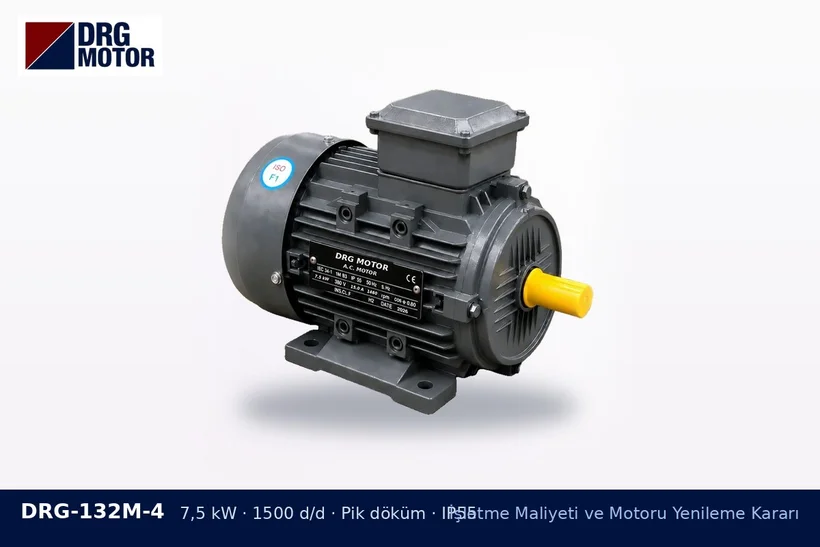
The technical framework that stays the same
The shaft power the machine needs, how hard it is to start and the required speed do not depend on operating hours. Choosing a motor smaller than the load simply because it runs for short periods is a mistake; a motor that is overloaded during a short cycle still heats up and trips its protection. On the other hand, there is no need to go up one power rating just because the hours are long: the rated power on the nameplate is already given for carrying the load without interruption.
Criteria that gain weight as hours increase
| Criterion | Two hours a day | Three shifts |
|---|---|---|
| Energy cost | Small share of the total | Can overtake the purchase price within a short time |
| Loading ratio | Excess margin is less noticeable | Choosing power close to the load becomes important |
| Bearings and lubrication | An annual check is usually enough | Maintenance plan is tied to the hour meter |
| Spare motor | Generally not needed | Assessed against the cost of downtime |
The point often missed on a low-use machine
A motor used only occasionally may face condensation and humidity while standing idle for long periods. On a machine kept in a closed but unheated store or outdoors, IP55 protection alone does not solve everything; draining condensate and checking insulation before the first start are tasks for the maintenance team. If there are frequent stops and starts, treat this as a separate subject from short running time.
Information to gather for the decision
- Current or shaft power measured under the real load
- Total annual operating hours and number of starts per day
- Ambient temperature and storage conditions during idle periods
- How much production would be affected by a failure
Once the load is clear, you can compare the power and speed options in the three-phase induction motor family and estimate the running cost from annual hours with the energy consumption calculator.