 English
 Le français
 Türkçe

Standardisation means reducing the variety of motors used in the plant to a few power ratings, speeds and frame sizes. Fewer spares then cover more machines, finding the right motor in a breakdown becomes easier and the purchasing process becomes repeatable.
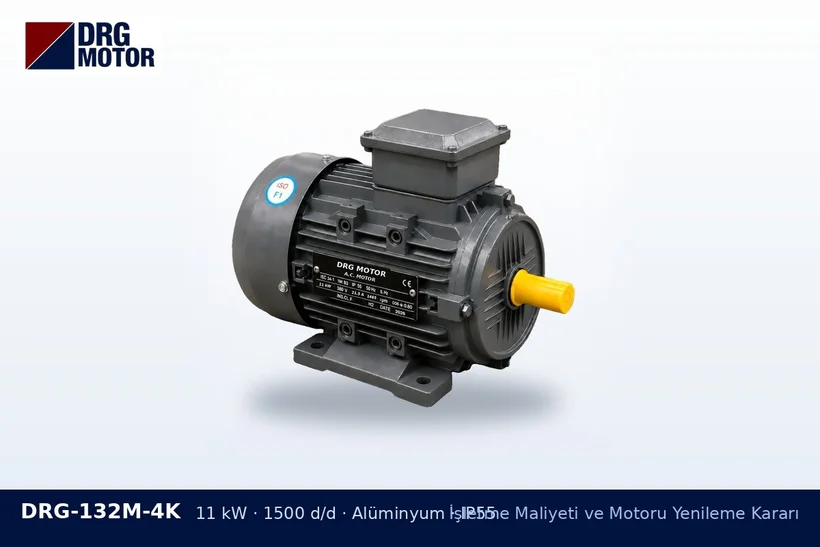
Concrete gains
- Spares: a single motor of a given size can be the spare for many machines.
- Response time: the maintenance team knows which base, coupling and pulley fit.
- Parts: the variety of bearings, seals and fan covers decreases.
- Purchasing: on repeat orders, technical questions and the risk of error diminish.
- Records: the inventory and maintenance plan become simpler.
Care when setting the standard
Gathering every machine onto one higher rating is not right; fitting a large motor to a machine with a small need leads to low-load operation and unnecessary panel cost. A sounder method is to identify the ratings that appear most often in the inventory and merge several neighbouring intermediate ratings into one value. For example, if motor speed on belt drives is consolidated on a single value, speed differences between machines can be met through the pulley ratio.
Implementation path
- Group the inventory by power, speed and frame number.
- In each group, choose the most widely used model as the target standard.
- Make new purchases and breakdown replacements according to this standard.
- Include the mounting arrangement (foot, flange) and shaft dimensions in the standard as well.
Limits
Machines requiring a special shaft, a different flange or a special voltage may remain outside the standard. Separate records must be kept for these, and spare decisions made case by case.
You can compare the ratings you are considering as standard in the three-phase induction motor family and verify the dimensions of the chosen model on pages such as the 7.5 kW 1500 rpm cast iron product page.