 English
 Le français
 Türkçe

Yes, but in the right place and at the right size. Scrap income can be entered as a separate income row in the replacement table; however, it should not be expected to be large enough to change the decision on its own. The more important question is whether the motor will be scrapped or put to use in some other way.
What determines scrap value
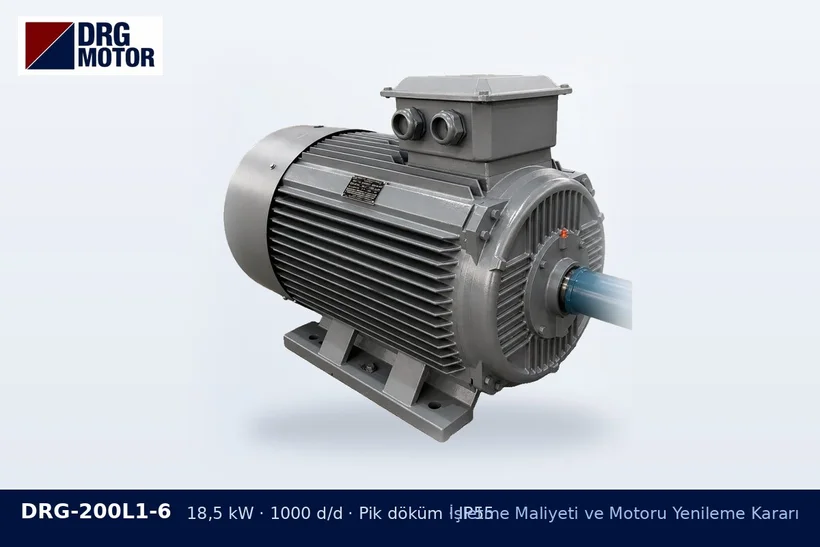
The value depends largely on the motor's weight and on the proportion of copper winding to iron and steel inside it. On high-power, cast iron frame motors the amount is more noticeable, while on small motors it usually remains symbolic. Because the current value changes with the market, a dated quotation should be used in the calculation.
Options to consider before scrapping
- Store spare: if the motor is sound, it can be an emergency spare for machines of the same size.
- Another machine: it can be used on an auxiliary item of equipment that runs less.
- Source of parts: parts such as the fan, fan cover and terminal box can be useful on motors of the same type.
The value of these options is often higher than the scrap income; however, storage costs and checks before recommissioning must also be taken into account.
When scrapping is the right choice
Keeping a motor with a cracked frame, a damaged shaft, several rewinds behind it, or dimensions that fit no other machine on site is a waste of space and time. In that case the scrap income is entered as a small contribution to the replacement budget and the motor is removed from the inventory.
A point not to confuse in the calculation
Scrap income should not be put on the same row as the energy gain or the reduction in failure risk. When each item is written separately, it is clear what the decision is based on.
Once the replacement decision is settled, you can review equivalents of the same power on product pages such as the 30 kW 3000 rpm cast iron motor or in the shop list.