 English
 Le français
 Türkçe

No. A flexible coupling is designed to absorb the small errors left after installation and the thermal shifts that occur in operation, not to make up for poor alignment. Each coupling type has separate limits for angular, parallel and axial misalignment, and these limits narrow as speed rises.
How flexible is "flexible"?
Jaw couplings with an elastomer spider, tyre couplings, pin-and-bush couplings and steel disc couplings each allow a different amount of misalignment. Types with elastomer elements flex comparatively more, while disc couplings are stiffer. The limit values are given in the coupling maker's table; they are maximum values, and for long life it is recommended to keep the alignment well below them.
Misalignment ends up in the bearing, not the coupling
As the coupling element flexes, it produces a restoring force. This force changes direction with every revolution and is passed on to the motor and machine bearings. The consequences appear over time:
- Cracking of the elastomer element, wear into powder, melting of the spider
- Heat and noise at the motor drive-end bearing
- Fatigue cracking at the shaft end due to repeated bending
- Gland packing or mechanical seal leakage on the pump
- Vibration that increases with speed, loosening connections
If you are changing the coupling element often
When the element fails quickly, it usually means the alignment needs to be measured again. Fitting a harder or more durable element only shifts the problem to the bearing. Instead, measure in two planes with a dial indicator or laser, and check for soft foot and pipe strain.
Motor data for coupling selection
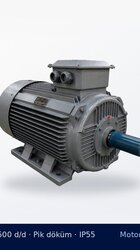
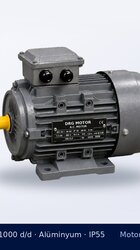
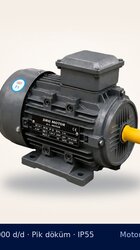
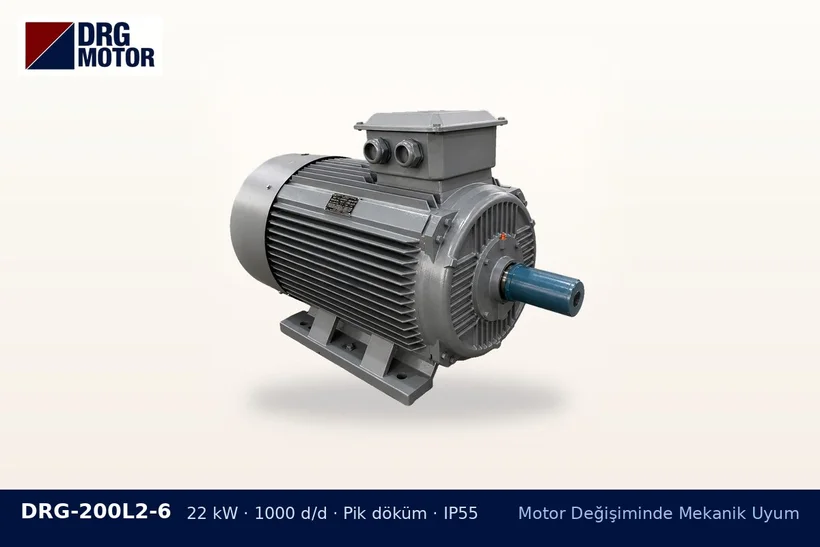
Coupling size is chosen according to motor power, speed and shaft diameter. You can take the shaft dimensions from the technical drawings and, for coupling-driven applications, choose among pump motors and the three-phase models in the shop.