 English
 Le français
 Türkçe

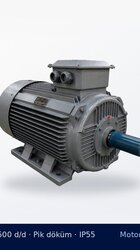
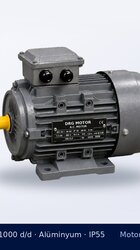
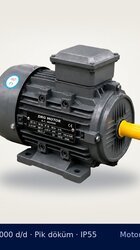
The order should state whether the foot-mounted motor will be fixed to a wall or to a ceiling, on which side the feet will be with the shaft kept horizontal, and the corresponding mounting code (IM B6, B7 or B8). This information matters for condensate drainage, the position of the terminal box and the direction of load on the bearings.
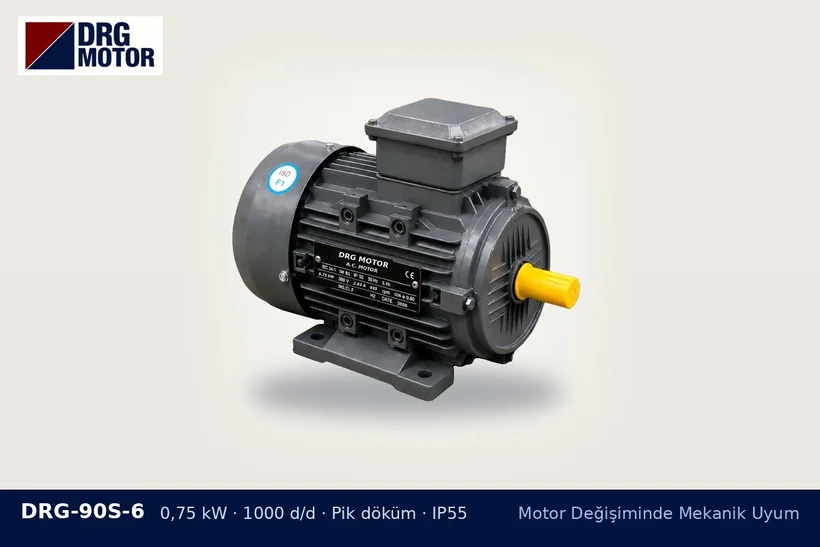
What do the mounting codes mean?
| Code | Mounting surface | Shaft |
|---|---|---|
| IM B3 | Floor, feet down | Horizontal |
| IM B6 / B7 | Wall; feet on the left or right viewed from the shaft end | Horizontal |
| IM B8 | Ceiling, feet up | Horizontal |
Although a foot-mounted motor can be used in these positions, the frame's condensate holes must end up at the lowest point in the new position; otherwise the water that collects will damage the winding.
What to add to the order note
- The mounting code, or a drawing or photo of the motor as installed
- Which way the terminal box should face in this position and where the cable will come from
- What the mounting surface is, given the weight of the motor: concrete wall, steel structure, sheet-metal panel
- Drive type: if belt-driven, the direction of belt pull (down, up, sideways)
- Environment: enclosed space, damp area, outdoors
Safety and fixing
On a ceiling-hung motor the bolts carry a tensile load; suitable anchors or a welded bracket, locking nuts and a vibration-resistant connection should be used. In critical locations, a secondary safety suspension against falling may be considered. As weight increases, for example with a cast iron frame, the supporting structure becomes even more important.
Application examples
This arrangement is common on wall-mounted extract fans and on conveyor drives hung from the ceiling. For wall-type applications you can read the notes on wall-mounted axial fan motors and compare models in the shop by power and speed; whether the required mounting arrangement suits the model is confirmed before ordering.