 English
 Le français
 Türkçe

Because it is the easiest way to catch mechanical problems before the motor is connected to the machine. The shaft should turn freely, quietly and smoothly; if there is catching, a rubbing noise, stiffness or anything abnormal in the axial play, the situation should be assessed before the motor is installed.
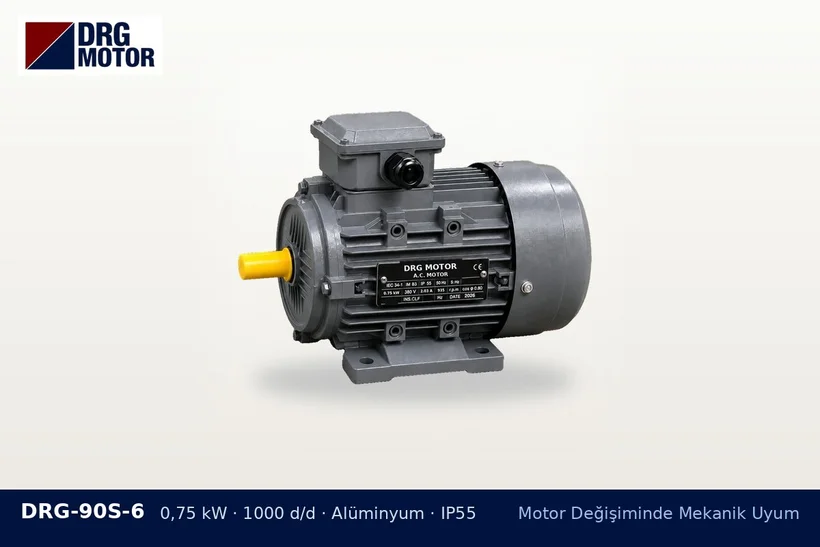
What to look for when turning it by hand
- Smoothness: The shaft should turn with the same resistance over a full revolution. Stiffening at a particular point may indicate a dented bearing or a distorted frame.
- Noise: A slight swishing may be considered normal; clicking, grating and metallic rubbing noises are not.
- Fan: If the rear fan cover has taken a knock, the fan blades rub against it. This sound is easy to hear when the shaft is turned slowly.
- Runout: Noticeable wobbling of the shaft end during rotation may point to a bent shaft.
Why before installation?
After coupling or belting up, part of the resistance you feel belongs to the driven equipment, so pinning down the source becomes harder. Moreover, installation and running take the motor outside the return and exchange conditions. If the unit sat on a shelf for months, its bearing grease may have settled; a few turns spread it again.
The link with delivery
If the packaging shows dents or signs of impact, a damage report should be made with the carrier before accepting the motor, and DRG informed without delay. Even if the package looks intact, this pre-installation check brings hidden transport damage to light early. See the delivery and shipping information for details.
If you notice a problem
Do not attempt to dismantle the motor, open the cover or interfere with the bearing; unauthorised dismantling voids the warranty. Prepare the model and serial number, the invoice or delivery note details and a short video, and send them to DRG Motor (+90 (542) 666 11 11). If you are looking for a new model, browse the shop's three-phase range.