 English
 Le français
 Türkçe



A keyway difference usually comes from a difference in shaft diameter; if the pulley hub has enough wall thickness, the bore is enlarged to the new shaft diameter and a keyway of the right width for the new shaft is cut. If the hub is thin or the new shaft is smaller than the old one, the solution is a new pulley or a taper bush pulley.
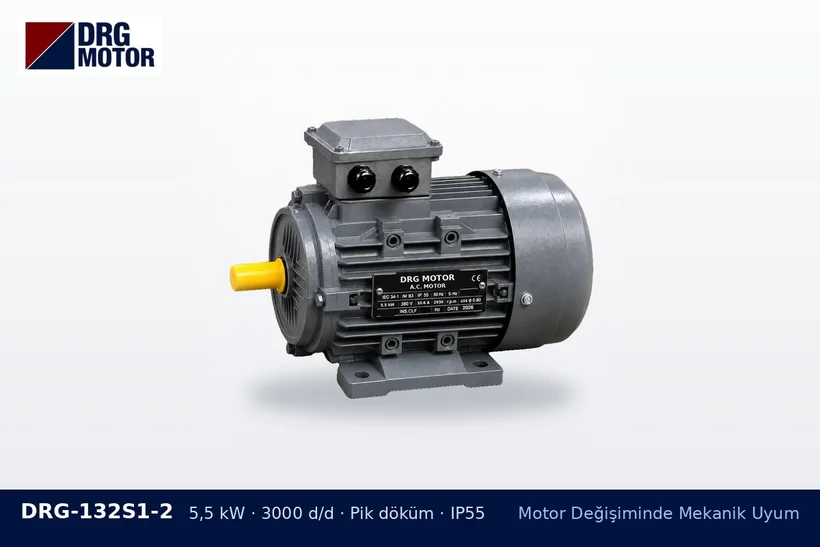
Key size depends on shaft diameter
On metric shafts, key width is standardised according to the shaft diameter range (DIN 6885 form A parallel key). Values for shaft diameters common on DRG models:
| Shaft diameter (mm) | Key width (mm) | Example IEC frame |
|---|---|---|
| 24 | 8 | 90S / 90L |
| 28 | 8 | 100L / 112M |
| 38 | 10 | 132S / 132M |
| 42 | 12 | 160M / 160L |
Always confirm the exact value from the technical drawing of the model concerned.
Method by situation
- New shaft is larger: The pulley is bored out to the new diameter on a lathe, then the keyway is cut by broaching or slotting. The fit between bore and shaft must not be loose.
- Little hub wall left: Enlarging the bore weakens the pulley; a new pulley is preferable.
- New shaft is smaller: A pulley with a sleeve pressed into it risks runout and loosening; buying a pulley with the correct bore is safer.
- Plant where motors are changed often: With a taper bush pulley, a different shaft diameter can be accommodated by changing only the bush.
Checks after machining
Rebalancing a rebored pulley is important, especially in 3000 rpm applications. If the pulley diameter changes, recheck the machine speed with the pulley and belt calculator. To choose with the shaft size in mind, every motor's shaft diameter and length are listed in the model list in the shop.