 English
 Le français
 Türkçe

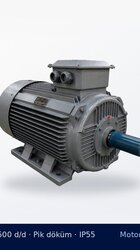
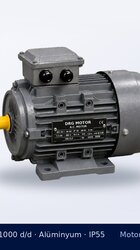
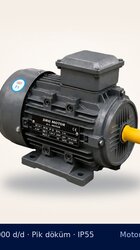
For a vertical machine, the most critical piece of information in the order is which way the shaft points: down or up. In addition, give the IEC mounting code (IM V1, V3, V5, V6, etc.), the flange type and size, the axial load acting on the shaft and the face by which the motor is suspended from the machine.
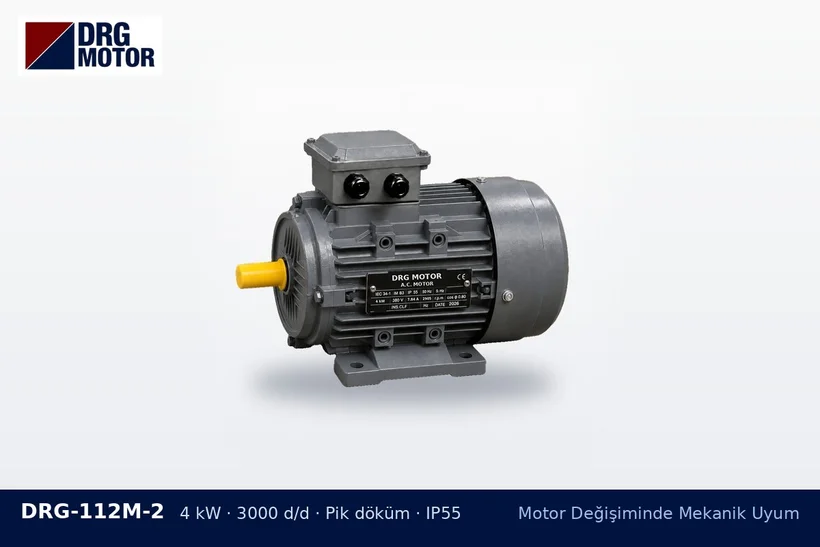
State the shaft direction and mounting code together
"Vertical motor" on its own is not a sufficient description. A flange-suspended arrangement with the shaft pointing down is usually referred to as V1, and a flanged arrangement with the shaft pointing up as V3; foot-mounted vertical arrangements are designated V5 and V6. The code determines the bearing arrangement, the position of the condensate drain holes and, where needed, whether a rain canopy is required. If the machine documentation does not show the code, a side-view photo of the existing motor as installed will also do the job.
Flange data
On most vertical machines the motor is carried by its flange rather than its feet. The following dimensions should therefore appear in the order note:
- Outside diameter of the flange and bolt-hole circle diameter
- Number of holes; whether the holes are clearance holes or tapped
- Spigot diameter (the raised ring on the flange)
- Shaft diameter, shaft length and key width
To compare these dimensions with IEC frame values, see the motor technical drawings.
Shaft load and environment
On machines such as vertical-shaft mixers, in-line pumps or vertical screw conveyors, the weight of the impeller or blade and the process thrust act directly on the motor bearing. If the approximate value of the load, its direction (down or up) and whether the machine has its own bearings are stated, it can be assessed whether the bearing will carry this load. For shaft-up arrangements, note the risk of water and dust entering along the shaft exit, and for outdoor use, the rain or snow falling on top of the motor.
Do not forget the electrical data
Power, speed and supply voltage are needed just as much as mounting information. For pump applications you can read the selection notes for in-line pump motors and, once the details are clear, filter the three-phase motor models in the shop by power and speed; whether the required mounting arrangement is available on a model is confirmed before ordering.