 English
 Le français
 Türkçe

The main effect of lint and fibre dust on a motor is that it impairs cooling. A self-ventilated (IC411) motor gets rid of its heat through the fins on the frame surface, with the air blown by the fan; when fibres mat over the fan cover grille and the gaps between the fins like felt, the heat cannot escape, the winding temperature rises and the insulation ages sooner than expected.
Signs that fibre build-up leaves on a motor
Textile dust behaves differently from mineral dust: it is light, stays suspended in the air for a long time and forms a sticky layer when it combines with oil mist. This layer acts like an insulating blanket. The symptoms most often seen in the field are:
- A thick curtain of lint in front of the fan cover grille and reduced airflow,
- A frame too hot to touch and protection relay trips that seem to have no cause,
- Fibres wrapping around the terminal box and the shaft exit,
- A frame surface that becomes harder to clean because of the oily fibre layer.
What does IP55 protect against, and what not?
The IP55 protection rating limits the ingress of dust into the motor in harmful quantities, so only a small amount of fibre reaches the windings. It does not, however, prevent fibre from accumulating on the outer surface. In other words, even when internal protection is sufficient, the external cooling path still needs maintenance. Fibre is combustible, and leaving it on a hot surface for long periods is also undesirable from a fire point of view.
Practical measures for maintenance and placement
- Include the fan grille and fins in a cleaning schedule tied to the shift pattern; if compressed air is used, take care not to blow the fibre onto another motor.
- Where possible, place the motor on the clean side of the airflow rather than below the lint-producing zone of the machine.
- Do not cover the motor frame with cloth, tarpaulin or cardboard; this cuts off the fan's air path.
- For a motor running close to its rated power, consider selecting one that leaves some thermal margin against build-up.
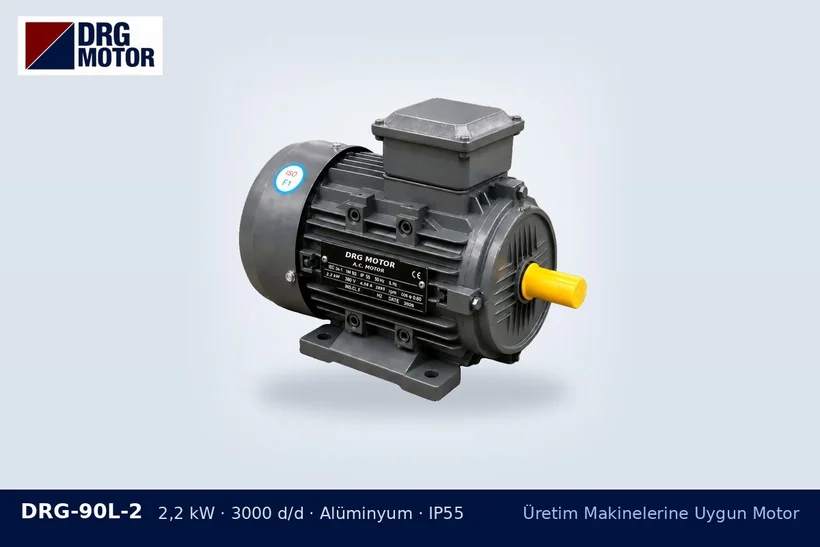
On light machines an aluminium frame may be preferred because it dissipates heat quickly from its surface. For power and speed options, see the aluminium frame motor family or the shop listing with all models.