 English
 Le français
 Türkçe

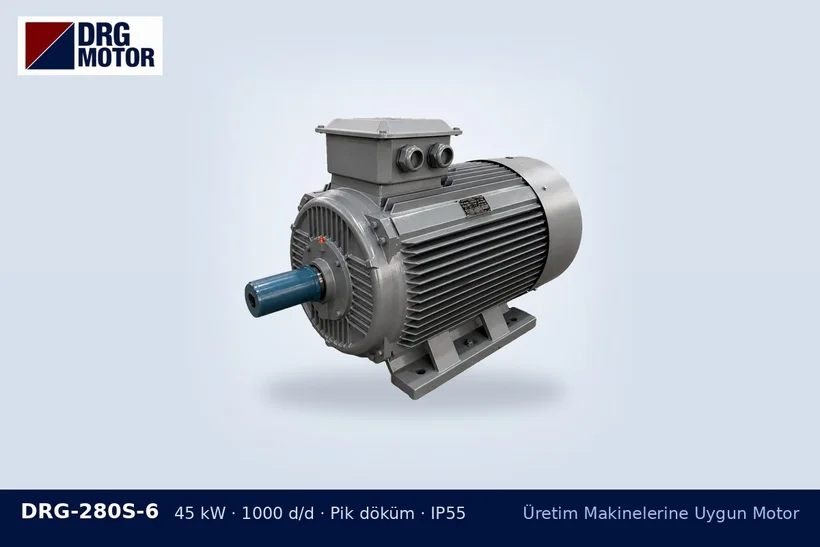
The decisive conditions are the machine's load profile (especially starting under full load), the clay and dust environment, humidity and the temperature in the drying zone. A single line includes a clay crusher, open mixer, roller mill, vacuum extruder, cutter and fans; the motor for each is selected according to a different combination of these conditions.
Load profile by machine
| Machine | Key condition |
|---|---|
| Vacuum extruder | Starting with the hopper full of clay; high, sustained torque |
| Crushing and stone-separating rolls | Shocks from stones and hard lumps; often a two-motor drive |
| Mixers | Load that varies with clay moisture and consistency |
| Dryer fans | Hot, humid environment and long running hours |
Ambient conditions
Dry clay dust is fine and abrasive; it builds up on the fan cover and the cooling fins. In the wet preparation area there is slurry and water splashing. IP55 protection is the basic level in these environments; cleaning of the outer surface and checking of the seals should be included in the maintenance plan. For motors around the dryer and kiln, if the cooling air temperature exceeds the value assumed on the nameplate, derating may be needed; this value should be taken from the motor documentation.
Starting and the gearbox
On a vacuum extruder, starting is the most difficult moment; when the line stops unexpectedly, the hopper and auger remain full of clay. The motor's starting torque, the starting method and the gearbox capacity should be assessed against this situation. At higher power ratings a soft starter or a drive may be preferred; their parameters are set by qualified electrical personnel.
Gathering information and relevant pages
Selection is quicker once the existing nameplate power, speed, pulley or gearbox ratio, mounting arrangement and ambient information have been compiled for each machine. Line-wide applications are covered on the brick and tile production line motors page, and extruder-specific details on the vacuum extruder motors page.