 English
 Le français
 Türkçe

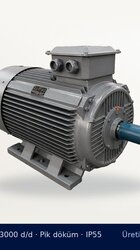
You need the conveyor dimensions, the type and density of the material conveyed, the fill level in the trough, the incline, whether the material packs down while standing, and the transmission ratio from the motor to the screw shaft. The torque required to start a full conveyor can be markedly higher than during normal conveying; the motor must be selected to cope with that first moment.
Conveyor and material data
| Information | Why it matters |
|---|---|
| Screw diameter, length and pitch | Determines the amount of material in the trough |
| Angle of incline | The steeper the incline, the more torque is needed to push the material upwards |
| Material density and moisture | Damp flour, bran, sand or cement can form lumps while standing |
| Fill ratio | A completely full screw turns far harder than one designed to run half full |
Drive and starting data
- Screw shaft speed and gearbox ratio; the torque required at the gearbox output
- Reason for stopping: a planned stop, or a sudden stop after a power cut or fault
- Standstill time; material left standing longer packs down more
- Starting method; reduced-voltage starting such as star-delta also reduces the motor's starting torque
Gearbox output speed and torque can be estimated with the gearbox output speed and torque calculator. DRG does not sell gearboxes; the motor is selected to suit the existing gearbox or one sourced separately.
Where to find the motor's starting capability
The starting and breakdown torque of an induction motor is not shown on the nameplate but in the catalogue data. The meaning of the curve is explained in the article on the torque-speed curve. If the starting torque is insufficient, options include the next power rating up, a different transmission ratio or an operating routine that empties the conveyor before stopping.
To complete the selection
With this information you can look at the application examples on the screw conveyor and handling system motors page and review cast iron models of suitable power in the shop.