 English
 Le français
 Türkçe

No. Volume is only a rough indicator of the power required; the real load is determined by the mixer type, the consistency of the mix, the aggregate size and whether the mixer will have to restart while full. Because of these differences, two mixers of the same volume can need very different motors.
What volume does not tell you
- Mixer type: Twin-shaft, planetary, single-shaft horizontal and drum mixers differ in blade arrangement and in the resistance they meet in the concrete.
- Concrete consistency: Dry, low-slump mixes strain the blades far more than flowable concrete.
- Aggregate: Coarse aggregate can wedge between the blade and the liner and cause sudden torque peaks.
- Fill level: Loading above the nominal volume takes the motor into a range it was not sized for.
The possibility of a full restart
After a power cut or an emergency stop, the mixer may come to rest full of concrete. The torque needed at that moment is higher than during mixing, and it grows as the concrete begins to set. Whether the motor's starting torque and starting method can cope with this should be assessed with the mixer manufacturer and the project engineer.
Drive arrangement
On large twin-shaft mixers, two motors drive the shafts through a common synchronising link or two separate gearboxes. In this layout the motors must have the same power and speed so that the load is shared equally. On belt drives the pulley ratio, and on geared drives the gearbox input speed, must match the motor speed.
Where to get reliable data
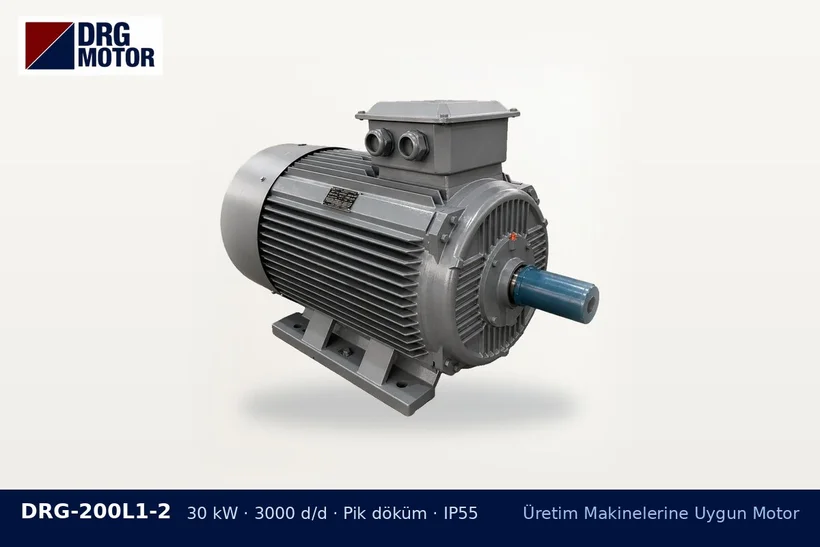
The most reliable source is the mixer's rating plate and technical data sheet. If the motor on an existing mixer is being replaced, current readings taken while mixing the hardest batch also give a good indication. With this information you can review the application notes on the concrete batching plant motors page and compare heavy-duty cast iron models in the motor shop.