 English
 Le français
 Türkçe

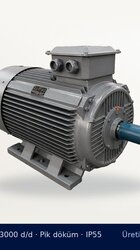
Motor power is determined by the amount of dough kneaded per batch, the dough's water content and flour type, and the design and speed of the kneading arm. As kneading progresses the gluten network develops and the dough gains resistance; for this reason the highest load often occurs not at the start of the cycle but towards its end.
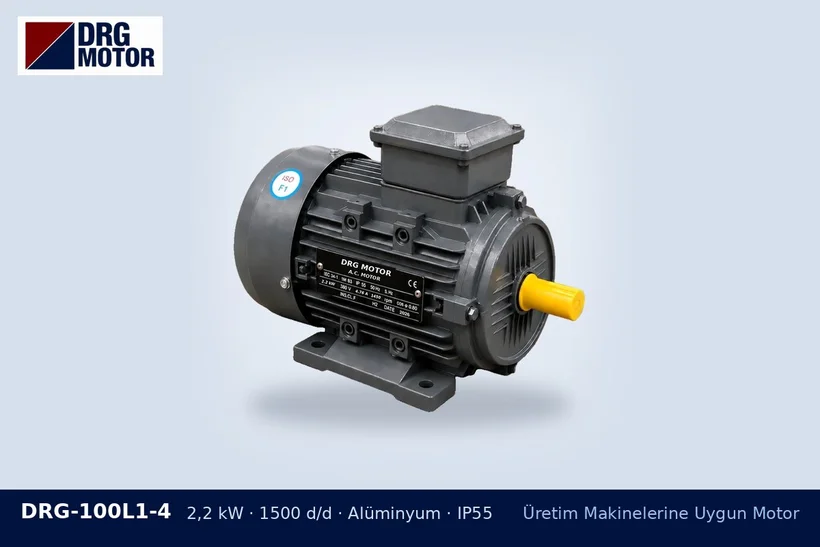
Factors that determine the load
- Dough quantity: Bowl capacity is usually given in kilograms of flour or dough; loading above capacity strains the motor.
- Water content: Stiff doughs (such as those for bagels or certain flatbreads) need far more torque than soft bread dough.
- Arm type: Spiral, fork and planetary mixers cut and fold the dough in different ways.
- Speed setting: On two-speed machines the high-speed setting raises the power requirement.
Separate drives for bowl and arm
On many spiral mixers the arm and bowl are driven by separate motors. The arm motor carries the main kneading load; the bowl motor is smaller. When replacing, decide which motor is being changed and make sure the shaft, flange and pulley dimensions are retained. On two-speed machines the motor may have a special two-speed winding; such a motor cannot be swapped directly for a standard single-speed motor, and the speed change needs a separate solution.
Conditions specific to food environments
Flour dust settles on the fan cover and reduces cooling; during daily cleaning the motor must not be washed with pressurised water. A hot environment near the baking oven also warms the motor's cooling air. Food-contact parts are the machine's responsibility; the motor should remain outside that zone.
A practical approach
On an existing machine, measure the current while kneading the stiffest dough with the fullest bowl and compare it with the nameplate value. On a new machine, the power specified by the manufacturer is the reference. Details are on the planetary mixer and dough kneading machine motors page; other food applications are on the food machinery motors page.