 English
 Le français
 Türkçe

It is not mandatory; in most cases the existing motor can stay. When the impeller diameter is reduced, the pump's flow, head and shaft power decrease, so the motor runs at a lower load. Whether downsizing the motor makes sense depends on the pump curve for the new impeller diameter, the frame size and whether demand is likely to rise again in the future.
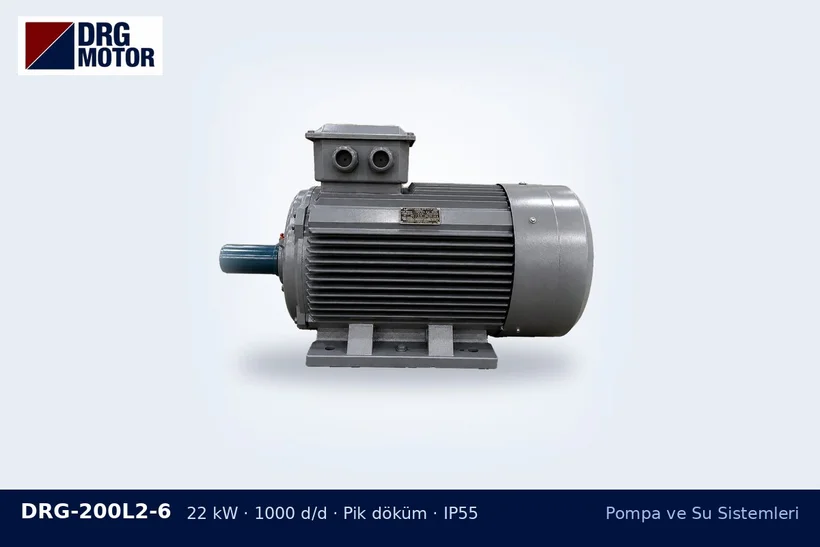
What changes when the impeller gets smaller?
For small trims, the approximate relations are as follows: flow varies with diameter, head with the square of diameter and power with the cube of diameter. These relations hold only roughly, for limited trims and within the same pump casing; the exact value must be taken from the curve the pump manufacturer provides for that diameter. For example, trimming the diameter by 10% reduces the power by roughly one quarter.
Questions to ask before downsizing the motor
- Maximum power point: On the new curve, what is the pump's power with the valve fully open? The motor must cover this value as well.
- Mechanical fit: The next lower power rating usually means a smaller frame, a different shaft diameter and flange. The pump baseplate, coupling and flange may not suit the new motor.
- Future demand: If the plant is going to grow or the original impeller will be refitted, keeping the larger motor makes more sense.
- Cost of the change: The new motor, coupling, installation and downtime should all be counted together.
The effect of keeping the larger motor
An induction motor running well below its rated load has a lower power factor, so a relatively large share of the current it draws is reactive, and energy conversion becomes less favourable at part load. A light load poses no mechanical danger to the motor; however, if the load has dropped a great deal and it is certain the plant will run in this condition for many years, downsizing can be considered. Reviewing the overload protection settings for the new operating current is a job for qualified electrical personnel.
The calculation logic for diameter and speed changes is explained in the article on the affinity laws, and motor selection for volute-casing pumps on the centrifugal pump motor page. You can compare alternative models for the new power requirement in the shop.