 English
 Le français
 Türkçe

Because a defect on the suction side produces symptoms that closely resemble a motor fault. A blocked strainer, a joint drawing in air or a low tank level leads to cavitation, loss of flow and vibration in the pump; renewing the motor does not change this picture, and a faster motor may even make it worse.
Symptoms mistaken for a motor fault
- A noise as if gravel were passing through the pump: usually cavitation
- Fluctuating pressure and irregular current: air being drawn in
- Flow dropping some time after start-up: a clogged strainer or foot valve
- Early failure of the drive-end bearing: cavitation-induced vibration transmitted to the bearing
Points to inspect on the suction line
- The height difference between the minimum tank level and the pump centreline
- The suction pipe diameter, length, number of bends and a slope rising continuously towards the pump
- Air leaks at unions, flange gaskets and valves
- Cleanliness of the strainer, filter and check valve
- Fluid temperature; hot water is more prone to vaporise
Effect of a higher speed on the suction side
Sometimes a 3000 rpm motor is considered instead of a 1500 rpm one to increase the flow. Since flow rises roughly in proportion to speed, velocity and losses in the suction line also grow, and the pump's required suction head increases. On a line that is already marginal, this change markedly increases cavitation. Speed should not be changed without checking the pump manufacturer's curve; the relationships are summarised in the article on the affinity laws.
If the motor really needs replacing
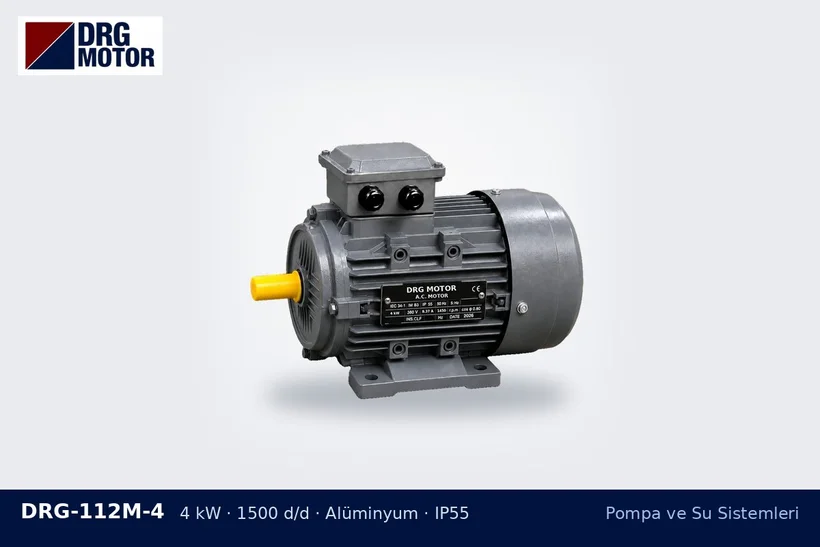
If, after the suction side has been corrected, the current is still high, the bearing is noisy or the winding is weak, replacement makes sense. At that stage you can compare the nameplate power, speed and mounting dimensions with the centrifugal pump motor selection criteria and find a suitable model in the motor shop.