 English
 Le français
 Türkçe

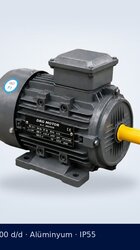
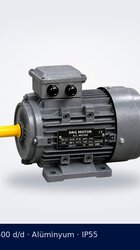
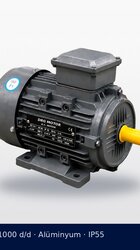
The two nameplates measure different things. The value on the pump nameplate usually shows the power the pump draws at its shaft at a specific operating point, while the kW on the motor nameplate shows the rated power the motor can safely deliver at its shaft. Because the motor is chosen by adding a margin to the pump power and taking the next standard rating up, the two figures are often not the same.
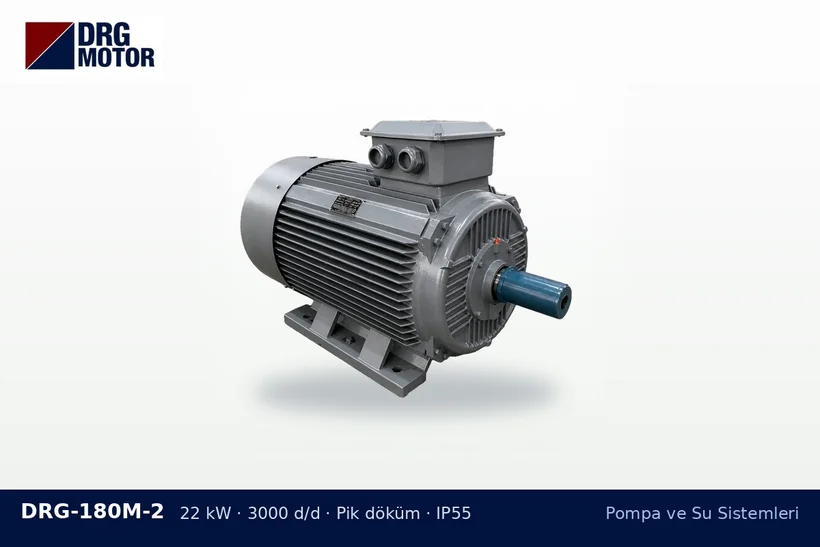
Common reasons for the difference
Power margin and standard ratings
Motors are built in standard power steps such as 5.5 – 7.5 – 11 – 15 – 18.5 kW. If the pump needs 12.6 kW at its operating point, a 15 kW motor is chosen; this also leaves a margin for the power demand that rises towards the end of the curve and for uncertainties in the pipework.
Power at which point?
Some pump nameplates give the power at the design point, others the maximum power seen along the curve. A motor chosen on the design-point power may be overloaded when valves are opened and the pump moves to the right of its curve.
Difference in units
On older pump plates the value is given in HP or metric horsepower (PS). For the conversion, a factor of 0.746 is used for imperial horsepower and 0.736 for metric horsepower. A value of 20 HP corresponds to roughly 15 kW.
Three kinds of power not to confuse
| Concept | Meaning | Where it appears |
|---|---|---|
| Hydraulic power | Net power transferred to the water | Pump calculations |
| Pump shaft power | Power the pump draws at its shaft | Pump nameplate, curve sheet |
| Motor rated power | Power the motor can deliver at its shaft | Motor nameplate |
Because of motor losses, the electrical power drawn from the supply is higher than the motor's nameplate power; this value is measured separately.
If the nameplates are written for 60 Hz
On imported pumps, values may be given for 60 Hz. The same pump runs slower on a 50 Hz supply and needs less power; in this case the comparison should be made using the 50 Hz curve.
Power selection by pump type is summarised on the pump motors page. You can compare models in the standard rating corresponding to the power the pump requires in the shop.