 English
 Le français
 Türkçe

The replacement motor must not behave differently from its partners in the set: the same kW, the same speed and the same flange and shaft dimensions are the basic requirements. Because the set's control panel brings the pumps in one after another and also together, a single mismatched motor can upset the pressure balance and the operating sequence.
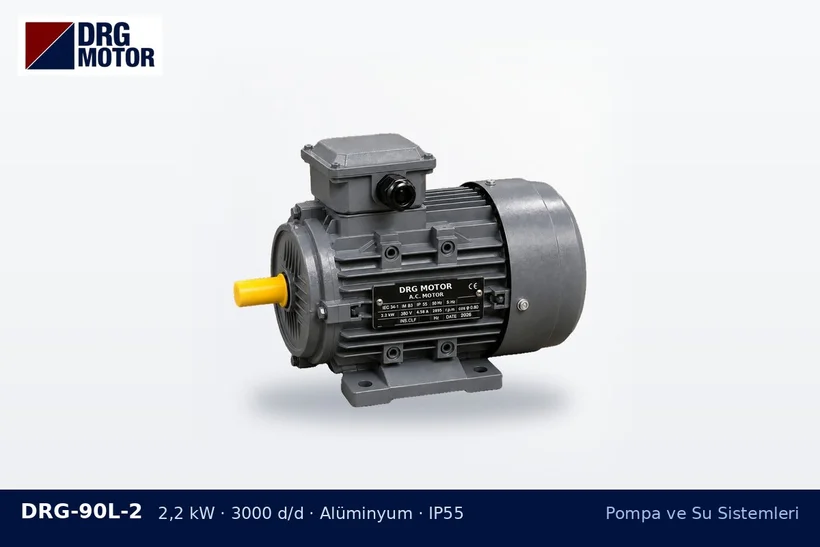
Remember that the set works as a whole
In booster sets the pumps usually discharge into the same manifold and cut in one after another as demand rises. If one pump has a different speed or power, it delivers less or more water than the others during parallel operation. This leads both to pressure fluctuations and to one motor running hotter than the rest.
Checklist
- Power, speed, voltage and connection (Δ/Y) shown on the old nameplate
- For vertical multistage pumps: flange type, spigot diameter and shaft length
- Whether the pump's axial load is carried by the motor bearing
- Direction of rotation: on vertical pumps the wrong direction severely reduces pressure
- The age of the other motors; if they are also due for renewal soon, plan the work together
Panel and drive side
In variable-speed sets the drive is configured with the motor parameters. The rated current and speed of the new motor may differ slightly from the old one; whether the parameters need updating, and how the protection is set, depends on the drive documentation and the judgement of qualified electrical personnel. A new motor drawing slightly different current from the old one is not in itself a sign of a fault; load, slip and winding design can account for the difference.
What to monitor after the replacement
During the first days, compare the order in which the pumps cut in, the current of each pump and the pressure fluctuation. If one stands out, the cause should also be sought on the pump side. For application details see the booster pump motor page, and choose the model with equivalent power and speed from the three-phase motor list.