 English
 Le français
 Türkçe

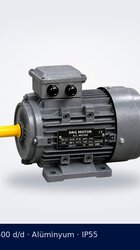
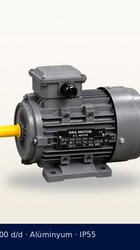
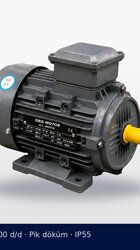
A booster pump that starts too often almost always has a system-related cause; the motor is not the reason for the problem but its victim. Before buying a new motor, the pressure tank, leaks, the check valve and the pressure switch should be inspected. A new motor fitted without removing the cause will overheat from the same frequent starts and wear out quickly as well.
Why do frequent starts wear out the motor?
At every start the motor briefly draws a current far above its nameplate current, and heat builds up in the winding. If there is no time to cool down between starts, the temperature keeps climbing. The contactor, coupling and mechanical seal are also stressed at every start. Motor manufacturers give a limit for the number of starts per hour; checking whether the installation exceeds this limit is the first step of the diagnosis.
Order of checks
- Pressure tank: The pre-charge pressure of a diaphragm tank drops over time; if the diaphragm is torn, the tank fills with water and no longer acts as a buffer. Water coming out of the air valve is a sign of a tear.
- Leaks in the installation: If the pump runs at short intervals while no tap is in use, look for a leaking cistern, float valve or hidden pipe leak.
- Check valve: A leaking check valve lets water flow back when the pump stops, causing pressure to drop quickly.
- Pressure switch or sensor: If the difference between cut-in and cut-out pressures is set too narrow, the pump runs often. The settings should be determined by the installer according to the project conditions.
- Tank volume: If consumption has increased but the tank has stayed small, the cycle becomes shorter.
When should the motor really be replaced?
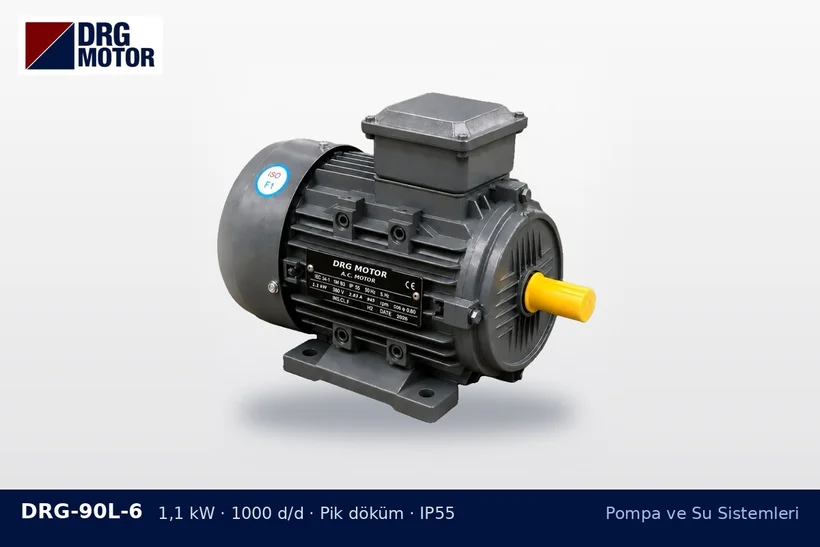
If the motor still overheats, makes bearing noise or shows a low insulation resistance reading after the system has been put right, replacement becomes an option. In that case, the power, speed, flange and shaft dimensions on the old motor's nameplate should be matched with the new model. If frequent starting is going to continue, this should be stated in the order.
Details on motor selection for pressure booster sets are on the booster pump motor page. You can find 3000 rpm three-phase motors corresponding to the nameplate data in the shop.