 English
 Le français
 Türkçe


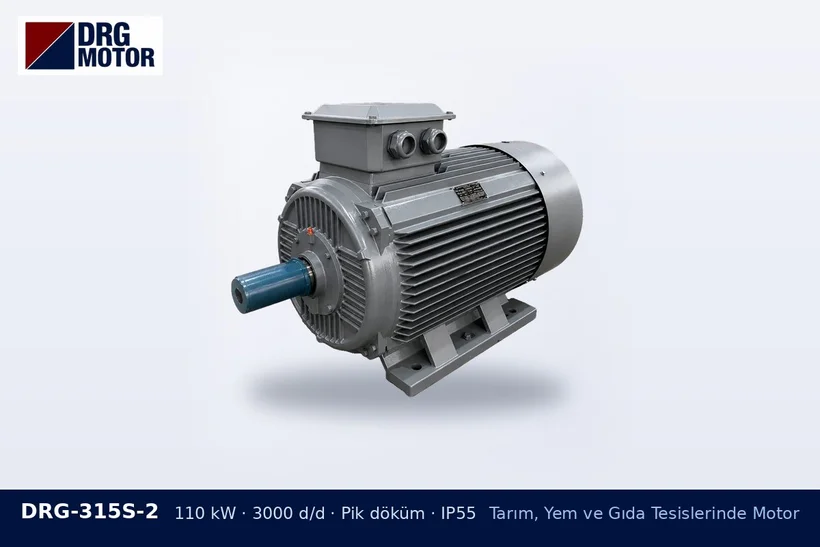
On a pellet mill, the main motor turns the rollers that force material through the die holes; the most important factor in the load is the compression ratio of the die, that is, the relationship between hole diameter and die thickness. The motor should be selected at the power and the same speed specified by the machine manufacturer for that die and capacity.
How do the die and raw material change power?
On the same machine, producing hard pellets with a small-hole, thick die needs more power than producing soft pellets with a large-hole, thin die. The moisture and fat content of the raw material and its steam conditioning also determine friction. Dry, fibrous material strains the motor; correct conditioning improves both quality and current.
Die blockage and starting
The hardest moment for a pellet press is restarting a machine that stopped with a full die. As the die cools, the material inside hardens, and the motor then needs very high torque. Filling the die with an oily mix before stopping prevents the material from hardening in the die and, in practice, makes starting easier. If blockages are frequent, the feed and conditioning settings should be examined first.
Drive arrangement
- Belt drive: The die speed is set with the motor pulley; belt tension loads the shaft end.
- Gearbox drive: The motor is connected through a coupling; shaft height and flange fit are checked.
- Auxiliary motors: The feeder screw and conditioner mixer run on separate small motors and are selected independently of the main motor.
Information required
Machine model, die diameter and hole size, target capacity, drive type (belt or gear), the existing motor nameplate and mounting dimensions. With this information, following the approach on the feed pellet mill motors page, the right power can be weighed among the options in the online motor shop.