 English
 Le français
 Türkçe

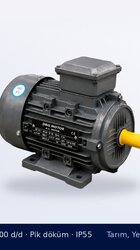
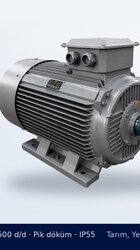
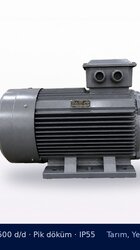
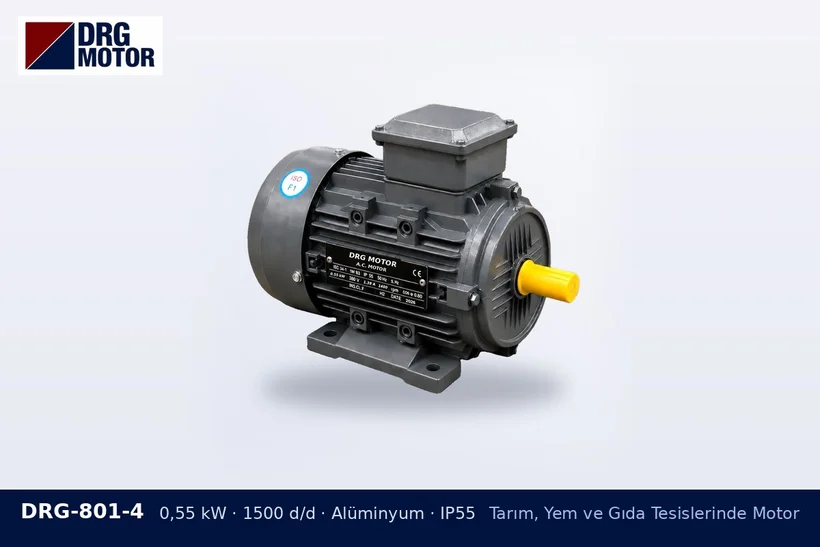
In a food plant, how often and how equipment is washed directly determines the degree of protection a motor needs and where it should be placed. An IP55 motor is protected against water splashed from any direction and low-pressure water jets; however, it is not designed for areas washed directly with high-pressure water or foaming chemicals. In those areas, moving the motor out of the water’s path should be considered first.
Risk by washing method
| Washing method | Risk to the motor | Approach |
|---|---|---|
| Cloth and low-pressure water | Splashing | An IP55 motor is usually sufficient |
| Daily hose washing | Direct water, pooling | Shield, adjusting the motor’s orientation and height |
| High-pressure and hot water | Ingress past seals and gaskets | Moving the motor out of the wash area, or a special product built for this condition |
| Acidic/alkaline foam | Paint and surface corrosion | Keeping the chemical away from the motor |
Condensation and temperature difference
When a motor that has been running hot is washed with cold water, the air inside cools quickly and draws in humid air from outside; over time water can collect inside. Because this effect is more insidious than outdoor rain, it pays to stop the motor for a while and let it cool before washing, and not to wash it while it is hot.
Measures that can be taken at design stage
- Positioning the motor beside or above the line rather than underneath it
- Moving the motor away from the wet zone with a long shaft, belts or a coupling
- Making sure the cable entry faces downwards
- Using a stainless steel shield without cutting off the motor’s cooling air
Damage caused by wash water is treated as outside the warranty under misuse beyond the nameplate conditions and moisture; it is therefore important to state the environmental conditions clearly in the order. For line motors, the food production line conveyor motors and vegetable and fruit washing machine motors pages give guidance; low-power models are listed in the shop.