 English
 Le français
 Türkçe

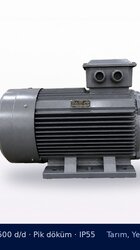
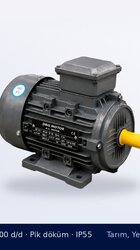
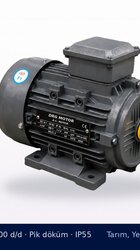
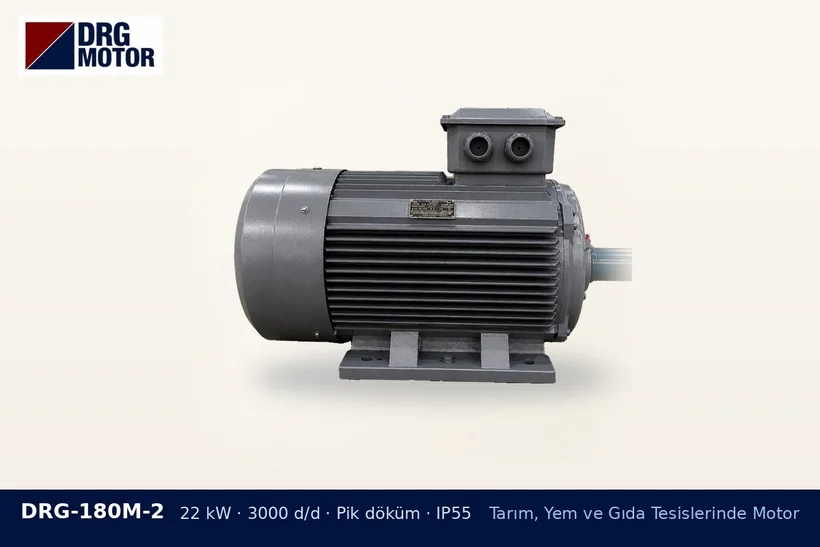
The main motor of a decanter has to bring a heavy bowl from standstill up to operating speed; because the bowl’s inertia is large, this acceleration takes a long time and the motor draws high current meanwhile. In the selection, endurance over the starting time, the belt arrangement and the conditions of running in a wet environment all season are as decisive as power.
Long acceleration time
While the bowl accelerates, the motor stays in the starting current zone and the winding heats up quickly. Decanter manufacturers therefore usually specify an arrangement that softens the start (a drive, a fluid coupling or similar). On replacement, the same arrangement must be kept and the new motor’s suitability for this starting time must be confirmed against the manufacturer’s documentation. Starting settings depend on the motor nameplate and the assessment of qualified electrical personnel.
Main motor and second motor
On many decanters, the differential speed between bowl and scroll is provided by a separate small motor or drive system. This motor should be assessed separately from the main drive. The electronic system and special gearbox that set the differential speed belong to the machine manufacturer; keeping their settings is important when the motor is replaced.
Seasonal running and environment
- Almost uninterrupted running for weeks is expected during the harvest; the motor’s power margin and bearing lubrication should be checked before the season.
- As the plant is washed often, the motor should be where the wash hose cannot reach it directly.
- Long idle periods out of season can weaken insulation in a humid environment; an insulation check should be done before the first start.
- If belt tension or bowl balance is off, the vibration also reaches the motor bearing.
Information required
Decanter model, bowl speed, pulley diameters, the existing motor nameplate, the starting arrangement and mounting dimensions. For an overview of food processing lines see the food production and processing machine motors page, and for the features of centrifuge drives the industrial centrifuge motors page; you can compare suitable ratings in the three-phase motor shop.