 English
 Le français
 Türkçe

A silo auger drags material along inside a tube, while an elevator lifts it vertically in buckets; the power of each therefore depends on different variables. For the auger, tube length, diameter and incline are decisive; for the elevator, lift height and capacity. What they share is the need for enough torque to restart after stopping while full.
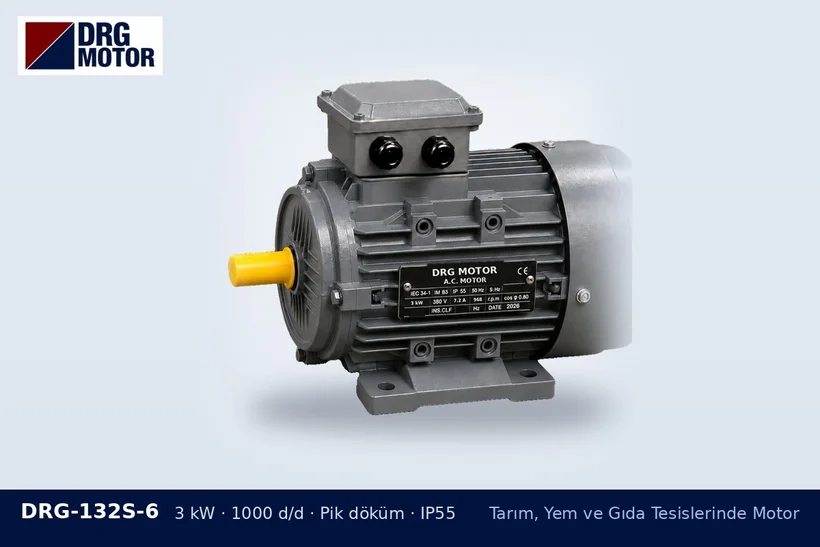
Auger motor
In a horizontal auger, power is largely spent on the friction of the material inside the tube. As the incline increases, a lifting component is added and capacity falls. A long auger stopped with a full tube has to break up compacted grain. Closing the feed gate and emptying the tube before stopping the auger makes starting markedly easier.
Elevator motor
In an elevator, most of the power goes into lifting the material: power rises as capacity (t/h) and lift height grow. Added to this is the buckets scooping material in the boot. During a power cut, loaded buckets tend to run back; the backstop that prevents this is in the gearbox or the head pulley, not in the motor itself.
Comparison
| Item | Auger | Elevator |
|---|---|---|
| What sets the power | Length, diameter, incline | Height, capacity |
| Starting risk | Jamming in a full tube | Full buckets and build-up in the boot |
| Motor position | At the tube end, usually near the ground | At the head, high up |
The motor at the elevator head is exposed to rain, sun and dust, and maintenance access is also difficult. A canopy and a solid maintenance platform extend this motor’s life.
Information required
Capacity, type of material, tube or elevator length, incline, gearbox ratio and the existing motor nameplate. Detailed explanations can be found on the agricultural elevator motor and agricultural auger and conveyor motor pages; once the power is clear, a model can be chosen in the three-phase motor shop.