 English
 Le français
 Türkçe

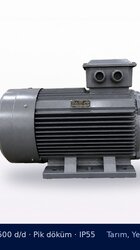
The engine power on the tractor’s registration is not the same as the power the machine draws from the PTO; the usable PTO power is lower, and the machine often uses only part of that. When switching to an electric motor, the basis should be not the tractor’s rated power but the power the machine actually draws in operation and the required PTO speed.
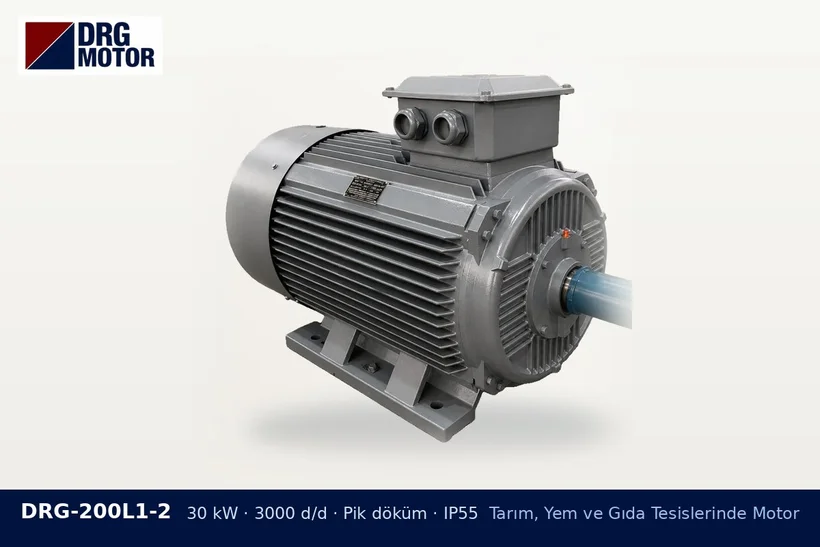
Converting units correctly
One metric horsepower is about 0.736 kW. A 60 hp tractor corresponds to about 44 kW of engine power; however, because of transmission losses, the power available at the PTO is below that. If the machine runs comfortably with this tractor, its requirement is most likely below the PTO power as well. The correct figure is the PTO power requirement stated by the machine manufacturer.
Matching the speed
PTO shafts are standardised at 540 or 1000 rpm. The electric motor must provide this speed through pulleys, a coupling or a gearbox. For example, for a machine requiring 540 rpm, a pulley arrangement with a ratio of about 1.8 is needed with a motor in the 1000 rpm class, and about 2.7 with a 1500 rpm motor. Since the motor turns slightly slower than nominal under load, the nameplate speed should be used in the calculation.
Differences between a tractor and an electric motor
- Starting: On a tractor the operator engages the load gently with the clutch; an electric motor starts straight into the load from standstill. On machines with heavy flywheels this difference can make starting difficult.
- Response to overload: A diesel engine drops speed when strained; an electric motor tries to hold its speed, its current rises, and if the overload persists the protection device may switch the motor off.
- Fixed position: An electric drive needs a base, a belt guard and a three-phase supply to be prepared.
Measuring before deciding
If possible, the fuel consumption and speed drop of the machine during the heaviest work with the tractor should be observed and assessed together with the manufacturer’s data. You can check the pulley ratio with the pulley and belt calculator. Explanations specific to farm applications are on the agricultural machinery electric motors page, and power options are in the three-phase motor shop.