 English
 Le français
 Türkçe

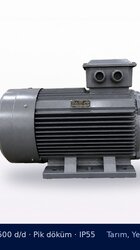
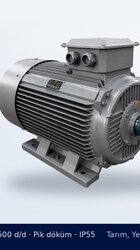
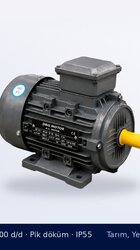
To select a roller mill motor correctly, the power of the old motor alone is not enough; the roll length, the passage it works on, the belt arrangement and the motor’s position relative to the machine must also be known. Although most roller mills in a flour mill look alike, the break passage and the reduction passage have different power requirements.
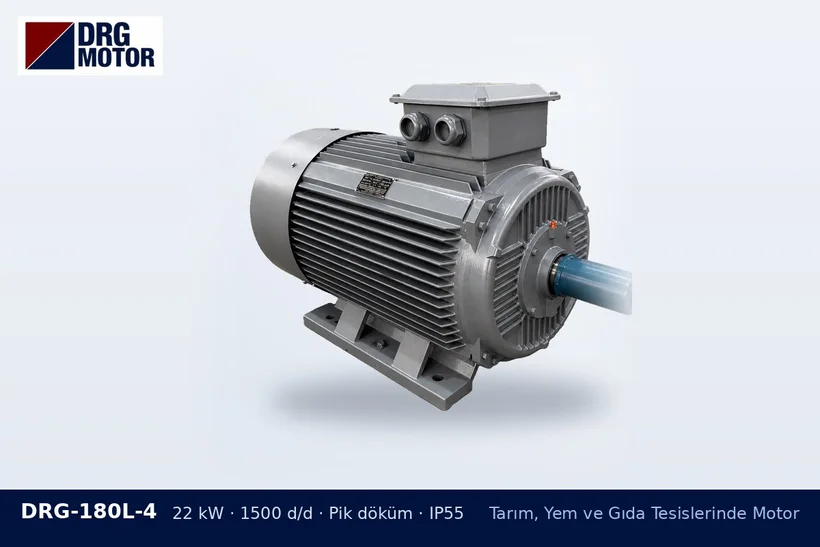
Data to be collected
| Information | What it determines |
|---|---|
| Roll length and diameter | The rough order of the power |
| Passage (break, reduction, semolina) | The grinding load and the heavy-duty section |
| Fast roll speed and pulley diameters | The motor speed and pulley ratio |
| Single- or double-sided drive | Whether one or two motors are needed |
| Mounting position and base | Foot-mounted frame size and tensioning arrangement |
Why does the break passage need more?
On the first break rolls the whole kernel is split and the fluted surfaces work under high force. On the later reduction rolls the material is finer and the load is smoother. It is therefore normal to see different power ratings for two rolls of the same length. On replacement, each roll’s own nameplate should be the reference.
Belt arrangement and environment
Roller mills are usually belt-driven with the motor below and the roll above. If the pulley ratio is not kept when the motor changes, the roll surface speed changes and the grinding result suffers. Flour dust builds up on the fan cover; regular cleaning and ventilation preserve cooling. Areas where flour dust creates an explosive atmosphere require certified motors; such products are not in DRG’s standard range, and the zone classification must be carried out by the plant’s responsible person.
Details are on the roller mill electric motors page; for the mill’s other motors you can go to the flour mill motors page and compare suitable models in the shop.