English
 Le français
 Türkçe




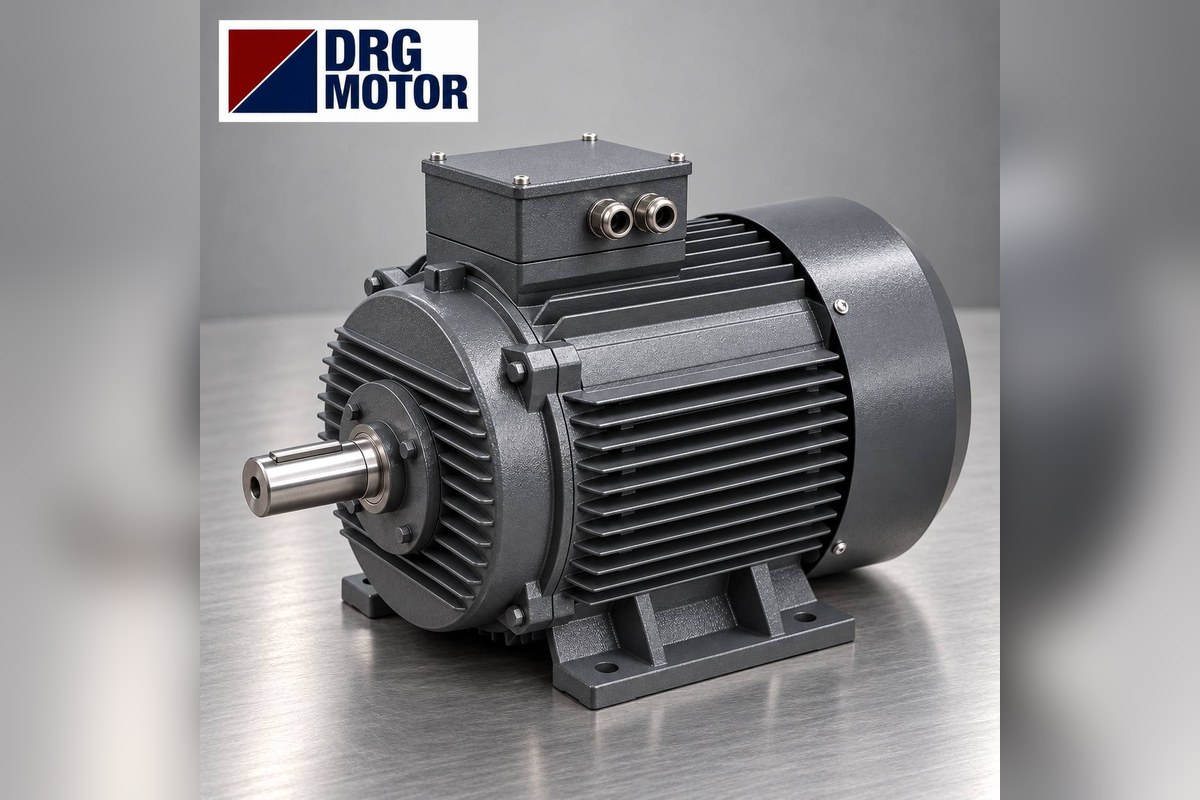

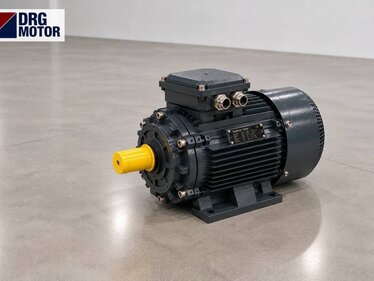
On a tomato paste line, the machine that loads the motor most is the pulper/finisher (sieve rotor) group; these machines usually run on a 4-pole, 1460–1470 rpm three-phase motor through a belt, and motors between 7.5 kW and 22 kW are common depending on line capacity (the exact value is on the machine nameplate). When replacing a burnt pulper motor, taking the same kW, the same pole number, the same shaft (for example 42 × 110 mm on frame 160M) and the same mounting gets the line running again fastest in mid-season: the 11 kW DRG-160M-4 draws 20.4 A at 400 V, the 15 kW DRG-160L-4 27.3 A.
In a paste plant, motor failures tend to come in the busiest weeks of the season: the line runs for days without stopping, the room is hot and steamy, and tomato acid splashes onto the motor housing and terminal box. So the replacement decision is not only about power but also about where and how the motor is mounted. Panel and connection work must be done by a qualified electrician; wet floors and stainless frames increase the risk of earth leakage. All cast iron and aluminium-housing models in the store are on the Buy Electric Motors Online page.
Fault table: did the motor fail, or is the machine overloading it?
Before buying a new motor, separate out the real cause; otherwise the new motor will trip on the same cause within a few weeks.
| Symptom | Likely cause | Check first | Replace motor? |
|---|---|---|---|
| Overload trips often | Blocked sieve, paddle angle | Sieve, paddles, current | Usually not |
| Burnt smell, dark winding | Winding burnout | Insulation test | Yes |
| Humming, vibration | Bearing or pulley alignment | Bearing noise, belt | If bearing damaged |
| Struggles to start | Loaded rotor, low voltage | Line voltage, starter | Panel first |
| Rusty housing, damp terminals | Steam and acid | Gasket, gland direction | Depends on damage |
Frequent overload trips do not on their own mean the motor is bad. In a pulper, when the sieve holes clog with skins and seeds or the gap between paddles and sieve narrows, the rotor demands more torque and current exceeds the nameplate value. First clean the sieve and measure the current under load with a clamp meter; on the 11 kW DRG-160M-4 the rated current is 20.4 A at 400 V. We cover the link between overheating, power and protection class in our article on replacing an overheating motor with the right power and IP rating.
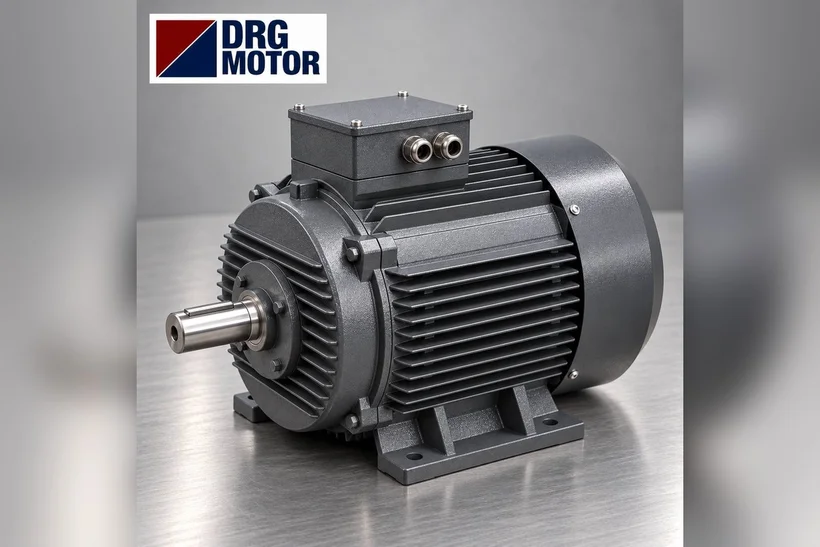
Which machine on a paste line uses which motor?
A paste line has no single motor type; every machine has a different load character. The table below summarises, machine by machine, what to look at during replacement. Power values are left out because they vary widely with plant capacity; always go by the value on each machine's nameplate.
| Machine | Load character | Typical drive | Watch when replacing |
|---|---|---|---|
| Crusher / chopper | Shock load, loaded start | Coupling or belt | Starting torque |
| Pulper (coarse sieve) | Steady, heavy | Belt, 4-pole | Pulley and rotor speed |
| Finisher (fine sieve) | Steady, faster | Belt, 4-pole | Sieve clogging, current |
| Transfer pump | Depends on flow/head | Coupled, often 2-pole | Pump speed, coupling |
| Progressive cavity pump | Thick product, const. torque | Geared motor | Gearbox flange |
To check a transfer pump motor against your own flow and head, use the pump-fan motor power calculator. On a centrifugal pump, changing the pole number changes flow and pressure together; a 2-pole pump motor is replaced by a 2-pole motor. For example, the 5.5 kW 2-pole DRG-132S1-2 runs at 2930 rpm and draws 10.1 A at 400 V.
Click to see current electric motor prices and order nowSEE PRICES →
How is the pulper rotor speed set with pulleys?
On a pulper and finisher, rotor speed sets how fast product passes through the sieve and how much skin and seed is rejected. With a belt drive, rotor speed is: nrotor = nmotor × dmotor pulley / drotor pulley. Example (diameters are assumptions): with the 1465 rpm DRG-160M-4, a 180 mm motor pulley and a 250 mm rotor pulley turn the rotor at about 1055 rpm; with a 200 mm motor pulley the rotor rises to about 1172 rpm.
Raising the speed is not free for the motor: the power the rotor needs rises with speed, and the same motor may now run above its rated current. Always measure current under load after a pulley change. The pulley-belt calculator helps with the pulley and belt maths, and our article on motor selection for belt and pulley drives covers belt tension and bearing load.
How do you protect the motor in a hot, steamy, acidic room?
A paste plant has two enemies for the motor: hot steam from the hot-break and evaporator sections, and the acid of tomato juice. The IP55 housing of DRG three-phase motors is protected against dust and splashing water; but on a motor that sits permanently in a steam cloud or gets hot product splashed on it, gaskets, paint and terminal connections degrade over time.
- Place the motor beside or below steam outlets and hot pipework, not above them; hot air rises.
- Leave at least a hand's width of space in front of the fan cover; a motor that cannot draw cooling air runs hot.
- Wipe acid-splashed surfaces with a damp cloth at the end of the shift; a dried product layer hinders heat dissipation.
- Point the cable gland downwards and check the terminal-box gasket and cover screws at the start of the season.
- Clean and repaint areas where paint has lifted at the end of the season; once rust spreads, foot and flange faces are damaged.
- Do not wash the motor with a pressure washer during cleaning; use a protective sheet-metal guard if needed.
Starting and panel for intensive seasonal operation
Pulper and crusher motors may have to start with a loaded rotor several times a day throughout the season. With direct-on-line starting the motor draws about 7–8 times its rated current: for the 18.5 kW DRG-180M-4, 33.5 A × 7.8 ≈ 261.3 A. At DRG, motors from 4 kW upwards are 400/690 V and run in delta on a 400 V network, so they are suitable for star-delta starting. In star, starting current falls to roughly one third (≈ 87.1 A), but starting torque also falls to one third; on a machine that cannot start in star with a loaded rotor, a soft starter or an inverter is a better fit. See the star-delta starting tool for a comparison of methods.
Motor checks at the start and end of the season
- Have a qualified electrician measure insulation resistance on a motor that has stood idle; a winding left in a damp store can break down on the first start.
- Turn the shaft by hand: any catch or rustle points to the bearings.
- Check belt tension and pulley alignment; an over-tight belt wears the motor bearing.
- Confirm the overload setting equals the 400 V current on the nameplate.
- At the end of the season keep the motor dry and, if possible, run it briefly or turn the shaft once a month.
Replacement checklist: what to take from the old motor before ordering
- Nameplate: kW, speed, voltage (230/400 V or 400/690 V), current.
- Pole number: around 1460 is 4-pole, around 2900 is 2-pole; do not change it.
- Frame and shaft height: distance from feet to shaft centre (H), e.g. 160 mm → frame 160.
- Shaft: diameter and length (D × E) and key width (F); on 160M, 42 × 110 mm, key 12 mm.
- Mounting: foot (B3), flange (B5) or both (B35); for the flange, P / M / N (160M B5: 350 / 300 / 250 mm).
- Terminal box position and cable entry: so it does not hit the machine frame.
- Pulley: diameter and keyway; does it fit the new shaft?
- Direction of rotation: the arrow on the rotor and pump; jog briefly on first start.
Compare the dimensions with the values on the technical drawings page.
Which DRG motor for pulpers and finishers?
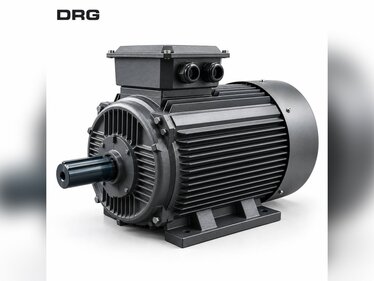
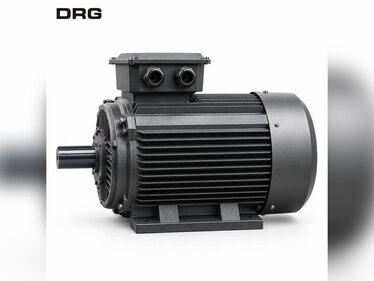
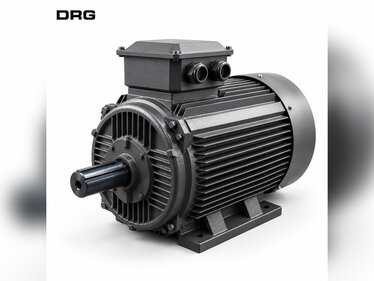
Below are 4-pole cast iron models for the 7.5–22 kW range common on paste lines. Foot mounting (B3) is the most usual on machines that drive the sieve rotor by belt.
| Model | Power / speed | Frame | Current 400 V |
|---|---|---|---|
| DRG-132M-4 | 7.5 kW / 1460 rpm | 132M · cast iron | 14.3 A |
| DRG-160M-4 | 11 kW / 1465 rpm | 160M · cast iron | 20.4 A |
| DRG-160L-4 | 15 kW / 1465 rpm | 160L · cast iron | 27.3 A |
| DRG-180M-4 | 18.5 kW / 1470 rpm | 180M · cast iron | 33.5 A |
| DRG-180L-4 | 22 kW / 1470 rpm | 180L · cast iron | 39.7 A |
The value met most often on a medium-capacity pulper is 11 kW; the nameplate data of this model:
- Power: 11 kW
- Rated speed: 1465 rpm
- Frame: 160M · cast iron
- Current 400 V: 20.4 A
- cos φ: 0.85
- Rated torque: 71.7 Nm
- Starting torque: 2.2 × Tn
- Starting current: 7.7 × In
- Shaft D × E: 42 × 110 mm
- Bearing: 6309-C3
- Voltage: 400/690 V (Δ/Y)
DRG Motor is a manufacturer, supplier and seller of electric motors; DRG MOTOR motors are guaranteed against material and manufacturing defects for 2 years from the date of delivery (warranty certificate). Shipping is by contracted freight or courier and is paid by the buyer; terms are on the sales, delivery and return terms page.
Motors in this power range
- DRG-132M-4 – 7.5 kW – 1460 rpm – 132M cast iron
- DRG-160M-4 – 11 kW – 1465 rpm – 160M cast iron
- DRG-160L-4 – 15 kW – 1465 rpm – 160L cast iron
- DRG-180M-4 – 18.5 kW – 1470 rpm – 180M cast iron
- DRG-180L-4 – 22 kW – 1470 rpm – 180L cast iron
- DRG-132S1-2 – 5.5 kW – 2930 rpm – 132S cast iron
Click to see current prices and order these motors nowSEE PRICES →
Frequently Asked Questions
How many kW is a tomato paste machine motor?
It depends on the machine and line capacity. Pulper/finisher motors are commonly 7.5–22 kW; smaller workshop machines use less and large lines more. The exact value is on the machine nameplate.
What speed should a pulper motor be?
Mostly a 4-pole motor at 1460–1470 rpm; rotor speed is set by the pulley ratio. Small corrections are made with the pulley rather than by changing the motor pole number.
How many amps does an 11 kW paste machine motor draw?
Nameplate values are 20.4 A at 400 V and 21.5 A at 380 V (11 kW 4-pole DRG-160M-4). On the panel side, allow for the inrush of nearly 7.7 times this value at a direct-on-line start.
Why do motors burn out often on paste lines?
The most common causes are overload from a clogged sieve, moisture entering the terminal box through steam and acid, and a housing that cannot cool because of dirt. Check the sieve, the current and the gasket and gland before replacing the motor.
If a machine has stopped mid-season, send a photo of the old motor's nameplate and the shaft size, and we will pin down the equivalent DRG model straight away. Phone +90 (542) 666 11 11, e-mail info@drgmotor.com, contact page. All models for a pre-season spare motor: Buy Electric Motors Online.