 English
 Le français
 Türkçe

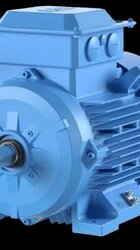
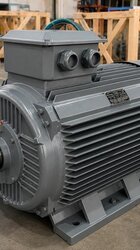
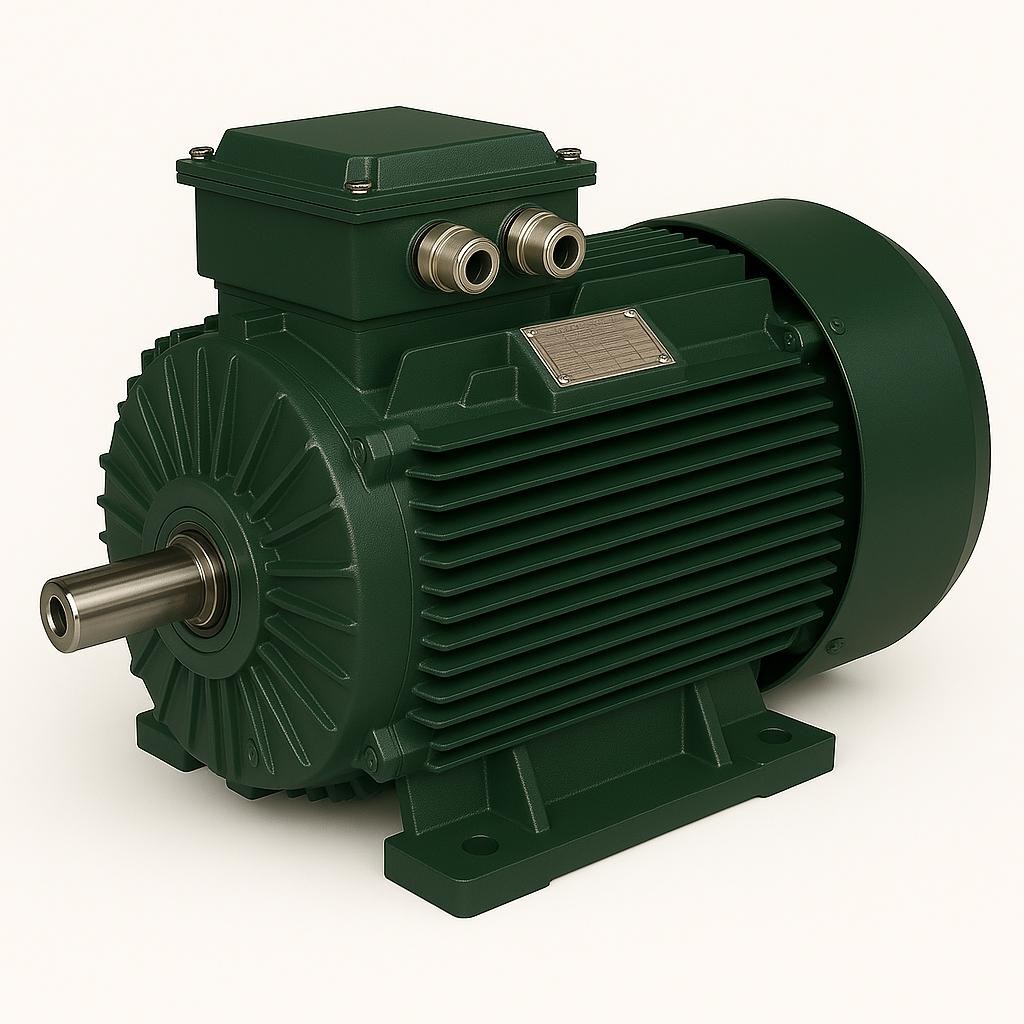

Belt-and-pulley drive is one of the most common ways to transfer a motor's power to a load. From a ventilator to a stone-crushing line, from a machining tool to a conveyor, many systems have a belt and two pulleys between the motor and the load. This seemingly simple arrangement actually affects motor selection directly: the pulley ratio converts speed and torque, the belt tension imposes a side load on the shaft and bearings, and slip reduces efficiency. When the right motor is not selected, the system either fails to reach the desired speed or the bearings fail prematurely. In this article we cover motor selection in belt-and-pulley driven systems, the mechanical effects to watch for, and the points that stand out in the field at DRG Motor.
What Is a Belt-and-Pulley Drive?
In a belt-and-pulley system, one pulley is fitted to the motor shaft and another to the load shaft, with a belt running between them. As the motor turns, the belt moves and drives the load shaft. This method offers advantages such as flexibility in aligning the motor and load, vibration damping and speed conversion.
Why Not a Direct Connection?
Connecting the motor directly to the load with a coupling is possible, but not always desirable. A belt-and-pulley allows a certain distance between the motor and the load, softens shocks and is an economical solution especially when speed conversion is required. To compare with a geared solution, the article on motor-gearbox compatibility is complementary.
Speed Conversion with the Pulley Ratio
If the load pulley's diameter is larger than the motor pulley's, the load turns more slowly; if smaller, it turns faster. The speed ratio equals the ratio of the pulley diameters. For example, if the motor pulley is 100 mm and the load pulley is 200 mm, the load turns at half the motor's speed.
Torque Conversion with the Pulley Ratio
When speed drops, torque rises, and when speed rises, torque drops; because power is constant. If the load pulley is larger, the torque at the load increases. This means the belt-and-pulley acts like a kind of mechanical lever. To clarify the relationship between power, torque and speed, the behavior in motor starting and inrush current should also be kept in mind. In practice the designer first determines the speed and torque the load needs, then links these values to the motor's rated speed and torque through the pulley ratio. The right ratio keeps the motor turning in its efficient region while giving the load exactly the desired speed and torque.
A Pulley Ratio Calculation Example
Suppose the motor turns at 1450 rpm and the load is required to turn at 725 rpm. In this case the load pulley is chosen with twice the diameter of the motor pulley. The load torque rises to roughly double, because power is conserved as the speed halves. This simple calculation shows why pulley selection must be considered in terms of both speed and torque. As the ratio grows the required pulley diameter grows too, and beyond a point a gearbox becomes more practical.
Choosing the Motor Speed Correctly
Although the pulley ratio provides flexibility, the motor's rated speed is the starting point of the selection. It is possible to reduce a very high motor speed with a large pulley ratio, but this requires large pulleys and a wide center distance. Generally a motor turning at a speed close to the load with a smaller pulley ratio is preferred.
Determining the Power Requirement
The motor power should be selected by adding the belt efficiency to the power the load needs. In a belt-and-pulley drive there is typically a small power loss; this loss is added as a margin to the motor power. Otherwise the motor runs constantly at the limit and overheats.
Why Is Belt Tension Critical?
A belt can transfer power only with sufficient friction, which requires a certain tension. An under-tensioned belt slips, fails to transfer power and overheats. An over-tensioned belt, on the other hand, imposes a large side load on the shaft and bearings. The correct tension is the balance between these two extremes.
The Side Load on the Shaft and Bearings
Belt tension applies a radial (side) force to the motor shaft. This force constantly stresses the motor's bearings. This load, which is absent in a direct connection, is the main factor determining bearing life in belt-and-pulley systems. When selecting the motor, you must make sure the bearings can carry this side load. The side load depends on the power the belt transfers, the tension setting and the pulley diameter; therefore a motor of the same power that runs without issue in a direct connection must be evaluated differently for bearing selection in a belt-and-pulley application. Manufacturers usually specify the maximum allowable radial load and its point of application for each motor frame size; the selection must stay within these limits.
The Relationship Between Pulley Diameter and Side Load
To transfer the same power, a small pulley requires a higher belt force and therefore a higher side load. A large pulley reduces the force but takes up space. For this reason, avoiding a very small motor pulley is important for bearing life. At the same time, with a small pulley the belt's wrap angle becomes smaller and the contact area over which the belt wraps the pulley decreases; this lowers friction and increases slip. So a small pulley enlarges both the side load and the slip risk together. That is why, in the design, it is important not to go below the minimum diameter the supplier recommends for the motor pulley.
Wrap Angle and Center Distance
The larger the angle over which the belt wraps the motor pulley, the higher the power that can be transferred. If the two pulleys are very close to each other or their diameters are very different, the wrap angle decreases. Choosing the center distance and the pulley diameters in a balanced way provides both a sufficient wrap angle and a suitable belt length. When necessary, the wrap angle can be increased using an idler pulley; this reduces slip especially in high-ratio drives.
Ways to Reduce the Side Load
| Measure | Effect |
|---|---|
| Increasing the pulley diameter | Reduces belt force and side load |
| Using multiple belts/grooves | Distributes the load, lowers the tension |
| Correct tension setting | Prevents unnecessary excess load |
| Positioning the pulley close to the motor | Reduces the shaft bending moment |
| Choosing a motor with reinforced bearings | Safely carries high side load |
When these measures are applied together, both efficiency is preserved and bearing life is extended. The steps in the table are cost-free if considered at the design stage; but if a bearing problem occurs after the system is built, its solution is much more expensive. For this reason, side-load management should be part of motor selection from the outset, not afterward. Especially on continuously and heavily working lines, choosing a motor with reinforced bearings more than pays for itself in the long run.
Slip and Efficiency Loss
There is always some slip between the belt and the pulley. If this slip is small, the efficiency loss is limited, but when tension decreases or the load increases, the slip grows. Large slip means both power loss and the belt overheating and wearing out rapidly.
How Does Slip Affect the Speed Ratio?
Because of slip, the actual speed of the load shaft is slightly lower than the theoretical speed calculated from the pulley ratio. In applications requiring precise speed this deviation matters and is eliminated with toothed belts or a gearbox. In loads such as pumps and fans, small slip is generally tolerated.
Alignment and Pulley Parallelism
The two pulleys must be in the same plane and parallel. Misaligned pulleys pull the belt to one side, wear it out quickly and increase the side load. Good alignment extends belt life many times over and reduces vibration.
Belt Type Selection
V-belts, flat belts and toothed (synchronous) belts address different needs. A V-belt provides high power transfer and good friction; a toothed belt eliminates slip entirely and is used where precise speed is required. The choice is made according to the load's precision and power requirement. The wedge-shaped cross-section of the V-belt embeds in the pulley groove, increasing the friction surface and transferring more power at the same tension. A toothed belt, on the other hand, meshes with the pulley by its teeth; this way it never slips, but tension and alignment precision become more critical. Flat belts today are found mostly in high-speed, low-power special applications.
The Effect of Load Type
Constant-torque, variable-torque or shock loads stress the belt system differently. With shock loads the belt's elasticity is an advantage because it softens the shock. To resolve the load character correctly, the motor selection by load type analysis should be performed. For example, a crusher or mill is in the shock and high-inertia load class; here the belt protects both the motor and the transmission by damping sudden peak torques. By contrast, on a smoothly turning load such as a fan, the belt is used more for speed conversion. Correctly classifying the load type affects every choice from pulley ratio to belt count and prevents over- or under-sizing.
Starting Behavior and the Belt
When the motor starts it produces high torque; at this moment the belt is most stressed and the slip risk increases. Using a soft starter or an inverter reduces the starting shock and extends belt life. To understand the effect of the inrush current on the load, the article on inrush current helps.
Belt, Direct or Geared?
A belt-and-pulley is economical and offers flexibility of speed conversion but introduces side load and slip. A direct connection is efficient and low-maintenance but cannot perform speed conversion. A gearbox provides large speed reduction and high torque. Which one is suitable depends on the application; the article on motor-gearbox compatibility deepens this comparison.
Advantages of the Belt-and-Pulley
Low cost, installation flexibility, providing a kind of protection through slip under overload, and vibration damping are the main advantages of the belt-and-pulley. This is why it is still preferred in many industrial applications.
Disadvantages of the Belt-and-Pulley
Requiring periodic tension checks, speed loss due to slip, imposing side load on the bearings and the belt being a wear item are the main disadvantages. These points should be taken into account from the outset in motor and system selection.
Motor Mounting Configuration
To adjust the belt tension, the motor is usually mounted on a tensioning rail; this way the motor is slid to apply tension. Foot (B3) mounting is common in these applications. The motor mounting type, the pulley position and the shaft direction should be planned from the outset.
Idler Pulley and Automatic Tensioning
In some systems a spring-loaded or weighted idler pulley is used to keep the belt tension constant. This pulley automatically compensates the tension when the belt stretches over time and reduces the need for frequent manual adjustment. Automatic tensioning minimizes slip and extends belt life; however, since the idler also adds a side-load point, its position must be chosen carefully. On continuously running critical lines, automatic tensioning noticeably reduces the maintenance burden.
Shaft Diameter and Keyway
The pulley is connected to the motor shaft with a key. The shaft diameter and keyway must be sized to safely carry the torque to be transferred. An inadequate shaft leads to crushing in the keyway at high torque. When selecting the motor, the shaft dimensions should be checked against the load torque.
Vibration and Balance
An unbalanced pulley or a misaligned belt produces vibration; this vibration damages the bearings and the motor. Using a quality, balanced pulley and performing correct alignment minimizes vibration. At high speed this is even more critical. The proper seating of the pulley hub on the shaft, a play-free keyway and the belt running without wear are decisive for vibration. Vibration is not just a comfort issue; a bearing running under continuous vibration fails much earlier than expected and the winding insulation is also stressed. For this reason, balance and alignment must be checked before commissioning.
Maintenance and Periodic Inspection
Belt tension, alignment and belt wear should be checked regularly. A loose belt slips, and a worn belt can break. Regular maintenance both preserves efficiency and prevents unexpected stoppages. Monitoring the bearing temperature also catches side-load-related problems early.
Temperature and Ambient Conditions
Belts are sensitive to temperature; at high temperature the material hardens or softens and its life shortens. In a dusty environment, dust accumulating in the pulley groove changes the friction and increases slip. When selecting the motor, electrical conditions must be read alongside environmental ones, and if necessary an enclosed pulley guard and a suitable belt material should be considered. In a hot environment the motor's cooling must also be sufficient.
Using Multiple Belts
In high power transfer, multiple belts are used in parallel instead of a single belt. This distributes the load among the belts and lowers the tension of each one. However, the belts must be at equal tension and of the same length; if one is loose, the others are overloaded. In a multi-belt system all belts should be replaced at the same time, as a set; using a mix of old and new belts leads to uneven load distribution.
Approach in Industrial Plants
Using standard pulley and belt sizes across the plant makes spare-part management easier. Similar solutions for similar applications reduce both cost and the margin of error. In the selection of industrial electric motors, the drive method should be planned from the outset.
Why Is Correct Motor Selection Important?
In a belt-and-pulley drive, the motor must be evaluated not only for power but together with bearing side-load capacity, shaft size and a suitable speed. Getting these three elements right ensures the system runs long and efficiently. An incomplete selection causes problems even with the best belt and pulley.
DRG Motor for Belt-and-Pulley Drive Solutions
DRG Motor evaluates its motors for belt-and-pulley driven systems together in terms of side-load capacity, shaft strength and a suitable speed. Whether ventilator, compressor, machine tool or conveyor; for every application we recommend the right motor while considering the pulley ratio, the belt force and bearing life. To plan your system's pulley ratio, tension requirement and mounting configuration together and select the most suitable motor, get in touch with the DRG Motor team; let us set up your drive line correctly the first time.