English
 Le français
 Türkçe




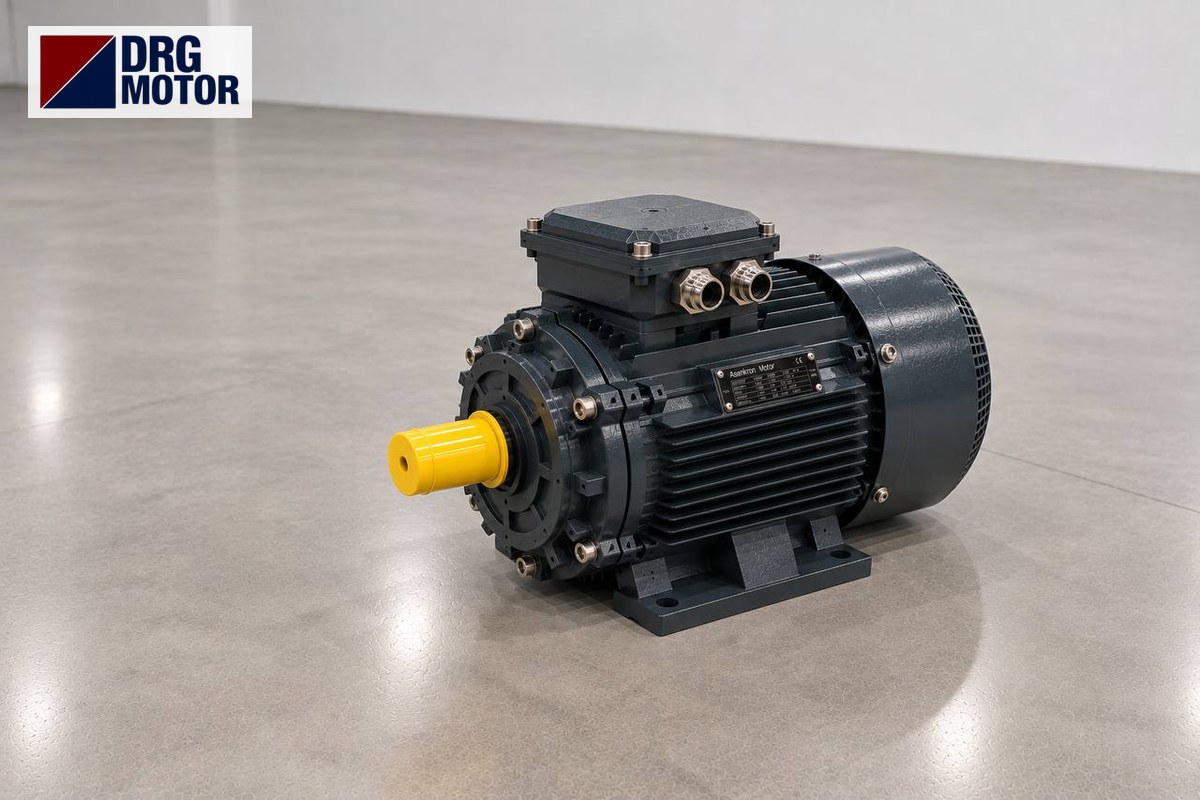

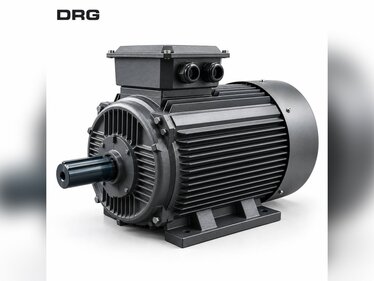
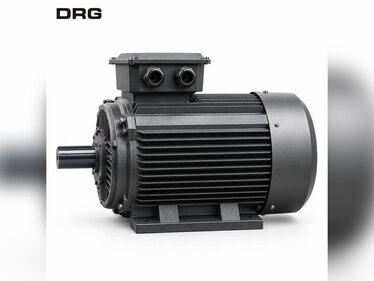
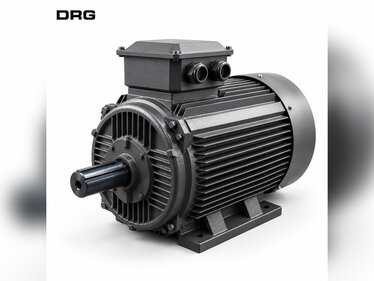
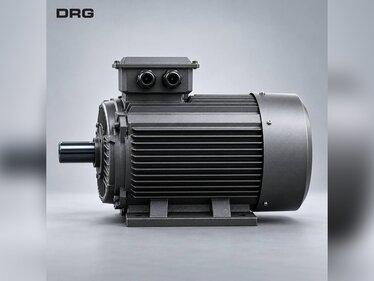
The electric motor of a glass crushing machine is sized not for the average crushing power but for the peak torque at the moment a mass of glass hits the hammers or rollers: for an average load of 8 kW an 11 kW motor looks sufficient for heating, yet the impact torque pushes its breakdown limit and 15 kW is needed. The most common match on hammer-type glass crushers is a 4-pole, belt-driven cast iron motor; for example, the 15 kW DRG-160L-4 draws 27.3 A at 400 V and has 224.9 Nm breakdown torque.
With glass the load arrives in much harder, shorter impacts than with plastic or feed crushing; on top of that, glass dust is extremely abrasive and, once inside the motor, destroys bearings quickly. Motor selection therefore rests on three questions: can it carry the impact torque, is it protected from dust, and does the belt damp the impact properly? Panel and wiring must be done by a qualified electrician; never reach into the crusher mouth without locking out power. You can see suitable models and current prices on the Buy Electric Motors Online page.
The 3 most common mistakes with glass crusher motors
- Choosing the motor by average power: the average shown on the ammeter hides the impacts; the motor may be sufficient on paper, but speed drops and the belt squeals at every surge of glass.
- Underestimating dust: glass dust gets in through the terminal box gasket, cable gland and shaft seal; a fan cover clogged with dust also cuts cooling.
- Over-tightening the belt: tightening the belt too much to stop slip transfers the impact straight to the motor shaft and front bearing; bearing life shortens.
Hammer or roller? Choosing speed and drive
Two types of glass crusher are common on recycling lines. In a hammer crusher, hammers on a fast-turning rotor break the glass by impact; in a roller crusher, two rollers turning towards each other break it by crushing. Because the speed need differs, motor and drive differ too:
| Crusher type | Typical speed need | Motor and drive |
|---|---|---|
| Hammer (rotor) | High rotor speed | 4-pole + belt |
| Roller | Low roller speed | 6-pole + belt/gearbox |
| Bottle pre-crusher | Medium speed | 4-pole + belt |
On a hammer crusher the rotor speed is set by the pulley ratio; on a roller crusher a 6-pole motor (DRG-160L-6, 970 rpm) and a large-ratio belt or gearbox are used for low roller speed. For similar logic on stone and rock crushers see our stone crusher motor selection article; the difference with glass is that pieces are more brittle but the dust is far more abrasive.
Impact load: why is Tmax/Tn decisive?
When a load of bottles enters the rotor, torque rises briefly. There is no data for this peak; to show the calculation, assume the impact torque on the rotor shaft of a hammer crusher is 360 Nm. With a 160 mm motor pulley and a 400 mm rotor pulley the ratio is 2.5, so the peak torque on the motor shaft is 360 / 2.5 = 144.0 Nm. Compare this with the motors' breakdown torque (Tmax); if the supply is 10% low, Tmax drops to 0.81 times with the square of voltage:
| Model | Tmax | Impact / Tmax | Impact / Tmax (0.9 U) |
|---|---|---|---|
| DRG-132M-4 | 112.9 Nm | 1.28 | 1.57 |
| DRG-160M-4 | 164.9 Nm | 0.87 | 1.08 |
| DRG-160L-4 | 224.9 Nm | 0.64 | 0.79 |
| DRG-180M-4 | 276.5 Nm | 0.52 | 0.64 |
As the ratio approaches 1, the motor hits its breakdown limit at impact, speed collapses and the belt slips. On the 11 kW motor the ratio is 0.87 at full voltage and 1.08 with low voltage: the impact is enough to stall it. With the 15 kW DRG-160L-4 the ratio falls to 0.64 and 0.79; even with an average load of 8 kW, this is the right choice. The flywheel effect of the rotor damps part of the impact; a crusher with a heavy flywheel gives a lower ratio, one with a light rotor a higher ratio.
Click to see current electric motor prices and order nowSEE PRICES →
Belt slip: the part that damps impact but must be watched
A belt drive does two jobs on a glass crusher: it sets rotor speed and protects the motor by slipping briefly at a sudden impact. But continuous slip heats the belt and lowers crushing output. The easiest check is to measure rotor speed with a tachometer and compare it with the theoretical speed. Example with the DRG-160M-4 (1465 rpm) and 160/400 mm pulleys:
| Reading | Rotor speed | Slip | Meaning |
|---|---|---|---|
| Theoretical (no slip) | 586 rpm | – | Calculated value |
| Example reading 1 | 575 rpm | 1.9% | Belt normal |
| Example reading 2 | 560 rpm | 4.4% | Check tension/wear |
Theoretical speed is 1465 × 160 / 400 = 586 rpm. If the measured speed is clearly below this (as in the second example), the belt is loose or worn or the crusher is overloaded; check the feed rate first, then belt tension. You can verify pulley diameters and belt length with the pulley-belt calculator.
How does glass dust affect the motor? IP55 and sealing
Glass dust is hard and sharp, so when it mixes with bearing grease it behaves like an abrasive paste. IP55 protection shows the motor is protected against dust, but this depends on gaskets and glands staying intact. On site, pay attention to:
- Check the terminal box cover gasket every time it is opened, and tighten the cover screws evenly.
- Close unused cable entries with blanking plugs; the gland used must suit the cable diameter.
- Clean the fan cover and body fins regularly with a brush and vacuum rather than compressed air; compressed air pushes dust towards the seals.
- Place the motor away from the crusher's dust outlet and outside the dust extraction path if possible.
- Monitor bearing noise and body temperature periodically; the bearing type is on the nameplate and in the catalogue.
Starting and panel: the empty-start rule
A glass crusher must always start empty; starting with a full rotor strains the motor and belt. DRG motors of 11 kW and above have 400/690 V windings and run in delta at 400 V, so they suit star-delta starting. Since starting torque in star drops to one third, the feed conveyor should only run after the motor has switched to delta; the panel should enforce this sequence with an interlock. For starting and changeover times use the star-delta starting tool, and for overload and contactor the overload-fuse-contactor selection.
Replacement checklist
- Old motor nameplate: kW, speed, frame and mounting.
- Pulley diameters and belt type; rotor or roller speed.
- Speed drop and belt squeal at impact?
- Interlock between feed conveyor and motor (no feed before delta).
- Terminal box facing away from the dust outlet?
- Current measured at no-load and under load at first start.
Which DRG motor? Models for glass crushers
The cast iron models below cover small and medium glass crushers. A 4-pole motor is preferred on hammer crushers, a 6-pole motor on roller crushers. Dimensions and shaft data are on the technical drawings page.
| Model | Power / speed | Frame | Current 400 V |
|---|---|---|---|
| DRG-132M-4 | 7.5 kW / 1460 rpm | 132M · cast iron | 14.3 A |
| DRG-160M-4 | 11 kW / 1465 rpm | 160M · cast iron | 20.4 A |
| DRG-160L-4 | 15 kW / 1465 rpm | 160L · cast iron | 27.3 A |
| DRG-180M-4 | 18.5 kW / 1470 rpm | 180M · cast iron | 33.5 A |
| DRG-160L-6 | 11 kW / 970 rpm | 160L · cast iron | 22 A |
The model found suitable for the impact load in the example calculation:
- Power: 15 kW
- Rated speed: 1465 rpm
- Frame: 160L · cast iron
- Current 400 V: 27.3 A
- cos φ: 0.86
- Rated torque: 97.8 Nm
- Starting torque: 2.2 × Tn
- Breakdown torque: 2.3 × Tn
- Shaft D × E: 42 × 110 mm
- Bearing: 6309-C3
- Voltage: 400/690 V (Δ/Y)
DRG Motor is a manufacturer, supplier and seller of electric motors; DRG MOTOR motors are guaranteed against material and manufacturing defects for 2 years from the delivery date (warranty certificate).
Motors in this power range
- DRG-132M-4 – 7.5 kW – 1460 rpm – 132M cast iron
- DRG-160M-4 – 11 kW – 1465 rpm – 160M cast iron
- DRG-160L-4 – 15 kW – 1465 rpm – 160L cast iron
- DRG-180M-4 – 18.5 kW – 1470 rpm – 180M cast iron
- DRG-160L-6 – 11 kW – 970 rpm – 160L cast iron
Click to see current prices and order these motors nowSEE PRICES →
Frequently Asked Questions
How many kW motor does a glass crushing machine need?
It depends on average crushing power and the peak torque at impact. In the example assumption an 11 kW motor is enough for heating at an average load of 8 kW, but the impact torque calls for 15 kW. For a replacement, the old motor's power is the reference.
What speed should a glass crusher motor have?
Hammer crushers use a 4-pole (1500 rpm) motor with the rotor speed set by belt; roller crushers use a 6-pole (1000 rpm) motor with a belt or gearbox.
How many amps does a 15 kW glass crusher motor draw?
The DRG-160L-4 draws a rated current of 27.3 A at 400 V and 28.8 A at 380 V. At start the current rises to about 7.8 times rated; with star-delta this falls to one third.
Why does the belt squeal on a glass crusher?
At impact the torque exceeds what the belt can carry and the belt slips briefly. Continuous squealing means a loose or worn belt, overfeeding or a motor that cannot cope with the impact torque. Measuring rotor speed and comparing it with the theoretical value separates the causes.
Send us your crusher type, the old motor's nameplate and the pulley diameters, and we will narrow down the right DRG model together: phone +90 (542) 666 11 11, e-mail info@drgmotor.com, contact page. For all models and current prices, see Buy Electric Motors Online.