English
 Le français
 Türkçe




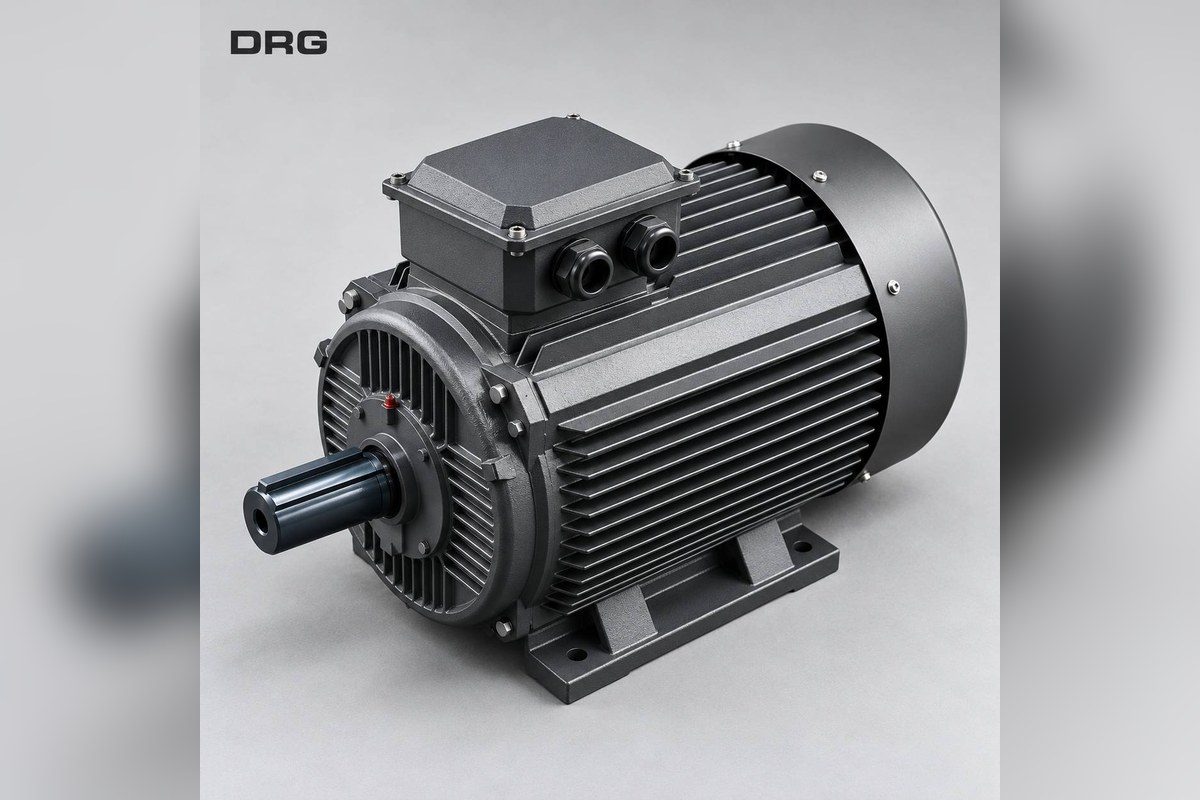

On a three-roll section bending machine, the motor is chosen together with a gearbox so that it turns the rolls at low speed and high torque: a 150 mm roll must turn at about 9.7 rpm for a bending speed of 4–5 metres per minute, which means a gear ratio of around 150 with a 4-pole motor. Workshop machines commonly use 3–5.5 kW and machines bending large sections and tube 7.5–11 kW, 4-pole motors; for example the 4 kW DRG-112M-4 draws 7.95 A at 400 V and, with an i = 150 gearbox, produces about 3945 Nm at the roll shaft in a lossless calculation. The exact power is on the machine builder's nameplate; the calculations below are a check for a machine with an unreadable plate or for a builder designing their own machine.
What strains the motor in section bending is less the power than the duty pattern: the rolls are reversed often, each reversal is a new start under load, and the operator wants the machine to stop immediately at the bending point. So gear ratio, starting torque, the forward-reverse panel and the brake must be considered together. Panel and motor wiring must be done by a qualified electrician; on these machines, where a hand can be drawn between the rolls, the emergency stop and foot pedal circuit must work flawlessly. You can filter suitable models by power and speed on the Buy Electric Motors Online page.
The 3 most common mistakes with a section bender motor
- Replacing a 6-pole motor with a 4-pole one without changing the gearbox: on the same gearbox the roll speed rises by about 1.5 times and output torque falls by the same ratio. The machine cannot bend thick sections and the motor trips.
- Reversing suddenly under load: switching straight to the opposite direction while the rolls are turning puts a shock above starting torque on the motor and gearbox. The panel should include a short pause and interlock between the two directions.
- Raising motor power while keeping the gearbox: a bigger motor can exceed the gearbox's permitted output torque; a gear or shaft breaks. A power increase is checked together with gearbox capacity.
Bending speed and gear ratio
Roll peripheral speed is the speed at which the section passes through the machine: v (m/min) = π × D (m) × n (rpm). For a 150 mm roll, the roll speed for the desired bending speed and the total ratio needed with a 4-pole (1460 rpm) and a 6-pole (968 rpm) motor were calculated in Python:
| Bending speed | Roll speed (150 mm) | Ratio (4-pole) | Ratio (6-pole) |
|---|---|---|---|
| 3 m/min | 6.4 rpm | ≈ 229 | ≈ 152 |
| 5 m/min | 10.6 rpm | ≈ 138 | ≈ 91 |
| 8 m/min | 17 rpm | ≈ 86 | ≈ 57 |
Bending speed is chosen according to material and section; thick and hard sections use low speed, thin sections higher speed. A total ratio between 90 and 230 is hard to achieve in one stage, which is why section benders use multi-stage helical, planetary or worm + chain arrangements. You can check output speed and torque with your own values using the gearbox output speed and torque calculator.
Gearbox output torque: how much torque does each motor give?
The torque at the gearbox output is roughly T₂ ≈ T₁ × i (before gear losses). The table below was calculated with a ratio of i = 150 and the rated torque of DRG 4-pole motors; the starting torque ratio in the last column shows how safely the motor starts on a machine reversed under load:
| Motor | Roll speed (i = 150) | Output torque (lossless) | Starting Ts/Tn |
|---|---|---|---|
| DRG-100L2-4 · 3 kW | 9.67 rpm | 2970 Nm | 2.3 |
| DRG-112M-4 · 4 kW | 9.67 rpm | 3945 Nm | 2.2 |
| DRG-132S-4 · 5.5 kW | 9.73 rpm | 5400 Nm | 2 |
| DRG-132M-4 · 7.5 kW | 9.73 rpm | 7365 Nm | 2 |
| DRG-160M-4 · 11 kW | 9.77 rpm | 10755 Nm | 2.2 |
The real output torque stays below the table value depending on gearbox type; with a worm gearbox the losses are clearly higher. The permitted output torque in the gearbox catalogue must be greater than the chosen motor's rated torque × ratio; otherwise the motor can break the gearbox. We explain the relationship between ratio, service factor and torque in detail in how to select a motor gearbox.
Click to see current electric motor prices and order nowSEE PRICES →
How many kW are needed? Power from roll torque
The torque needed for bending depends on the section, material and bending radius; it is found in the machine builder's capacity table or from the current measured during a trial bend. Power and torque are related by P (kW) = T (Nm) × n (rpm) / 9550. Below, the total torque on the driven rolls is taken as example values, roll speed is assumed at 9.7 rpm and a factor of 1.3 is added for gearbox losses and starting shock:
| Roll torque (assumed) | Shaft power (9.7 rpm) | With 1.3 factor | Motor to choose |
|---|---|---|---|
| 2000 Nm | 2.03 kW | 2.64 kW | DRG-100L2-4 · 3 kW |
| 3500 Nm | 3.55 kW | 4.62 kW | DRG-132S-4 · 5.5 kW |
| 5000 Nm | 5.08 kW | 6.60 kW | DRG-132M-4 · 7.5 kW |
| 7000 Nm | 7.11 kW | 9.24 kW | DRG-160M-4 · 11 kW |
The first row of the table corresponds to small workshop machines, the last to machines bending large tube and sections. Measuring the old motor's current under load, at the moment of bending the thickest section, is the quickest way to confirm the estimate. If the current stays above rated for long, the motor is too small; short peaks come from forward-reverse starts and are normal.
4-pole or 6-pole? Same torque, different motor
On low-speed machines a 6-pole motor is the first choice that comes to mind, but looked at together with the gear ratio, a 4-pole motor often gives the same result in a smaller frame. Two options at the same 4 kW:
| Option | Motor | Ratio / output | Current 400 V |
|---|---|---|---|
| 4-pole + i = 150 | DRG-112M-4 · 112M | 3945 Nm · 9.67 rpm | 7.95 A |
| 6-pole + i = 100 | DRG-132M1-6 · 132M | 3950 Nm · 9.68 rpm | 8.99 A |
Both solutions give roughly the same torque and speed at the roll shaft. The difference is on the motor side: the 4-pole motor comes in a 112M frame with a 28 × 60 mm shaft, the 6-pole motor in a 132M frame with a 38 × 80 mm shaft, and the 400 V current is 7.95 A against 8.99 A. If the existing gearbox was chosen for a 6-pole motor, keep the 6-pole motor without changing the ratio; if you are designing a new machine, 4 poles + a larger ratio is usually more compact.
Forward-reverse operation and braking
Forward-reverse circuit
In section bending the rolls drive the profile in one direction and then pull it back in reverse; the operator controls this with a foot pedal. A three-phase motor is reversed by swapping two phases; a two-contactor circuit needs mechanical and electrical interlocking. We describe the contactor diagram and interlocking in detail in three-phase motor forward-reverse wiring. Each reversal is a start: the starting current of the 4 kW DRG-112M-4 is 7.8 times rated. On a machine that reverses often, the overload relay must be set to rated current and contactors chosen for starting current; the overload, fuse and contactor selection tool helps with this.
Need for a brake
If the rolls do not stop immediately when the operator lifts the foot from the pedal, the section overruns the intended point and the bend shifts. There are three solutions: a self-locking worm gearbox (the load cannot back-drive the motor), an electromagnetic brake motor, or controlled stopping with an inverter. The standard DRG models in the store have no brake; if you need a braked design, call us with the dimensions. When stopping with an inverter, braking energy goes to a braking resistor; for details see inverter dynamic braking and braking resistor.
What an inverter adds
An inverter combines smooth reversing, adjustable bending speed and controlled stopping in one device; the contactor reversing circuit is no longer needed. If heavy bending is done for long periods at low frequency, watch heating because the motor's own fan slows down as well.
Which DRG motor should I buy? Model table
The 4-pole cast-iron models below cover the power range used on section bending machines. A cast-iron frame is a robust choice for heavy machines carrying shock forward-reverse loads:
| Model | Power / speed | Frame | Current 400 V |
|---|---|---|---|
| DRG-100L2-4 | 3 kW / 1450 rpm | 100L · cast iron | 6.02 A |
| DRG-112M-4 | 4 kW / 1450 rpm | 112M · cast iron | 7.95 A |
| DRG-132S-4 | 5.5 kW / 1460 rpm | 132S · cast iron | 10.7 A |
| DRG-132M-4 | 7.5 kW / 1460 rpm | 132M · cast iron | 14.3 A |
| DRG-160M-4 | 11 kW / 1465 rpm | 160M · cast iron | 20.4 A |
Collect this information before replacing the motor:
- kW, speed, voltage and connection on the old motor's nameplate
- Gearbox type, ratio and permitted output torque
- Motor-gearbox connection: B5 / B14 flange or foot-mounted with coupling
- Shaft diameter and length (D × E), key width, coupling hub
- Roll diameter and number of driven rolls
- Forward-reverse circuit, foot pedal, interlock and emergency stop
- Braking arrangement: self-locking gearbox, brake motor or inverter
- Overload relay range and contactor size in the panel
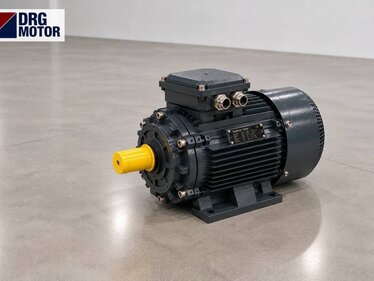
As an example, the model that stands out for a medium-size workshop section bender:
- Power: 4 kW
- Rated speed: 1450 rpm
- Frame: 112M · cast iron
- Current 400 V: 7.95 A
- Current 380 V: 8.37 A
- cos φ: 0.82
- Rated torque: 26.3 Nm
- Starting torque: 2.2 × Tn
- Shaft D × E: 28 × 60 mm
- Bearing: 6206-ZZ-C3
- Voltage: 400/690 V (Δ/Y)
DRG Motor is a manufacturer, supplier and seller of electric motors; our motors are guaranteed for 2 years from the delivery date against material and manufacturing defects (warranty certificate). For dimension checks, see the technical drawings page.
Motors in this power range
- DRG-100L2-4 – 3 kW – 1450 rpm – 100L cast iron
- DRG-112M-4 – 4 kW – 1450 rpm – 112M cast iron
- DRG-132S-4 – 5.5 kW – 1460 rpm – 132S cast iron
- DRG-132M-4 – 7.5 kW – 1460 rpm – 132M cast iron
- DRG-160M-4 – 11 kW – 1465 rpm – 160M cast iron
- DRG-132M1-6 – 4 kW – 968 rpm – 132M cast iron
Click to see current prices and order these motors nowSEE PRICES →
Frequently Asked Questions
What kW should a section bending machine motor be?
3–4 kW is common on small workshop machines, 5.5 kW on medium machines and 7.5–11 kW on machines bending large sections and tube. The exact value is on the old motor's nameplate and in the gearbox capacity.
What gear ratio should a section bender have?
For a 4–5 m/min bending speed on a 150 mm roll, a total ratio of about 150 is needed with a 4-pole motor and about 100 with a 6-pole motor. The ratio changes with roll diameter and desired speed.
How many amps does a 4 kW section bender motor draw?
The 4-pole DRG-112M-4 draws 7.95 A at 400 V and 8.37 A at 380 V; its rated torque is 26.3 Nm and its starting torque 2.2 times rated.
Does a section bending machine need a brake?
Yes, if the rolls do not stop immediately when the pedal is released. A self-locking worm gearbox, a brake motor or controlled stopping by inverter solves the problem.
Send us the old motor's nameplate or dimensions and we will narrow down the right DRG model together: phone +90 (542) 666 11 11, e-mail info@drgmotor.com, contact page. For all models and current prices, see Buy Electric Motors Online.