 English
 Le français
 Türkçe

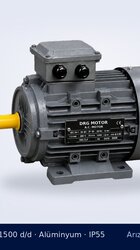
A cracked motor foot or frame is usually a sign of trouble with the base: if the feet are not in one plane, the chassis flexes or the bolts have worked loose, the frame is strained every time the motor runs. Unless flatness, rigidity and fixings are checked before the new motor goes onto the same base, the crack may reappear on the new motor too.
Soft foot check
If one of the four feet does not sit fully on the base, the frame is distorted when the bolt is tightened. This is called “soft foot”. To check, the motor is set in place and all bolts tightened, then each one is slackened in turn and any gap opening between foot and base is measured with a dial indicator or feeler gauge. A foot that lifts is supported with a shim. If there are old shims of different thicknesses, rusty or crushed, under the feet, it is right to replace them with new ones.
The base itself
- Flatness: The surfaces the motor feet sit on are checked with a straightedge and feeler gauge or a precision spirit level.
- Welds and sections: Look for cracks in chassis welds and for parts made of thin sheet that flex in operation.
- Concrete foundation: Cracking or voids around the anchor bolts, loss of grout between foundation and chassis.
- Slide-rail base: Bending of the tensioning screw and rails, the motor tilting sideways when the belt is tensioned.
Frame type and the base
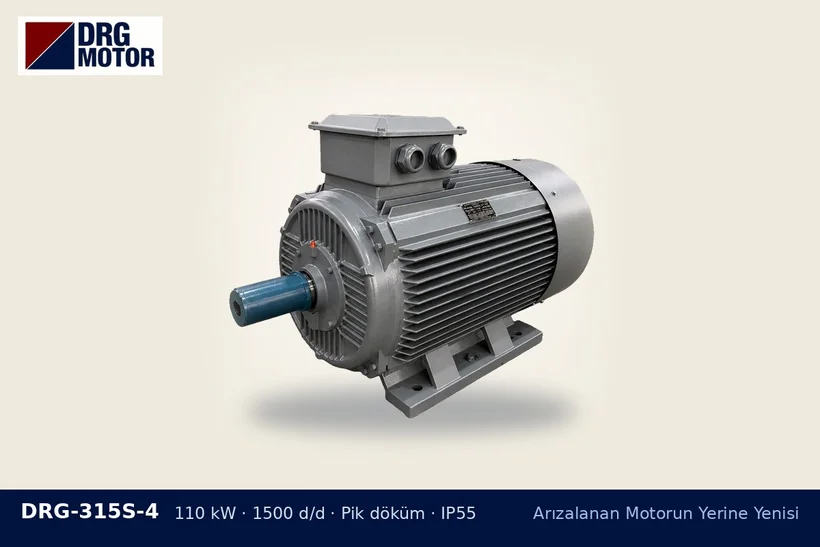
A cast iron frame is heavier than aluminium and damps vibration better; on heavily loaded machines with shock loads this difference matters. If a cast iron motor is to go onto a machine that ran with an aluminium frame, check whether the base can carry the extra weight and whether the bolt holes match the same IEC frame size.
Look for the source of vibration too
An unbalanced fan impeller, a worn coupling or a chassis running at resonance keeps straining the base. Once the base has been corrected, measuring and recording vibration at the first start gives a baseline for later checks. Remember that damage from faulty installation and impacts is not covered by the warranty.
For foot hole spacing and shaft height you can study the technical drawings, and see cast iron and aluminium options that suit your base in the shop.