 English
 Le français
 Türkçe

If a motor jammed and stopped, the first step is to uncouple it from the machine and find out which of the two will not turn. If the motor shaft turns freely but the machine cannot be turned by hand, the problem is in the machine; fitting a new motor will not clear the jam, it will only strain the new motor.
Testing uncoupled
After the power has been isolated and locked off, the belt is removed or the coupling separated. Turn the motor shaft by hand: if it runs smoothly and quietly, the bearings are most likely sound. Then turn the machine shaft by hand or with a suitable lever. Any stiffness, tight spot or noise felt here shows where the fault is.
Where to look on the machine
- Product build-up: Hardened material in the screw, elevator boot, crusher chamber or mixer bowl.
- Foreign object: A stone, bolt, piece of iron, or product wedged between the impeller or blades.
- Machine bearings: Collapsed or dry bearings supporting the machine shaft.
- Gearbox and gears: A gearbox that has run dry, broken a tooth or seized.
- Setting change: Roll, blade or screen gap narrowed.
- Cold start: Oil or product may have thickened in the cold and made the machine heavy.
Have the motor checked too
During the jam the motor may have drawn locked-rotor current for some time. If the protection tripped late, the winding has heated. If there is a burning smell, discolouration or an overheated frame, have qualified electrical staff test the motor's insulation even once the machine has been put right.
Is the motor too small, or was the machine overloaded?
If the machine jams again with normal product even after being cleaned and turning freely, the motor power may not be enough for the machine's starting requirement. That decision is made with current measurements and the machine maker's figure. Remember that overload-related failures are not covered by the warranty, and before increasing power ask whether the belt, coupling and machine shaft can withstand it.
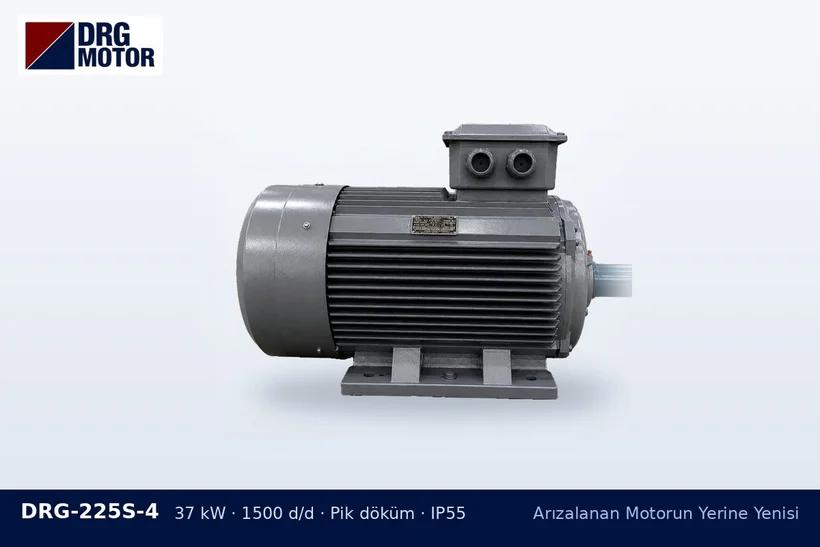
For heavy-starting machines see application pages such as raw material feeder machine motors, and once the requirement is clear, review the cast iron models in the shop.