 English
 Le français
 Türkçe

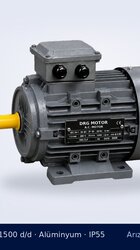
Overheating is prevented by correctly sizing the motor, providing adequate ventilation, carrying out regular maintenance and keeping operating conditions suitable. Overloading, low or unbalanced voltage, a blocked fan cover and insufficient cooling are the main causes.
Common causes of overheating
- Overload: when the motor runs above its rated current, winding losses rise with the square of the current.
- Voltage problems: low voltage increases current, and even a small imbalance between phases causes disproportionate heating in the windings. Loss of a phase is the most dangerous case.
- Poor cooling: standard enclosed motors are cooled by method IC411, meaning a shaft-mounted external fan blows air over the frame. Dust-covered fins, a clogged fan cover or a cramped installation interrupt that airflow.
- Frequent starts and stops: each start draws several times the rated current; starting more often than the duty type allows makes heat accumulate.
- Low-speed inverter operation: a shaft-mounted fan cools less as it slows down, so a separately driven (forced) fan should be considered for long periods at low speed.
Insulation class and thermal margin
Class F insulation means the winding system withstands up to 155 °C. In practice, running a motor with a class B temperature rise leaves a useful safety margin for the insulation. As a rule of thumb, every sustained 10 °C rise in winding temperature roughly halves insulation life.
Protective measures
A correctly set motor protection breaker or thermal overload relay, PTC thermistors embedded in the windings and a phase-failure relay safeguard the motor. DRG Motor's class F, IP55-protected motors offer high temperature resistance, and in critical applications thermal protection and a frequency inverter add further protection.
If one of your motors is running hot, ask for technical support on +90 (542) 666 11 11 (WhatsApp) or at info@drgmotor.com.