English
 Le français
 Türkçe




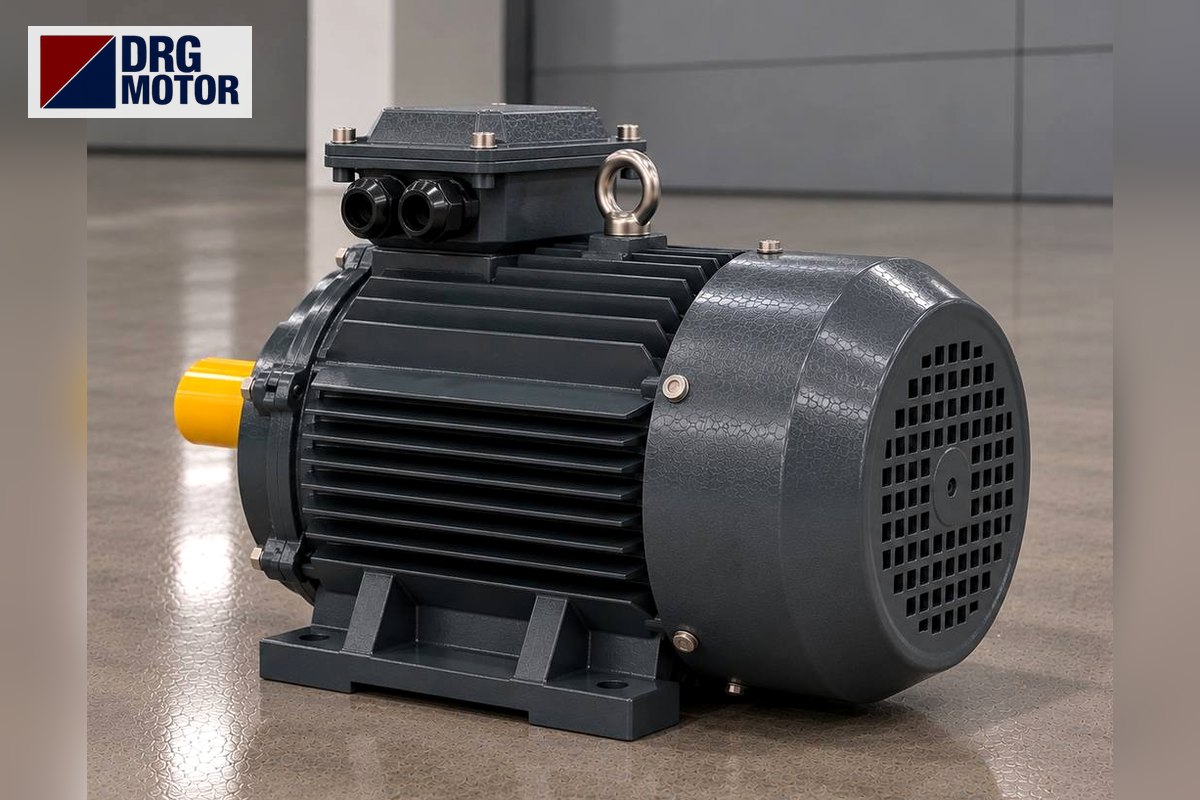

If your three-phase asynchronous motor runs the wrong way, the fix is simple: swapping any two of the three phases feeding the motor reverses the direction of rotation. There is no need to touch the third phase; interchanging two phases changes the direction of the rotating magnetic field, so the shaft turns the other way. This work must always be done with the supply isolated and by qualified electrical personnel.
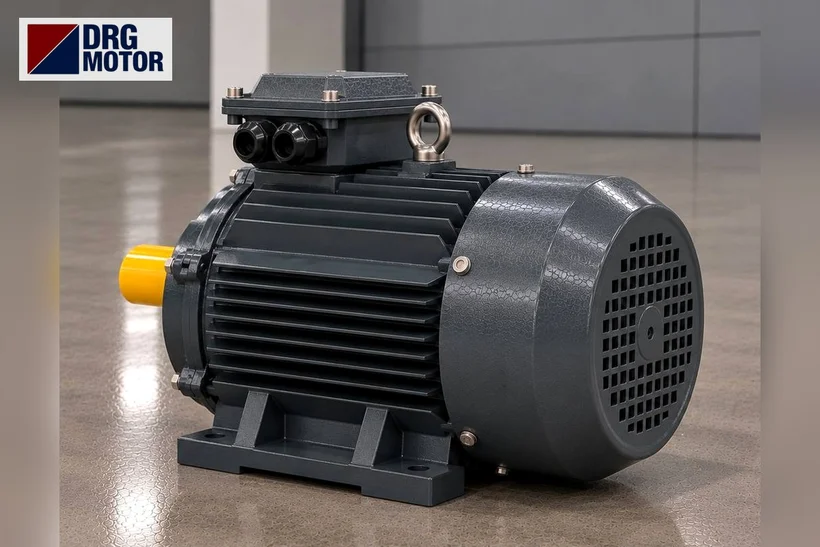
DRG Motor is a manufacturer, supplier and seller of electric motors. If you are looking for a new three-phase asynchronous motor, browse the online motor shop and the three-phase asynchronous electric motors category. This article is an informative guide to rotation direction; connection work belongs to qualified personnel.
Why is the three-phase motor running backwards?
The only thing that sets the rotation direction of a three-phase asynchronous motor is the order in which the three phases are connected to the windings. The L1-L2-L3 phases reaching the stator windings create a rotating magnetic field that chases itself through space. The direction this field turns is set by the sequence of the phases, and because the rotor follows the field, the shaft turns in that direction.
So "running backwards" is not really a fault but the result of a connection order. If two phases were swapped while pulling the panel supply, or a new motor was wired in a different sequence than the old one, the motor runs perfectly well but turns opposite to what is expected. The article on why an electric motor runs backwards completes the subject.
How to change the direction: swap two phases
The standard way to reverse direction is to interchange two of the three phases feeding the motor. For example, if the L1 and L2 leads at the terminal are swapped, the rotating field reverses and the shaft runs the opposite way. It does not matter which pair you choose; swapping any of L1-L2, L2-L3 or L1-L3 gives the same result. Shifting all three phases together does not change direction, because the phase sequence is preserved.
This change can be made at one of two points: at the motor terminal box, or at the panel/contactor output. Whichever is chosen, the work should follow this framework:
- Isolate the supply at the panel and confirm the absence of voltage with a suitable instrument.
- Have the phase-lead swap done only by qualified electrical personnel; do not move the terminal bridges (Y/Δ) — change only the sequence of the supply phases.
- Observe the direction with a brief no-load run; if it is still wrong, check whether the same two phases were correctly connected, rather than choosing another pair.
If you need to run the motor both forward and reverse regularly, instead of swapping phases by hand each time you build a contactor-based forward-reverse control circuit. In this circuit two contactors cross the phases automatically, and electrical/mechanical interlocking prevents both from pulling in at once. For the general reversing logic, see the rotation direction change guide as well.
Click to see current electric motor prices and order nowSEE PRICES →
Phase swap must not be confused with the star/delta bridge
A common mistake is to move the star (Y) or delta (Δ) bridges in the terminal box when trying to change direction. The bridges set the motor's connection type and voltage; they have nothing to do with rotation direction. To change direction you do not touch the bridges — you only change the order of two of the three supply phases reaching the motor. Setting the bridge to the wrong position can leave the motor at the wrong voltage and damage it, so the bridge layout is kept according to the diagram on the motor nameplate.
Which DRG model: example 4-pole three-phase motors
If you are replacing a motor that runs backwards, what matters in the replacement is not its direction but its power, speed (pole number), shaft and mounting type, because the direction of any three-phase asynchronous motor can already be set by swapping two phases. The table below lists example DRG models from the common 1500 rpm (4-pole) class, with rated torque and rated current at 400 V. The voltage on all of them is 400/690 V (Δ/Y).
| Model | Speed | Torque | Rated current (400 V) |
|---|---|---|---|
| DRG-112M-4 (4.0 kW) | 1450 rpm | 26.3 Nm | 7.95 A |
| DRG-132S-4 (5.5 kW) | 1460 rpm | 36.0 Nm | 10.7 A |
| DRG-132M-4 (7.5 kW) | 1460 rpm | 49.1 Nm | 14.3 A |
| DRG-160M-4 (11.0 kW) | 1465 rpm | 71.7 Nm | 20.4 A |
The torque values can also be verified approximately with T = 9550 · P / n. You can compare whether the current is normal for the application with the motor current chart. When replacing an existing motor, match not only the power but also the pole number, shaft diameter and mounting type.
Send a photo of your current motor nameplate and we will find the suitable DRG model together.Send on WhatsApp
Once you have chosen the right model, you can compare all power and speed options through the shop.
See three-phase asynchronous motor models and current prices suited to your direction needsSEE PRICES
Frequently asked questions
How is the rotation direction of a three-phase motor changed?
By swapping any two of the three phases feeding the motor. Interchanging two phases reverses the rotating field, so the shaft turns the other way. The work must be done by qualified personnel after the supply is isolated and the absence of voltage confirmed.
If I swap all three phases, does the direction reverse?
No. Shifting all three phases together does not change the phase sequence, so the rotation stays the same. To reverse direction only two phases are swapped; the third stays in place.
Should I move the star-delta bridge to change direction?
No. The Y/Δ bridges set the connection type and voltage, not the rotation direction. Moving the bridge can leave the motor at the wrong voltage; direction is changed only through the sequence of the supply phases.
What do I need if the motor must run forward and reverse continuously?
Instead of swapping phases each time, a two-contactor forward-reverse control circuit is built. It crosses the phases automatically and uses interlocking to stop both contactors pulling in at the same time.
Electric Motors Related to This Topic — Models and Current Prices
Suitability is not decided by power alone: compare the speed, voltage, mounting, shaft and fixing dimensions of your machine with the product data; if unsure, send us the nameplate of your current motor.
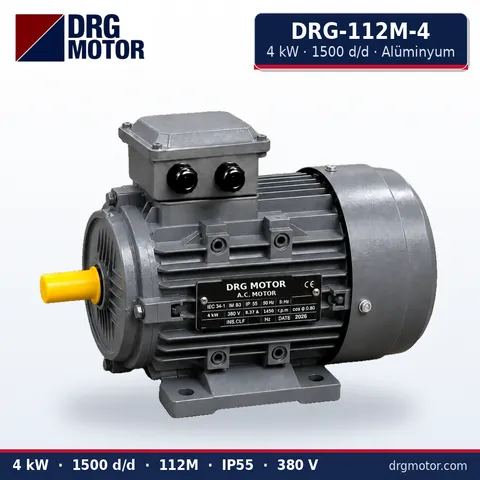
4 kW Three-Phase Motor 1500 rpm – DRG-112M-4 Aluminium
- 4 kW · 1500 rpm (4 poles)
- Aluminium frame · IEC 112M
- Shaft: 28 × 60 mm
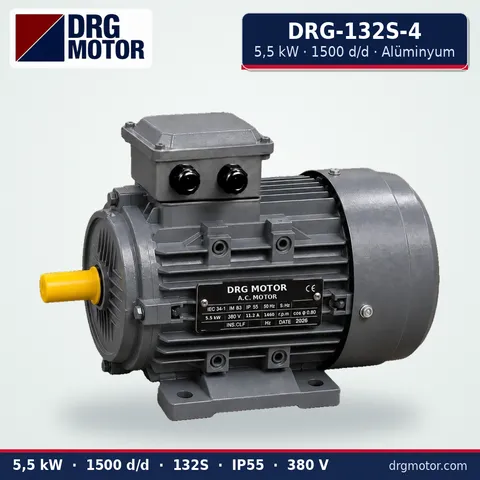
5.5 kW Three-Phase Motor 1500 rpm – DRG-132S-4 Aluminium
- 5.5 kW · 1500 rpm (4 poles)
- Aluminium frame · IEC 132S
- Shaft: 38 × 80 mm
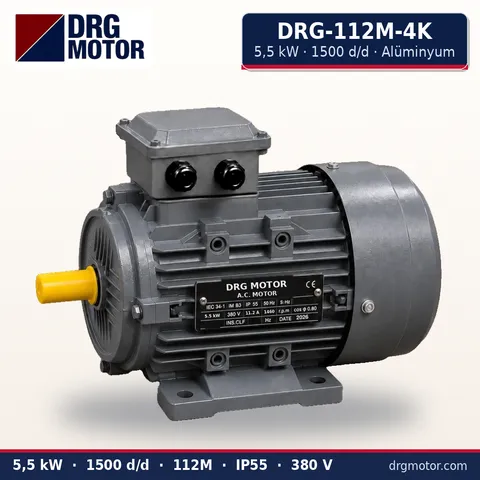
5.5 kW Compact Three-Phase Motor 1500 rpm – DRG-112M-4K Aluminium
- 5.5 kW · 1500 rpm (4 poles)
- Aluminium frame · IEC 112M
- Shaft: 28 × 60 mm
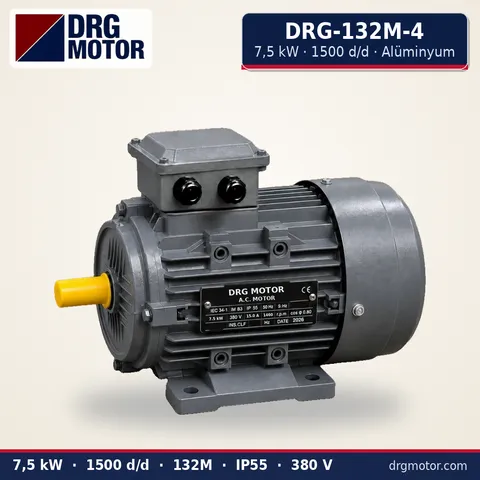
7.5 kW Three-Phase Motor 1500 rpm – DRG-132M-4 Aluminium
- 7.5 kW · 1500 rpm (4 poles)
- Aluminium frame · IEC 132M
- Shaft: 38 × 80 mm
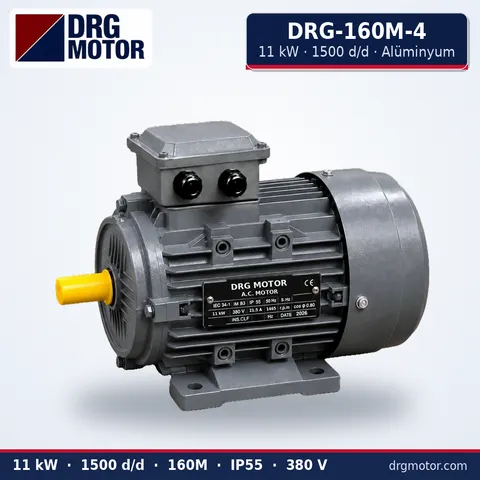
11 kW Three-Phase Motor 1500 rpm – DRG-160M-4 Aluminium
- 11 kW · 1500 rpm (4 poles)
- Aluminium frame · IEC 160M
- Shaft: 42 × 110 mm
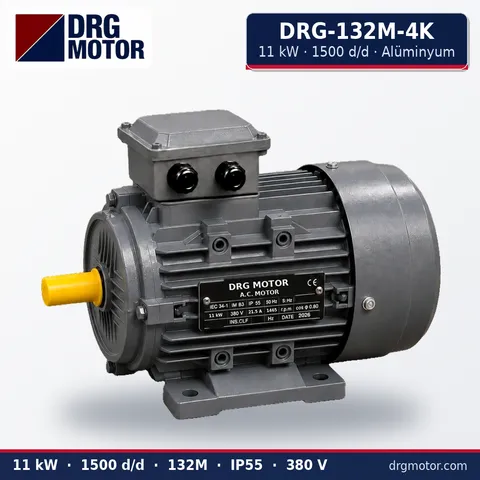
11 kW Compact Three-Phase Motor 1500 rpm – DRG-132M-4K Aluminium
- 11 kW · 1500 rpm (4 poles)
- Aluminium frame · IEC 132M
- Shaft: 38 × 80 mm