English
 Le français
 Türkçe




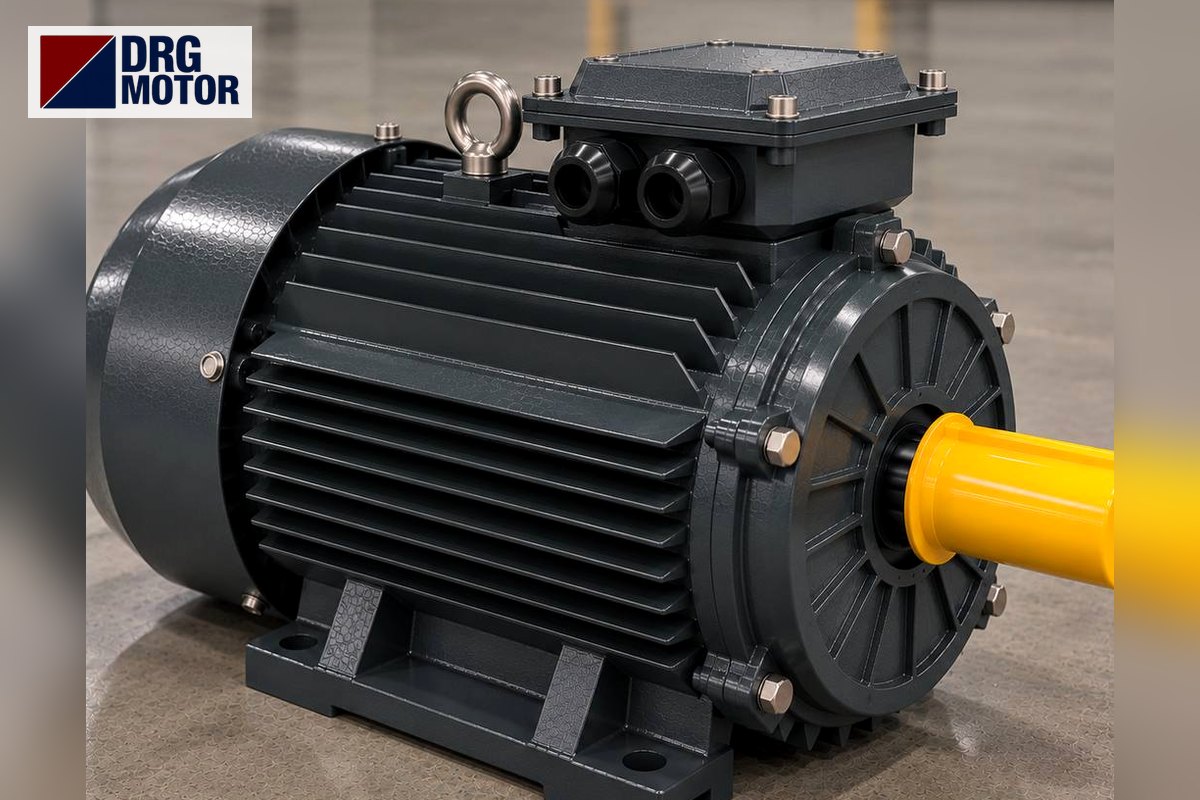

Knowing when to replace an electric motor is rarely about a single big failure; it usually shows up as a pile of small signs: the same fault coming back again and again, heavy damage, overheating that never clears, a growing maintenance burden, a capacity that no longer meets the job, or a power rating that was wrong from the start. This article looks at the "repair or replace" question without hype and explains what to check when you move to a new electric motor.
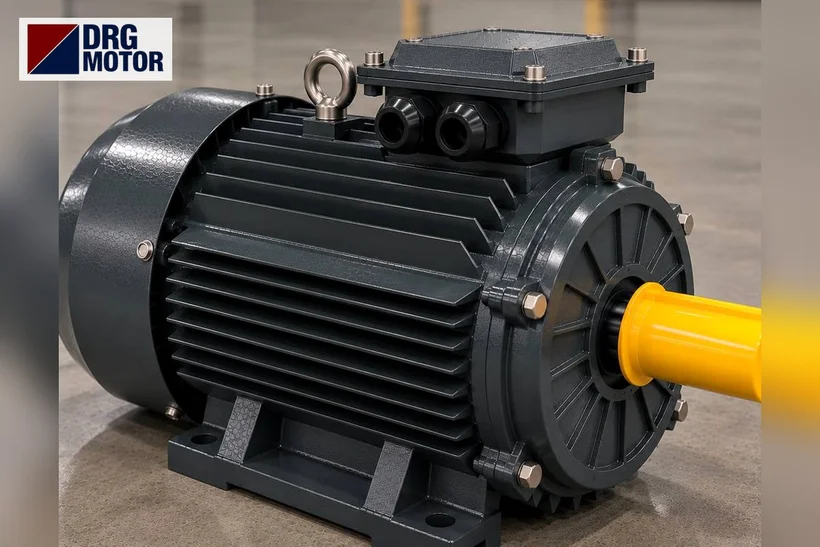
DRG Motor is a manufacturer, supplier and seller of electric motors. After reading the points below you can find the electric motor that best fits your need by power and speed in the online electric motor shop, and see the same models together in the three-phase asynchronous electric motors category.
First the question: repair or replace?
Not every fault means "replace it now". For a one-off, simple part problem, repair is often the reasonable path. But if the same electric motor keeps giving you the same trouble, if the damage has reached the main parts, or if the electric motor can no longer meet today's demand, replacement becomes a serious option. The healthiest approach is to decide by the signs, not by emotion.
Situations that point to replacement
None of the items below is a verdict on its own; but when several appear together, it may be time to consider replacing your electric motor.
- Recurring faults: If the same fault returns at short intervals, there is structural wear underneath.
- Heavy damage: A burnt winding, a cracked housing or foot, serious damage at the shaft or bearing seat.
- Persistent overheating: The electric motor keeps running too hot while load and environment are normal.
- High maintenance burden: Keeping the electric motor going needs more and more frequent intervention.
- Insufficient capacity: Your work has grown and the current electric motor no longer turns the load with ease.
- Wrong power choice: You are struggling with an electric motor that was sized too small or too large from the start.
Recurring faults and heavy damage
An electric motor may need a small intervention once or twice in its life, and that is normal. What deserves attention is the same area failing over and over. If a winding problem appears for the second time in a short period, or the bearing noise returns soon after every repair, the electric motor has crossed its wear threshold. When the winding is badly burnt, the housing is cracked or the shaft seat is damaged, repair is both troublesome and uncertain in outcome; in such cases a new electric motor is the calmer solution.
Click to see current electric motor prices and order nowSEE PRICES →
Persistent overheating and maintenance burden
Some warmth in an electric motor is normal. The problem is heat that is too high to touch even when load and ambient conditions are normal, and that does not clear despite repeated intervention. Behind it may lie poor cooling, load imbalance or internal wear. The cause should be investigated first; measurements and checks must be done by qualified electrical personnel, after the power is switched off and the de-energised state is confirmed. If the cause cannot be removed, the electric motor keeps returning to the same picture, and the maintenance burden keeps rising, replacement becomes the path with fewer headaches overall.
Insufficient capacity and wrong power
Sometimes there is no fault at all in the electric motor; the problem is that the job has outgrown it. If your output has risen, the line has sped up or the load has become heavier, the existing electric motor is constantly strained, heats up and trips its protection. This is not a fault but a capacity issue, and the right answer is a new electric motor at the power the job needs. A wrong power choice from the start is a similar chronic source of trouble: an undersized electric motor cannot turn the load, while an oversized one wastes space and energy. To settle on the right power, just describe your application; our electric motor calculator also gives a first idea.
Repair or new? A short road map
The table below helps you place the decision in a calm, claim-free frame.
| Situation | What it means | Leaning |
|---|---|---|
| First time, simple part | A one-off minor issue | Repair may be reasonable |
| Recurring fault | The same problem keeps coming back | Consider replacement |
| Heavy damage | Winding, housing or shaft harmed | Mostly replacement |
| Persistent overheating | Cause cannot be removed | Diagnose first, else replace |
| Capacity falls short | Work grew, power insufficient | New electric motor at right power |
What to check when moving to a new electric motor
Once you have decided to replace, a few headings make the choice easy: power (kW), speed (number of poles), mounting type (B3/B5), housing material (aluminium or cast iron), voltage, and shaft/flange dimensions. The safest method is to read the old electric motor's nameplate before removing it and note its dimensions; that makes fitting the new electric motor to the machine far easier. Below are a few commonly used 4-pole (about 1500 rpm) DRG models as examples:
| Model | Power | Speed | Torque |
|---|---|---|---|
| DRG-112M-4 | 4 kW | 1500 rpm | 26.3 Nm |
| DRG-132S-4 | 5.5 kW | 1500 rpm | 36.0 Nm |
| DRG-132M-4 | 7.5 kW | 1500 rpm | 49.1 Nm |
| DRG-160M-4 | 11 kW | 1500 rpm | 71.7 Nm |
If you need a higher or lower speed, 2-pole (about 3000 rpm) and 6-pole (about 1000 rpm) options also exist. If you are not sure which model suits you, let us clarify your electric motor choice together.
Send a photo of your current motor nameplate and we will find the suitable DRG model together.Send on WhatsApp
Click to pick the electric motor that best fits your need by power and speedSEE PRICES
Frequently asked questions
Is repairing the old electric motor always the smarter move?
No. For a one-off small issue repair may be reasonable; but with recurring faults, heavy damage or insufficient capacity a new electric motor is often the calmer solution that troubles you less in the long run. The decision is made case by case.
What is the most critical piece of information when choosing a new electric motor?
Power (kW) and speed (number of poles) come first; then mounting type, housing material, voltage and shaft/flange size. Starting by reading these from the old electric motor's nameplate is the most solid way.
Will a new electric motor of the same power fit in place of the old one?
Even with the same power, if the mounting type, shaft diameter or flange size differ, the fit can cause trouble. So compare not just the power but the dimensions too. To be sure, send us photos of the nameplate and the dimensions and we will identify the suitable model together.
Who should make the replacement decision?
Fault diagnosis, measurement and assessment are the job of qualified electrical personnel. A check carried out after the power is switched off and the de-energised state is confirmed makes it easier to decide correctly between repair and replacement.
In short: the time to replace an electric motor comes when the signs pile up. When recurring faults, heavy damage, persistent overheating, rising maintenance and insufficient capacity appear together, choosing the new electric motor that best fits your need is the most comfortable solution.
Electric Motors Related to This Topic — Models and Current Prices
Suitability is not decided by power alone: compare the speed, voltage, mounting, shaft and fixing dimensions of your machine with the product data; if unsure, send us the nameplate of your current motor.

4 kW Three-Phase Motor 1500 rpm – DRG-112M-4 Aluminium
- 4 kW · 1500 rpm (4 poles)
- Aluminium frame · IEC 112M
- Shaft: 28 × 60 mm
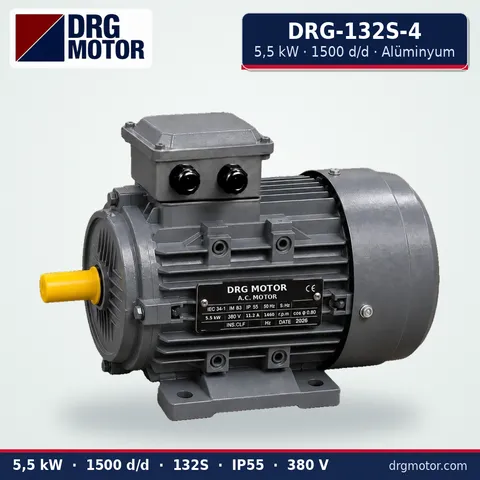
5.5 kW Three-Phase Motor 1500 rpm – DRG-132S-4 Aluminium
- 5.5 kW · 1500 rpm (4 poles)
- Aluminium frame · IEC 132S
- Shaft: 38 × 80 mm
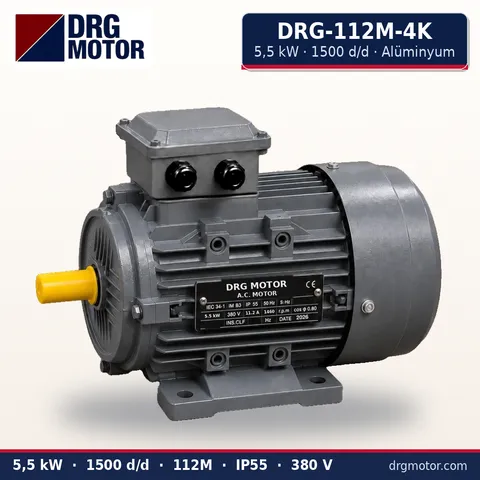
5.5 kW Compact Three-Phase Motor 1500 rpm – DRG-112M-4K Aluminium
- 5.5 kW · 1500 rpm (4 poles)
- Aluminium frame · IEC 112M
- Shaft: 28 × 60 mm
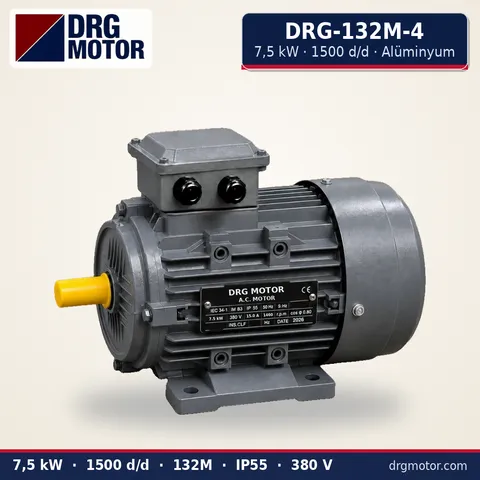
7.5 kW Three-Phase Motor 1500 rpm – DRG-132M-4 Aluminium
- 7.5 kW · 1500 rpm (4 poles)
- Aluminium frame · IEC 132M
- Shaft: 38 × 80 mm
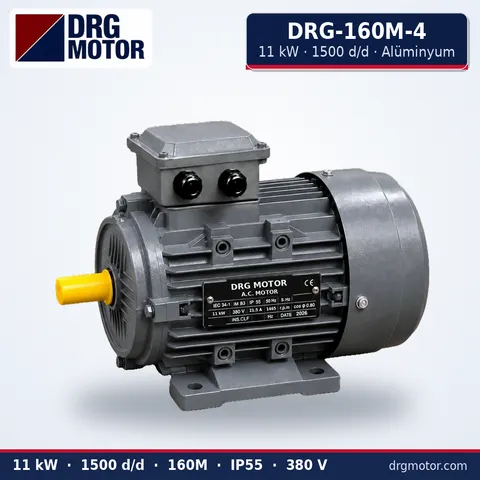
11 kW Three-Phase Motor 1500 rpm – DRG-160M-4 Aluminium
- 11 kW · 1500 rpm (4 poles)
- Aluminium frame · IEC 160M
- Shaft: 42 × 110 mm
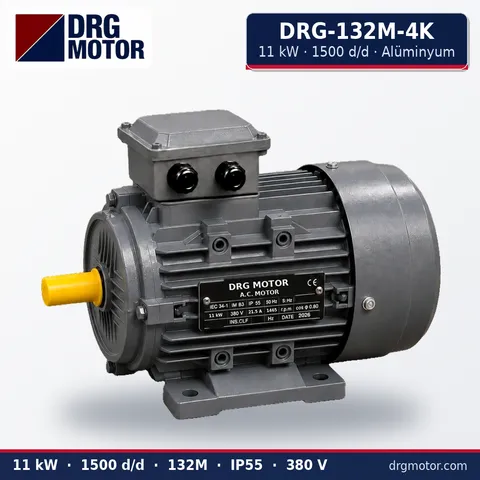
11 kW Compact Three-Phase Motor 1500 rpm – DRG-132M-4K Aluminium
- 11 kW · 1500 rpm (4 poles)
- Aluminium frame · IEC 132M
- Shaft: 38 × 80 mm