English
 Le français
 Türkçe




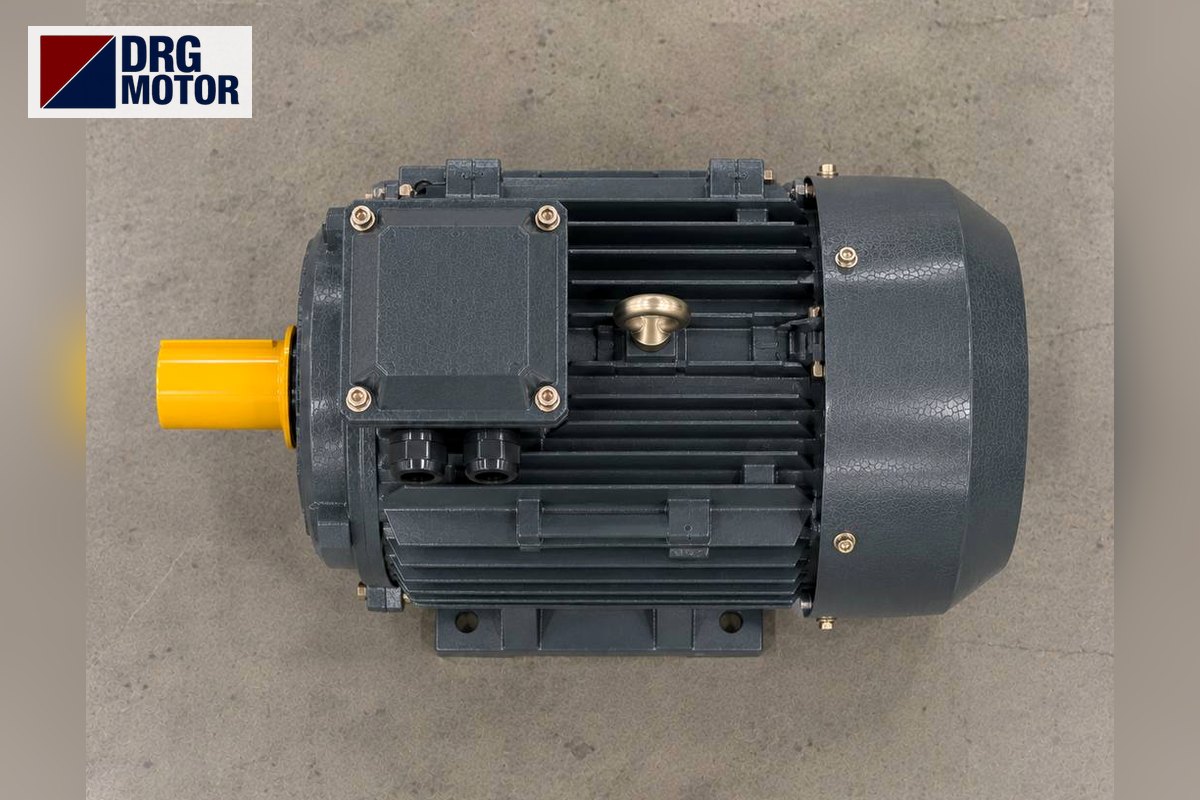

The single most important rule when transporting an electric motor is this: always lift it by the lifting eye (lifting lug) on its frame, never by the shaft, the terminal box or the fan cover, protect it from impact, and secure it well during transport. Do this and the motor arrives sound, unscratched and in true. Below we explain transport and lifting step by step, in plain language.
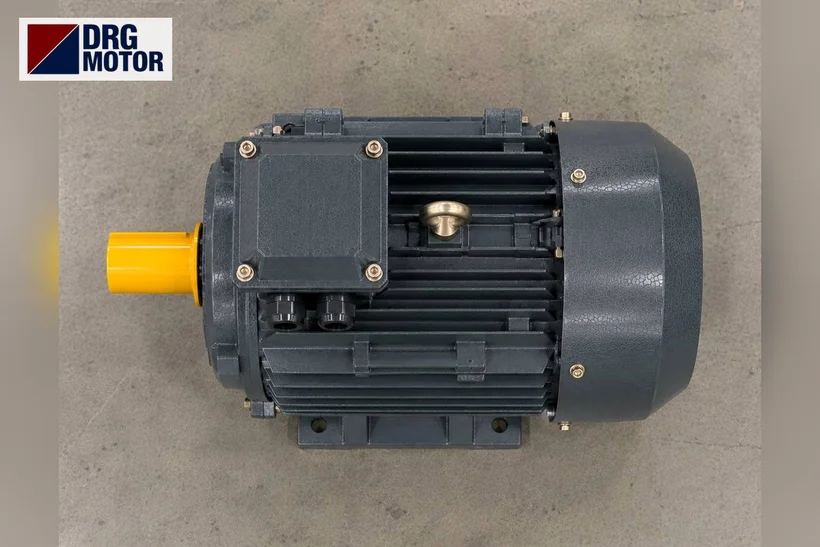
DRG Motor is a manufacturer, supplier and seller of electric motors. You can pick the right model by power and speed in the online electric motor shop and see the same range together in the three-phase asynchronous electric motors category. An electric motor is heavier than it looks and its weight is unevenly spread, so the right method, not haste, is what pays off.
Why does an electric motor need careful handling?
Although an electric motor looks like a solid metal block from the outside, it holds delicate parts inside: bearings, the shaft, the windings and the terminal connections. A hard knock, a drop or lifting from the wrong point during transport can mark a bearing, bend the shaft, crack the fan cover or damage the terminal box. Most of this damage is not visible at once; it shows up as vibration, noise or early failure once the motor runs. In short, preventing transport damage comes down to holding the motor correctly from unboxing to installation.
Always lift by the lifting eye
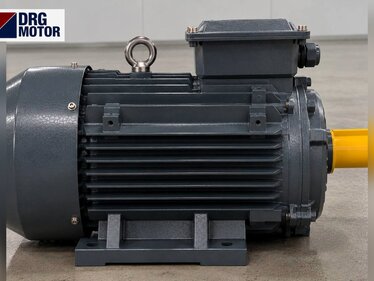
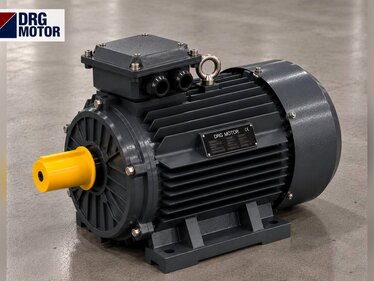
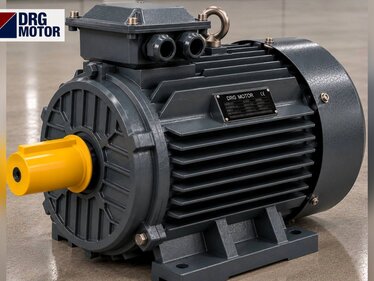
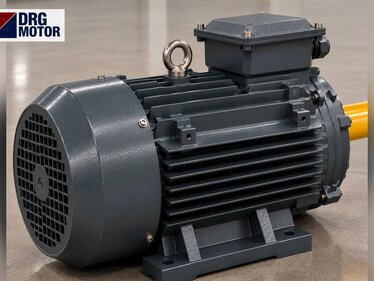
Most electric motors have one or two lifting eyes on the frame, placed near the centre of gravity. When lifting, always hook the sling, hook or crane onto this eye. It is designed to carry the motor's own weight safely.
- Check that the eye is fully seated in the frame and not loose.
- Keep the sling close to vertical; a shallow angle puts side load on the eye.
- The lifting eye is only for the motor itself; it is not for lifting an attached machine, gearbox or coupling with it.
Do not lift by the shaft, terminal box or fan
The most common and most costly mistake is lifting the motor from the wrong place. Do not lift by:
- The shaft: lifting by the shaft harms the bearings and the shaft seat and can bend the shaft. This surface, where a coupling or pulley fits, must always be protected.
- The terminal box: the thin sheet-metal cover is not made for carrying; under load it bends, the seal leaks and the connections inside loosen.
- The fan cover: the rear plastic or metal fan cover cracks easily; never lift the motor by it.
In short: your hold point should be the lifting eye on the frame, not the delicate parts that stick out.
Click to see current electric motor prices and order nowSEE PRICES →
Protect against impact, moisture and dust
When moving an electric motor, do not drop it onto a hard floor, do not let it slide in the vehicle bed and do not leave it exposed to rain. Moisture is the most insidious enemy of winding insulation and bearings, so open the packaging as late as possible. Leave the protective sleeve on the shaft end and the plugs in the terminal box in place until installation. The table below shows the frame size and shaft diameter of some frequently moved DRG models; the larger the shaft, the heavier the motor and the more the lifting method matters.
| Model | Power | Frame | Shaft diameter |
|---|---|---|---|
| DRG-112M-4 | 4 kW | 112M | 28 mm |
| DRG-132S-4 | 5.5 kW | 132S | 38 mm |
| DRG-132M-4 | 7.5 kW | 132M | 38 mm |
| DRG-160M-4 | 11 kW | 160M | 42 mm |
Shaft and frame dimensions also drive ordering and installation; for detail see our article on shaft diameter, key and coupling standards.
Crane, forklift and sling for a heavy electric motor
A small-frame electric motor can be carried by two people, but as the frame grows, hand-carrying becomes both dangerous and prone to damage. The weight varies from model to model, so we give no kilograms here, but one thing is certain: if in doubt, use lifting equipment.
- Crane and sling: hook the sling to the lifting eye, raise the load slowly and stop it from swinging.
- Forklift: carry the motor on a sound pallet, push the forks fully under the pallet and secure the load.
- Hand carrying: only for small frames, lifting with the knees not the back, and with two people.
If you are unsure about the right power and frame size, tell us about your application and we will settle on the electric motor that best fits your need together.
Shaft lock and transport bracing
Some motors have a shaft lock (transport lock) to stop the rotor moving in its seat during transport. If fitted, remove this lock just before running the motor; do not turn the motor while it is in place. When moving by vehicle, strap the motor to its pallet or the bed, brace it against tipping and try to set the shaft crosswise to the direction of travel, so a sudden brake puts less shock on the shaft seat.
Final check before delivery and installation
When the motor arrives, do a quick visual check before installation: any dents in the packaging, scratches on the shaft, a bent terminal box, a cracked fan cover? Confirm that the nameplate matches your order too. To choose the right mounting type, our comparison of B3, B5, B14 and B35 mounting types will guide you. If you have any doubt from transport, photograph the motor and consult us before commissioning.
Which model to look at?
Ease of handling and installation also starts with choosing a frame size that suits the job. Below are popular 1500 rpm (4-pole) aluminium-housing DRG models; you can compare them all by power and speed in the online electric motor shop.
| Model | Power | Frame | Shaft diameter |
|---|---|---|---|
| DRG-112M-4 | 4 kW | 112M | 28 mm |
| DRG-132S-4 | 5.5 kW | 132S | 38 mm |
| DRG-132M-4 | 7.5 kW | 132M | 38 mm |
| DRG-160M-4 | 11 kW | 160M | 42 mm |
Pick the electric motor that fits your need; click to see current prices and orderSEE PRICES
Send a photo of your current motor nameplate and we will find the suitable DRG model together.Send on WhatsApp
Frequently asked questions
Why is lifting an electric motor by the shaft wrong?
The shaft is a delicate part that turns on the bearings. Hanging the whole weight from it loads the bearing and the shaft seat and can bend the shaft. This damage is hidden at first but shows up as vibration and early failure once the motor runs. The right way is always to use the lifting eye on the frame.
How do I carry a small motor with no lifting eye?
You can carry a small-frame electric motor with both hands, gripping it on the frame in a balanced way; avoid holding it by the shaft, the terminal box or the fan. If it feels heavy, do not force it alone; get a second person or use a pallet.
Is it harmful to carry the motor on its side or upside down?
Careful handling over short distances is usually fine, but always secure the motor against tipping and impact. For long transport it is safest to carry it upright with its feet on the floor and tied down; protect the shaft from knocks.
Can I run the motor straight after transport?
Check it visually first, remove the shaft lock if fitted, and if you suspect moisture or condensation, let the motor rest in a dry place. Electrical connection and first start must be done by a qualified electrician.
Electric Motors Related to This Topic — Models and Current Prices
Suitability is not decided by power alone: compare the speed, voltage, mounting, shaft and fixing dimensions of your machine with the product data; if unsure, send us the nameplate of your current motor.
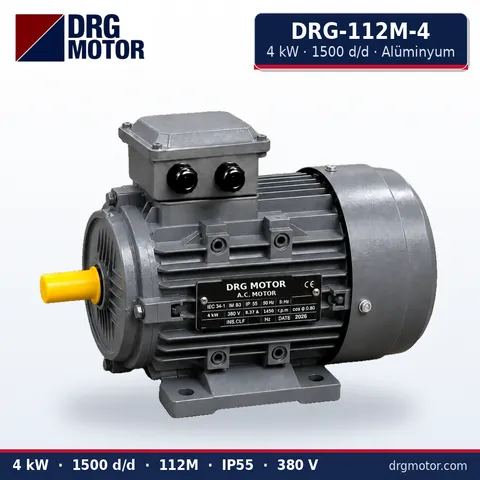
4 kW Three-Phase Motor 1500 rpm – DRG-112M-4 Aluminium
- 4 kW · 1500 rpm (4 poles)
- Aluminium frame · IEC 112M
- Shaft: 28 × 60 mm
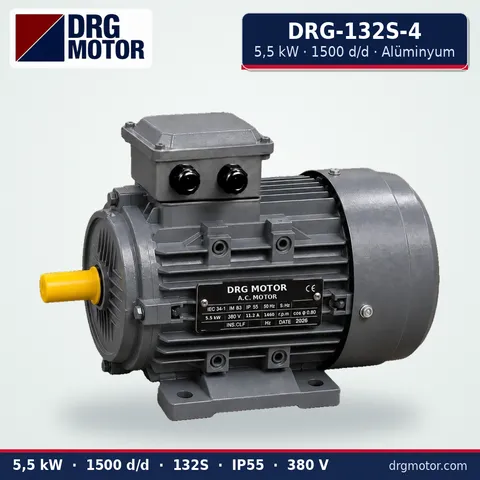
5.5 kW Three-Phase Motor 1500 rpm – DRG-132S-4 Aluminium
- 5.5 kW · 1500 rpm (4 poles)
- Aluminium frame · IEC 132S
- Shaft: 38 × 80 mm
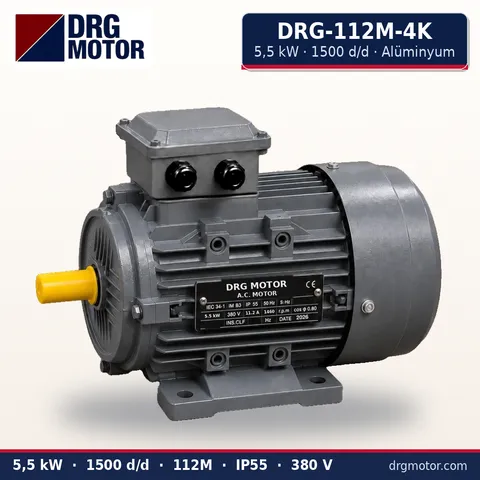
5.5 kW Compact Three-Phase Motor 1500 rpm – DRG-112M-4K Aluminium
- 5.5 kW · 1500 rpm (4 poles)
- Aluminium frame · IEC 112M
- Shaft: 28 × 60 mm
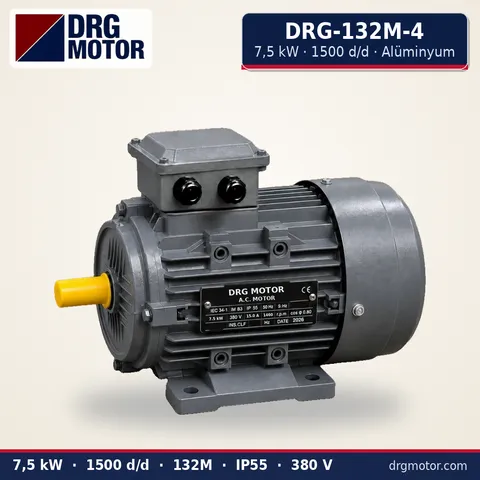
7.5 kW Three-Phase Motor 1500 rpm – DRG-132M-4 Aluminium
- 7.5 kW · 1500 rpm (4 poles)
- Aluminium frame · IEC 132M
- Shaft: 38 × 80 mm
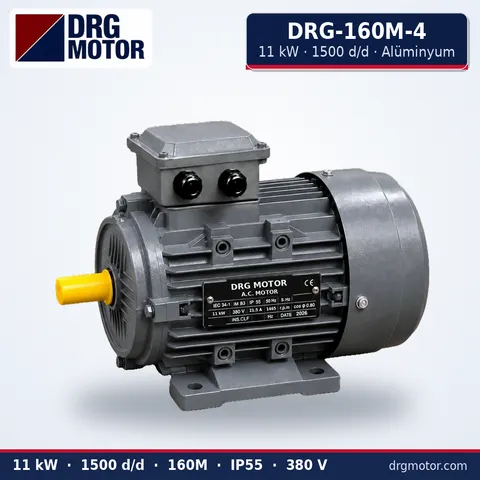
11 kW Three-Phase Motor 1500 rpm – DRG-160M-4 Aluminium
- 11 kW · 1500 rpm (4 poles)
- Aluminium frame · IEC 160M
- Shaft: 42 × 110 mm
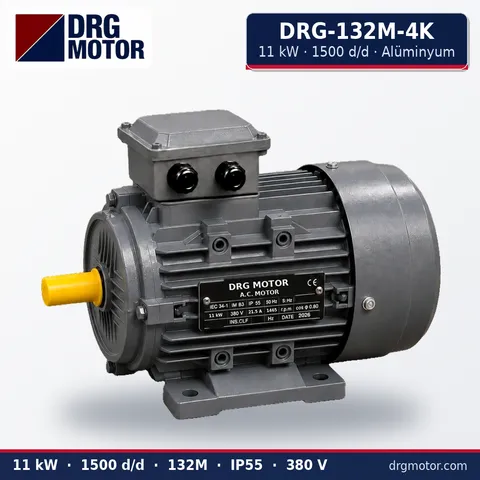
11 kW Compact Three-Phase Motor 1500 rpm – DRG-132M-4K Aluminium
- 11 kW · 1500 rpm (4 poles)
- Aluminium frame · IEC 132M
- Shaft: 38 × 80 mm