English
 Le français
 Türkçe




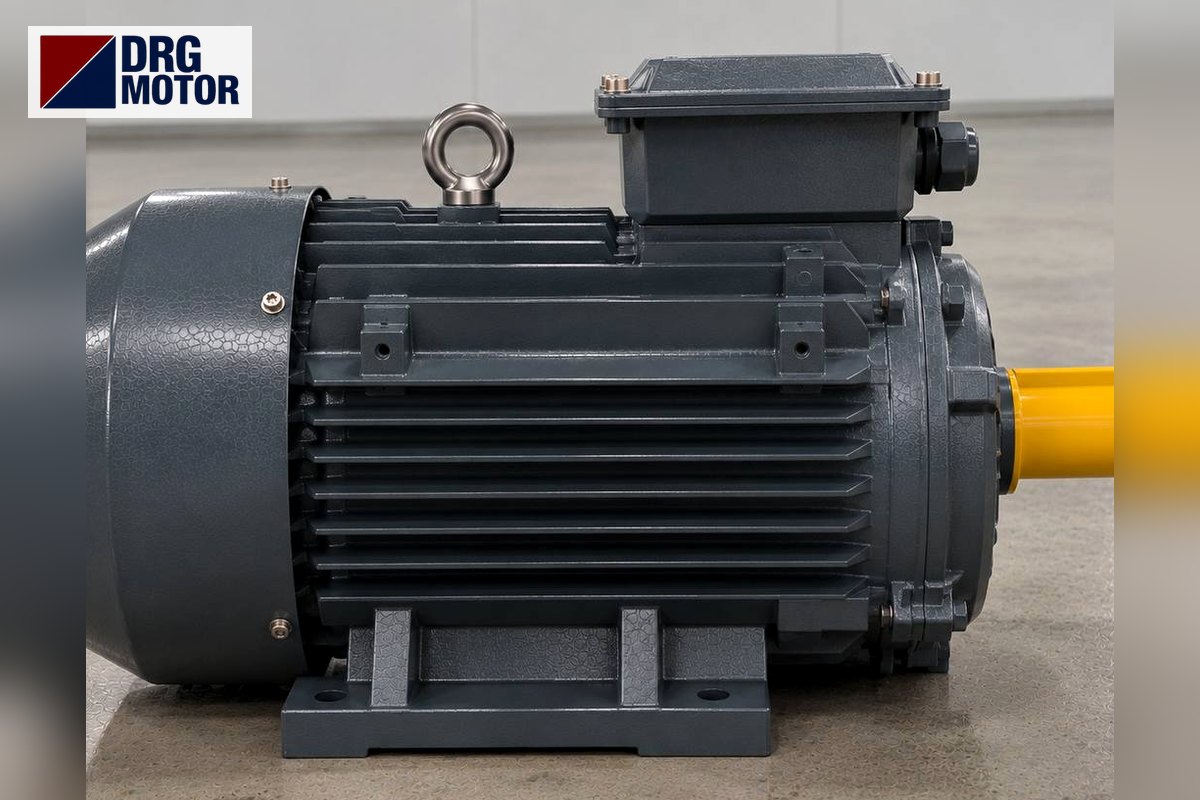

A running electric motor that suddenly stops usually has not one cause but several lookalike possibilities: the thermal overload or a protection relay tripping, the loss of a phase, overload, a loose connection, voltage fluctuation, a heat-triggered cut-off or a contactor fault. This article explains each possibility in plain language, from the symptom you see to the condition behind it.
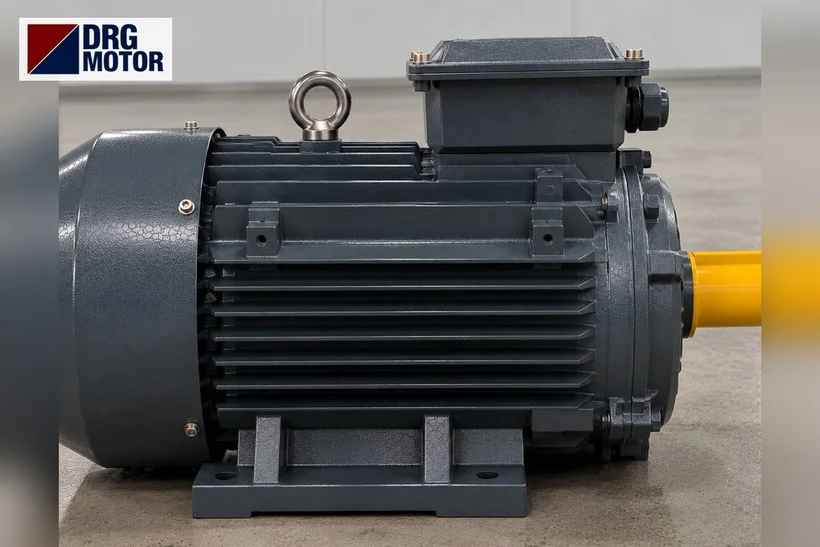
DRG Motor is a manufacturer, supplier and seller of electric motors. We prepared the sections below so you can locate the source of a sudden stop more easily; if you need a new unit, you can find the electric motor that best fits your need by power and speed in the online electric motor shop and see the models together in the three-phase asynchronous electric motors category.
First tell these apart: did it happen once, or does it repeat?
The first question is whether the stop was a one-off or a recurring event. An electric motor that stopped once because of a power cut, someone pressing a button or a brief fluctuation, and then runs normally when power returns, most likely met a passing event. But if the electric motor stops by itself at intervals, restarts after a while and stops again, that signals a lasting problem. Repeating stops mean one of the causes below is still present and must be investigated.
The thermal overload or a protection relay tripped
This is the most common cause. The thermal overload in the panel cuts the supply when the current the electric motor draws rises above the safe limit, to protect it; so in most cases the stop is not a fault but protective behaviour. If the electric motor stops abruptly and the overload appears tripped, the question should be "why did it draw too much current?" The load may have risen, the surroundings may have heated up, or a phase may have weakened. Resetting the overload by hand again and again is not a solution; you must first find why it tripped.
One of the phases is gone (phase loss)
A three-phase electric motor runs properly on three phases. When a fuse blows, a terminal works loose or a phase is lost on the supply side, the electric motor is left running "on two phases." It then either cannot start at all, or it strains while running, hums, heats up and soon stops. Phase loss is one of the leading causes of both sudden stops and winding burn-outs. For that reason a phase-failure relay in the panel protects the electric motor from this danger.
The electric motor was overloaded
A jam in the driven machine, seized bearings, an over-tensioned belt or simply heavier work all strain the electric motor. A strained electric motor draws more current, heats up and stops when its protection steps in. Sometimes the trouble is not in the electric motor but in the machine it drives. Choosing a motor that was undersized from the start produces the same picture. To compare the current it draws against the nameplate value, our motor current chart and electric motor calculator give a useful idea.
Click to see current electric motor prices and order nowSEE PRICES →
Loose connections, contactor and panel-related cut-offs
Sometimes the electric motor itself is perfectly sound and the trouble is on the path feeding it. A loose screw in the terminal box, a connection lug oxidised over time or a tired contactor creates a momentary loss of contact with vibration and stops the electric motor in an instant. When a contactor coil weakens or its contacts burn, the electric motor also stops and restarts erratically. Such faults usually show up as "sometimes it stops, sometimes it runs" — the trace of a loose contact.
Voltage fluctuation and heat-triggered cut-off
When the supply voltage drops or swings sharply, the electric motor cannot produce proper torque; it strains, its current rises and its protection stops it. A very long cable, a weak feed line or many loads on the same line at once make that fluctuation worse. Add poor cooling and the electric motor heats up faster. When the fan cover is clogged with dust, the surroundings are stuffy or the electric motor is boxed into a tight enclosure, heat builds up and the heat-sensitive protection cuts the supply. That stop, too, is really a warning.
Symptom → likely cause
The small table below matches the symptom you see with likely causes. These are not a firm diagnosis but a road map showing where to look; measurement and checking must be done by qualified electrical personnel.
| Symptom | Likely cause |
|---|---|
| Stopped while running, overload tripped | Overload, a weak phase or heating |
| Hummed, strained, then stopped | Phase loss (left on two phases) |
| Sometimes runs, sometimes stops | Loose connection or contactor fault |
| Heated up, smell, then stopped | Poor cooling, overload or frequent stops |
Which DRG electric motor for which power?
If the source of the stopping turns out to be an aged electric motor or one whose power no longer suits the job, choosing the right power and speed class is the soundest step. Below are a few 4-pole DRG electric motors (about 1500 rpm) with their power and nominal current at 400 V. The model codes go straight to the product page.
| Model | Power | Speed class | Current (400 V) |
|---|---|---|---|
| DRG-112M-4 | 4 kW | 1500 rpm | 7.95 A |
| DRG-132S-4 | 5.5 kW | 1500 rpm | 10.7 A |
| DRG-132M-4 | 7.5 kW | 1500 rpm | 14.3 A |
| DRG-160M-4 | 11 kW | 1500 rpm | 20.4 A |
You can review every power and speed option in the online electric motor shop.
If you have decided to renew your worn electric motor, click to see current prices and place your orderSEE PRICES
Safety: when and whom to ask for help
Before checking an electric motor that suddenly stopped, or its panel, switch off the supply and confirm it is dead; measurement inside the panel, connections and protection settings must be handled by qualified electrical personnel. Raising protection values off the top of your head, or resetting the overload by hand over and over, can turn a small warning into a big fault. If the electric motor stops often, do not treat it as a passing hitch; a repeating stop is the sign of an unsolved, lasting problem.
Frequently asked questions
Can I just reset the overload and run it again when the electric motor stops?
You can reset and try once, but if it stops again straight away, do not insist. The overload trips for a reason, and resetting it repeatedly while that reason (overload, phase, heating) persists wears the electric motor out. Find the cause first and leave the check to a qualified person.
The electric motor stops at the same time every day — is that normal?
No, a pattern like that is a clue. At certain hours a rising grid load may be dropping the voltage, or the load may increase as work intensifies. A regularly repeating stop points to a lasting cause that should be investigated.
Will buying a new electric motor solve the problem?
If the trouble is an aged or underpowered electric motor, a new unit of the right power and speed brings relief. But if the stop comes from a phase, the panel or the load, that must be fixed first; otherwise the new electric motor meets the same picture. To be sure, share your current setup with us.
Send a photo of your current motor nameplate and we will find the suitable DRG model together.Send on WhatsApp
Electric Motors Related to This Topic — Models and Current Prices
Suitability is not decided by power alone: compare the speed, voltage, mounting, shaft and fixing dimensions of your machine with the product data; if unsure, send us the nameplate of your current motor.
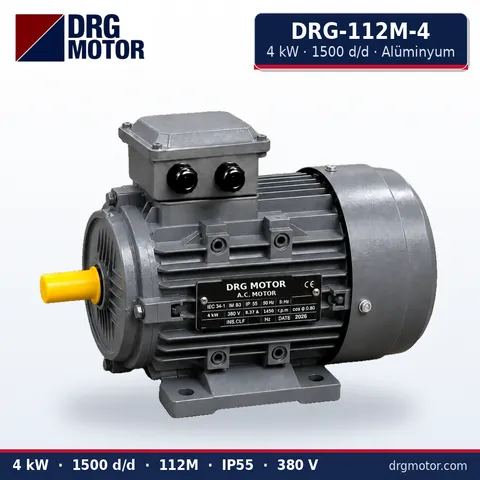
4 kW Three-Phase Motor 1500 rpm – DRG-112M-4 Aluminium
- 4 kW · 1500 rpm (4 poles)
- Aluminium frame · IEC 112M
- Shaft: 28 × 60 mm
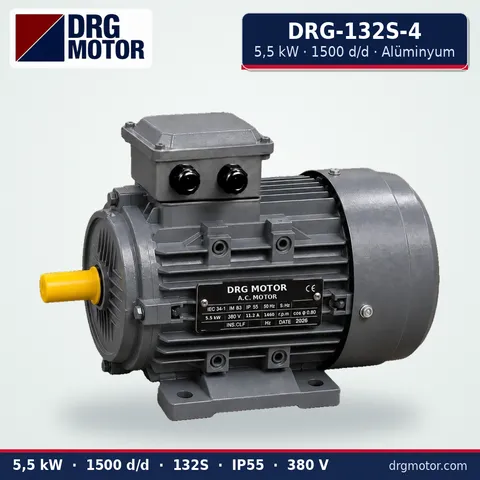
5.5 kW Three-Phase Motor 1500 rpm – DRG-132S-4 Aluminium
- 5.5 kW · 1500 rpm (4 poles)
- Aluminium frame · IEC 132S
- Shaft: 38 × 80 mm
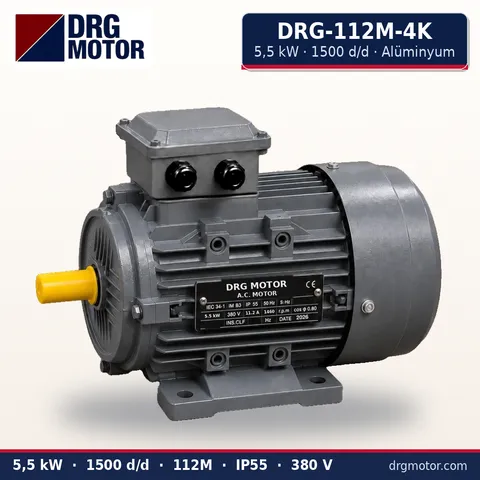
5.5 kW Compact Three-Phase Motor 1500 rpm – DRG-112M-4K Aluminium
- 5.5 kW · 1500 rpm (4 poles)
- Aluminium frame · IEC 112M
- Shaft: 28 × 60 mm
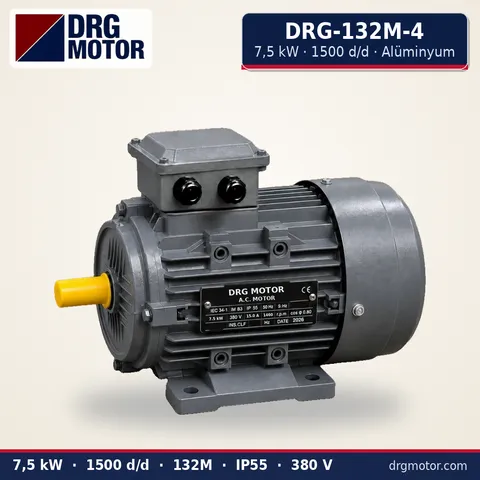
7.5 kW Three-Phase Motor 1500 rpm – DRG-132M-4 Aluminium
- 7.5 kW · 1500 rpm (4 poles)
- Aluminium frame · IEC 132M
- Shaft: 38 × 80 mm
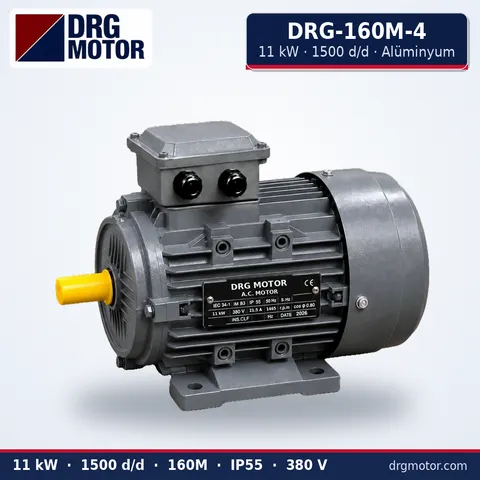
11 kW Three-Phase Motor 1500 rpm – DRG-160M-4 Aluminium
- 11 kW · 1500 rpm (4 poles)
- Aluminium frame · IEC 160M
- Shaft: 42 × 110 mm
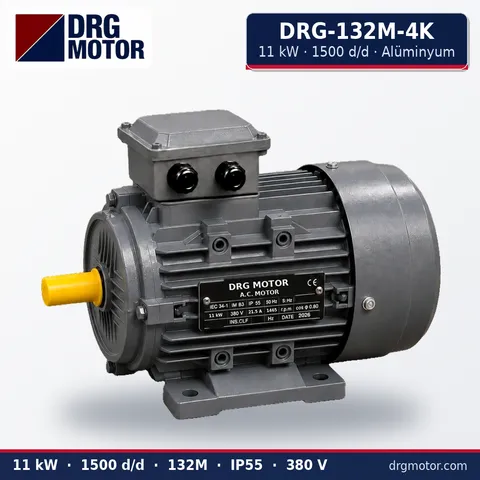
11 kW Compact Three-Phase Motor 1500 rpm – DRG-132M-4K Aluminium
- 11 kW · 1500 rpm (4 poles)
- Aluminium frame · IEC 132M
- Shaft: 38 × 80 mm