English
 Le français
 Türkçe




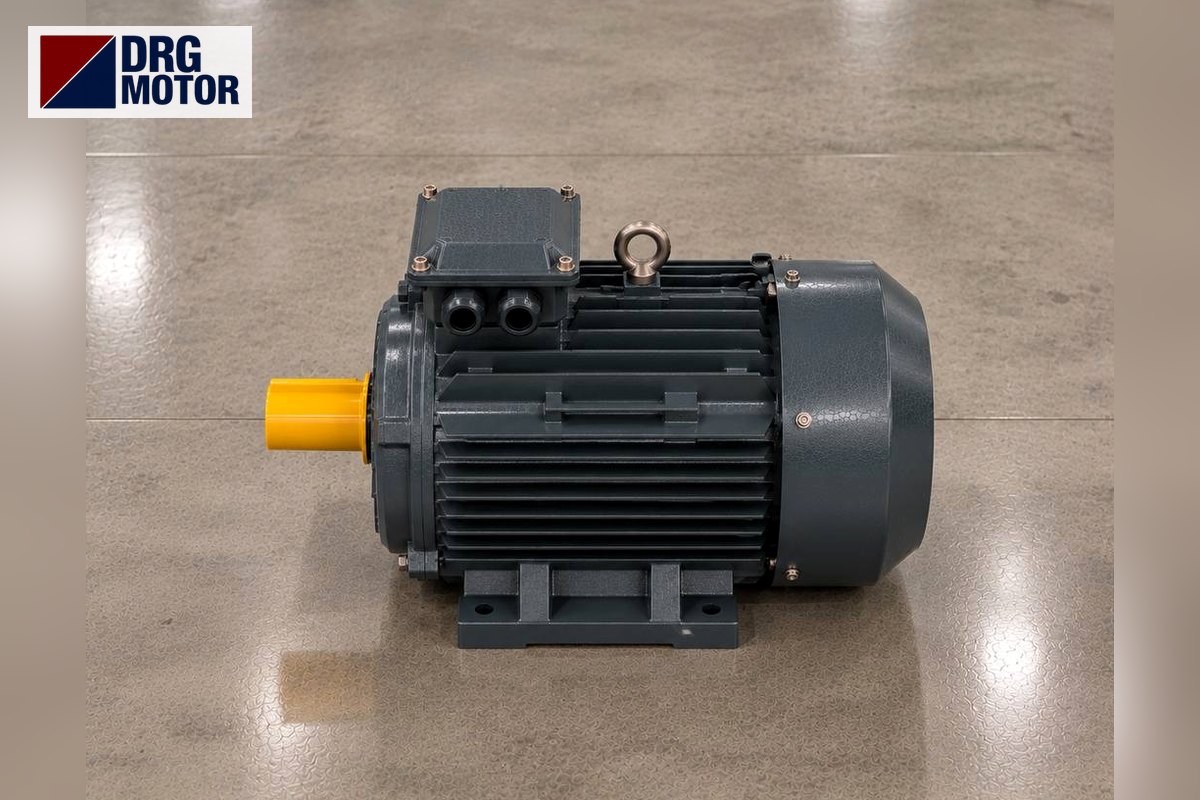

A 230/400 V rated electric motor is connected in star (Y) on a 400 V three-phase supply and in delta (Δ) on a 230 V supply. A motor labelled 400/690 V runs in delta (Δ) on a 400 V supply. The only rule that decides the connection is comparing the two voltages on the nameplate with the supply voltage.
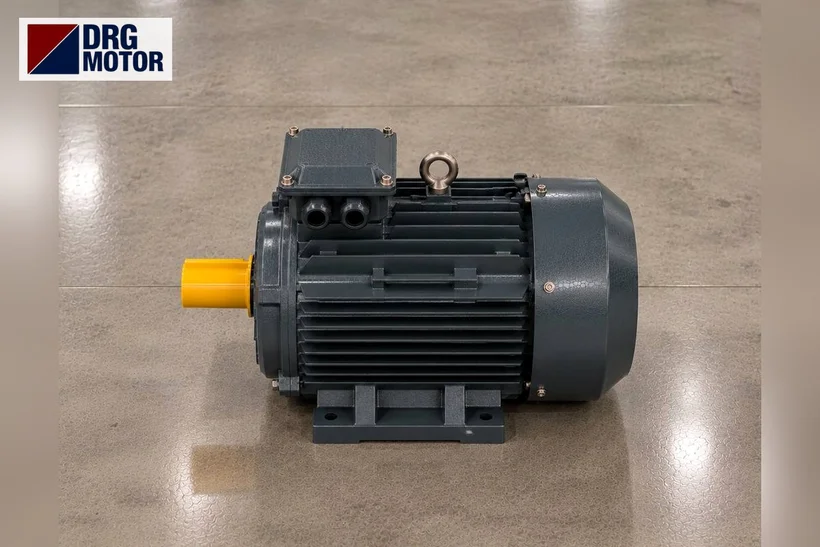
DRG Motor is a manufacturer, supplier and seller of electric motors. You can browse three-phase asynchronous models suited to your supply voltage in the online motor shop, and see the same motors grouped in the three-phase asynchronous electric motors category. This article explains how to choose the connection; the physical wiring must always be done by a qualified electrician.
Quick decision: when star, when delta?
The choice does not depend on what the motor drives, but on its nameplate voltage and on the voltage of the supply. On most grids the phase-to-phase voltage is 400 V (formerly stated as 380 V), so 400 V supply is the most common case. In short:
- 230/400 V motor + 400 V supply → Star (Y).
- 230/400 V motor + 230 V supply → Delta (Δ).
- 400/690 V motor + 400 V supply → Delta (Δ).
- 400/690 V motor + 690 V supply → Star (Y).
You can read where this rule comes from, and what the terminal-box links mean, in what is a star-delta connection.
What does 230/400 V on the nameplate mean?
The plate usually shows two voltages with Δ/Y symbols next to them. The idea is simple: both values are the phase voltage that the same winding sees in two different connections. The lower value belongs to the delta (Δ) connection, the higher value to the star (Y) connection.
The reason is that in a star connection each winding sees 1/√3 (about 58%) of the line voltage. On a 400 V supply a star-connected motor therefore has 400 ÷ √3 ≈ 230 V across each winding. In delta each winding sees the full phase-to-phase voltage. So if the winding is designed for 230 V, it must be in star on a 400 V supply and in delta on a 230 V supply. In both cases the voltage across the winding stays around 230 V.
Correct connection by supply voltage
The table below summarises which connection to choose at the intersection of nameplate voltage and supply voltage, and the approximate voltage per winding.
| Nameplate voltage | Supply | Connection | Winding voltage |
|---|---|---|---|
| 230/400 V | 400 V | Star (Y) | ≈ 230 V |
| 230/400 V | 230 V | Delta (Δ) | ≈ 230 V |
| 400/690 V | 400 V | Delta (Δ) | ≈ 400 V |
| 400/690 V | 690 V | Star (Y) | ≈ 400 V |
A wrong choice is costly: connecting a 230/400 V motor in delta on a 400 V supply puts 400 V across windings designed for 230 V, causing overcurrent and burnt windings. The opposite case leaves the motor under-excited, so it loses torque and cannot deliver its rated power. We cover supply voltage and tolerance in more detail in the 380 V three-phase motor buying guide.
Click to see current electric motor prices and order nowSEE PRICES →
Why is a 400/690 V motor connected in delta on 400 V?
In the DRG range, motors from roughly 4 kW upward are usually labelled 400/690 V, where the windings are designed for 400 V. On a 400 V supply each winding must see the full 400 V, so the correct connection is delta (Δ). Connecting the same motor in star would require a 690 V supply, which is a special industrial case.
That is why 400/690 V motors are almost always run in delta in the field, while 230/400 V motors run in star on the same 400 V supply. The only difference between the two groups is the voltage the winding is wound for; the decision is always read from the nameplate.
This decision is not the same as "star-delta starting"
What is described here is the motor's permanent running connection: the motor stays in a single connection (star or delta) throughout operation. "Star-delta starting" (a star-delta starter) is instead a starting method. There the motor is first started in star for a few seconds to limit inrush current, then automatically switched to delta and keeps running in delta.
Key distinction: star-delta starting can only be used when the motor's normal running connection on that supply is delta. So on a 400 V supply, the starting method suits motors labelled 400/690 V (which run in delta). It does not apply to a 230/400 V motor that already runs in star at 400 V. You can compare starting methods in star-delta vs soft starter. Not confusing the permanent connection with the starting method avoids one of the most common mistakes.
Nameplate voltages across DRG models
Below are sample 1500 rpm DRG models for 400 V supply and their nameplate voltages. Lower powers are 230/400 V (star on 400 V), higher powers are 400/690 V (delta on 400 V). Current values are at 400 V.
| Model | Power | Nameplate voltage | Connection at 400 V |
|---|---|---|---|
| DRG-100L1-4 | 2.2 kW | 230/400 V | Star (Y) |
| DRG-100L2-4 | 3 kW | 230/400 V | Star (Y) |
| DRG-132S-4 | 5.5 kW | 400/690 V | Delta (Δ) |
| DRG-112M-4K | 5.5 kW | 400/690 V | Delta (Δ) |
As you can see, on the same 400 V supply the 2.2–3 kW class runs in star and the 5.5 kW class in delta. Checking the nameplate voltage while choosing the model and speed prevents a connection error from the start. See how the terminal-box links are placed in motor terminal star-delta connection.
Notes for safe connection
Choosing the connection is a decision; carrying it out is qualified work. Before starting, switch off the power, verify the de-energised state with a suitable instrument, and have the wiring done by a qualified electrician. Place the links according to the motor nameplate and the terminal-box diagram. You can study the visual layout in the star-delta connection diagram. When unsure, sharing a photo of the nameplate for confirmation is the safest route.
Send a photo of your current motor nameplate and we will find the suitable DRG model together.Send on WhatsApp
Click to see three-phase asynchronous electric motor models matched to your supply voltageSEE PRICES
Frequently asked questions
Can I plug a 230/400 V motor into a 220 V household socket?
No. Here 230 V is the phase-to-phase voltage on a three-phase supply; it is not the same as a single-phase 220 V household socket. A three-phase asynchronous motor needs a three-phase supply.
What if the plate shows a single voltage (for example only 400 V)?
Some motors state only the operating voltage. The connection may then be fixed by the manufacturer; follow the motor nameplate and its documentation, and ask for confirmation if it is unclear.
Does the motor "notice" a wrong connection?
It shows it through current and heat. A 230/400 V motor wired in delta on 400 V draws overcurrent and heats up quickly; left under-voltage instead of star, it loses torque. In both cases the correct connection must be read from the nameplate.
What happens if I connect a 400/690 V motor in star on 400 V?
The winding stays below its design voltage, the motor runs weak and cannot carry the load. On a 400 V supply the correct connection for this motor is delta.
Electric Motors Related to This Topic — Models and Current Prices
Suitability is not decided by power alone: compare the speed, voltage, mounting, shaft and fixing dimensions of your machine with the product data; if unsure, send us the nameplate of your current motor.
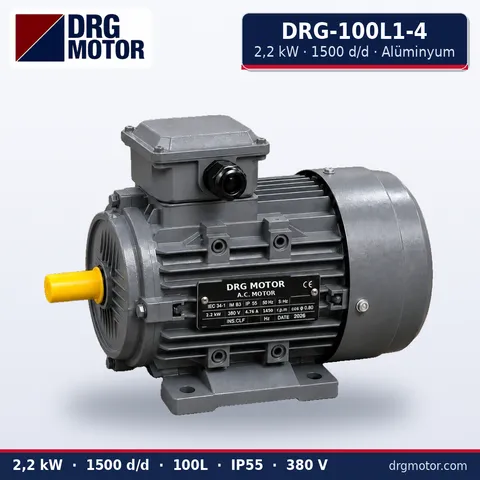
2.2 kW Three-Phase Motor 1500 rpm – DRG-100L1-4 Aluminium
- 2.2 kW · 1500 rpm (4 poles)
- Aluminium frame · IEC 100L
- Shaft: 28 × 60 mm
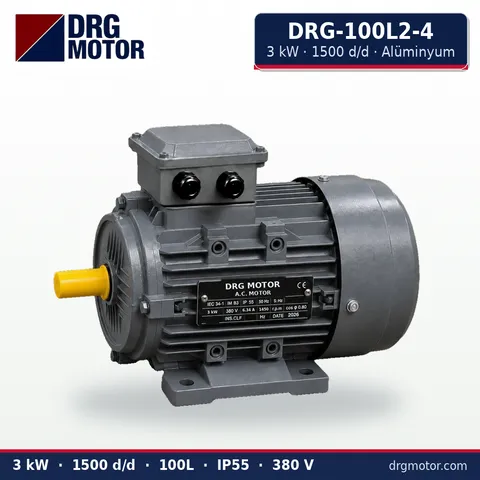
3 kW Three-Phase Motor 1500 rpm – DRG-100L2-4 Aluminium
- 3 kW · 1500 rpm (4 poles)
- Aluminium frame · IEC 100L
- Shaft: 28 × 60 mm
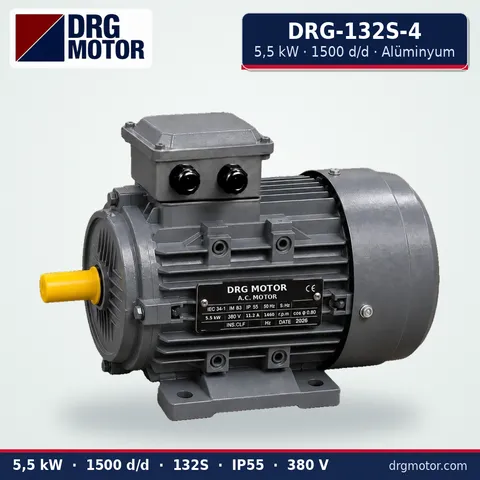
5.5 kW Three-Phase Motor 1500 rpm – DRG-132S-4 Aluminium
- 5.5 kW · 1500 rpm (4 poles)
- Aluminium frame · IEC 132S
- Shaft: 38 × 80 mm
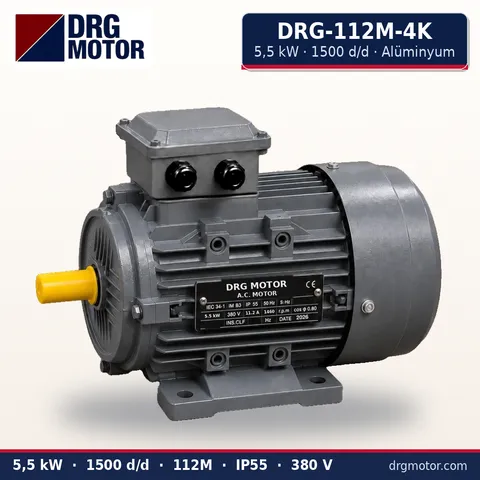
5.5 kW Compact Three-Phase Motor 1500 rpm – DRG-112M-4K Aluminium
- 5.5 kW · 1500 rpm (4 poles)
- Aluminium frame · IEC 112M
- Shaft: 28 × 60 mm
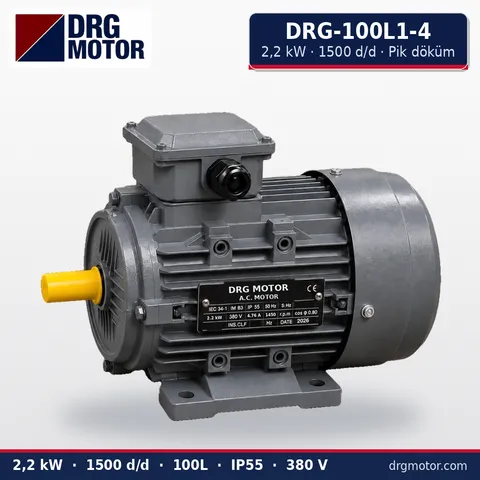
2.2 kW Three-Phase Motor 1500 rpm – DRG-100L1-4 Cast Iron
- 2.2 kW · 1500 rpm (4 poles)
- Cast iron frame · IEC 100L
- Shaft: 28 × 60 mm
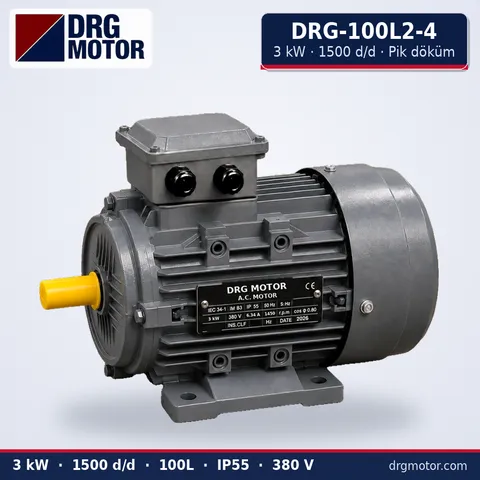
3 kW Three-Phase Motor 1500 rpm – DRG-100L2-4 Cast Iron
- 3 kW · 1500 rpm (4 poles)
- Cast iron frame · IEC 100L
- Shaft: 28 × 60 mm