 English
 Le français
 Türkçe


Connecting a large electric motor directly to the grid and running it seems like the simplest method at first glance; but this often leads to serious problems. At start-up, the motor draws a current far above its normal running current, and this sudden load stresses both the grid and the mechanical system. This is why starting methods were developed. In this article we compare in detail the two most common methods, star-delta and the soft starter, and explain where each should be used.
To review the general operation of a motor, see the how an electric motor works article; here the focus is entirely on starting methods.
Why Is the Starting Current High?
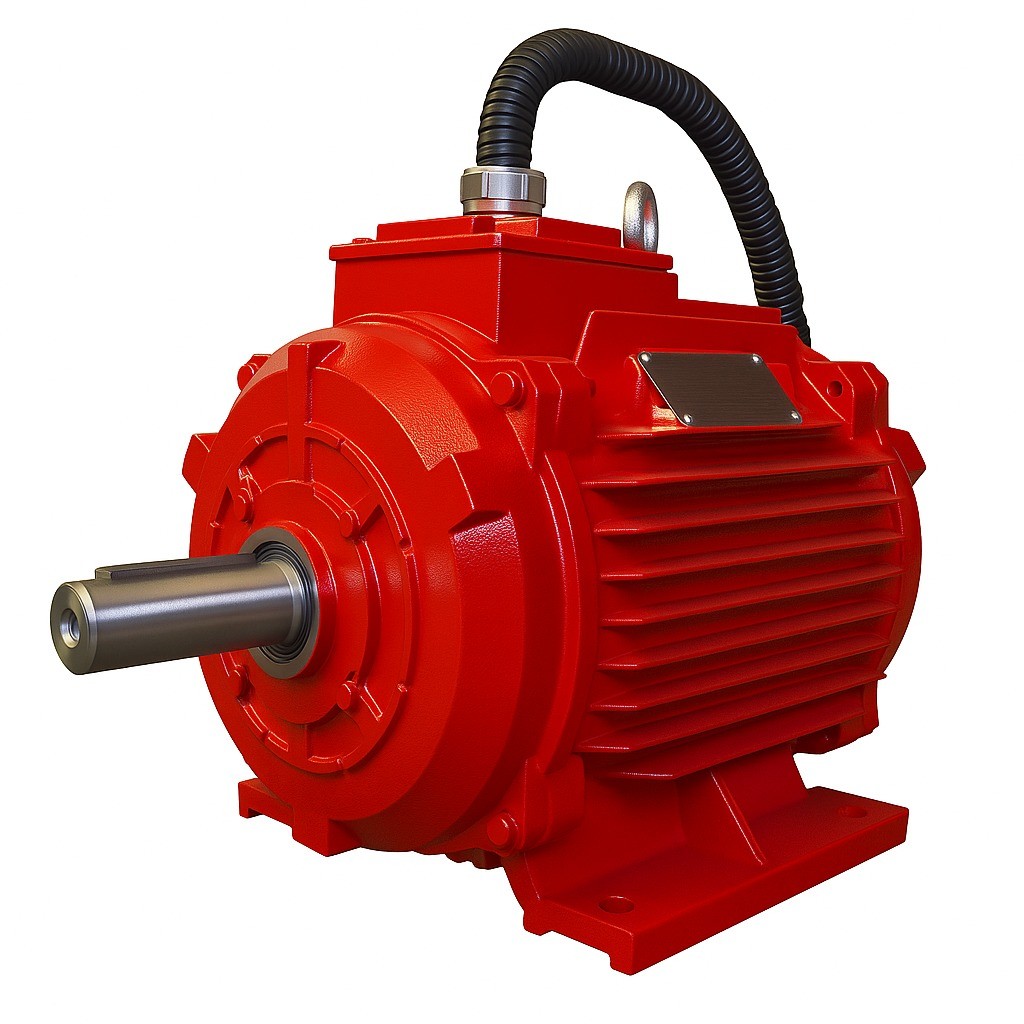
While an asynchronous motor is still stationary, the speed difference between the stator's rotating field and the rotor, that is, slip, is at its maximum. This high slip induces a very large current in the rotor, and accordingly the motor draws from the grid about six to eight times its rated current. This is called the starting current.
Although the starting current is brief, it causes serious problems in large motors. It can lead to a voltage drop on the grid, blown fuses, and sudden strain on belts and gears. You can find a detailed look at the relationship between slip and starting current in the slip in induction motors article.
Direct On Line Starting (DOL)
The simplest starting method is to connect the motor directly to the grid; this is called direct starting, or DOL (Direct On Line) for short. In this method, the motor suddenly comes online at full voltage and draws the high starting current as it is. This is not a problem in small motors, because the current they draw is negligible for the grid.
However, as the motor grows, direct starting stresses both the grid and the mechanical system. Above a certain power limit, direct starting is usually undesirable, or electricity distribution rules do not permit it. At this point, more controlled methods are needed.
Star-Delta Starting
Star-delta is a classic method used in large motors for decades. In this method, the motor is first started in a star connection; because the voltage across the windings is lower in the star connection, the motor starts smoothly by reducing the starting current to about one third. After the motor reaches a certain speed, the connection is switched to delta with a contactor arrangement, and the motor continues to run at full power.
The star-delta method is economical and has a simple structure. But it has one disadvantage: at the moment of transition from star to delta, a brief current and torque pulse occurs. In addition, because the starting torque is low in the star position, this method is not always suitable for applications that must start under heavy load.
Soft Starter
A soft starter is an electronic starting device that gradually increases the voltage applied to the motor. Starting at low voltage, the motor slowly reaches full voltage over an adjustable ramp time. This both limits the starting current and introduces the torque smoothly; sudden shocks are completely eliminated.
A soft starter protects the motor windings, belts, gears and connected equipment from mechanical strain. With its soft-stop feature, it can also stop the motor gradually rather than suddenly, which prevents water hammer especially in pump systems. Although more expensive than star-delta, the protection and flexibility it provides make it stand out in many modern applications.
Star-Delta vs Soft Starter Comparison
When we put the two methods side by side, the strengths and weaknesses of each become clear. The table below summarizes the basic differences.
| Feature | Star-Delta | Soft Starter |
|---|---|---|
| Starting current | Drops to ~1/3 | Adjustable, lower |
| Transition pulse | Yes (star-delta switch) | None (gradual) |
| Torque control | Limited | Precise, adjustable |
| Soft stop | No | Yes |
| Cost | Low | Medium |
| Maintenance | Contactor maintenance | Low |
As you can see, the soft starter offers a smoother, more controlled start, while star-delta is a more economical solution. The choice depends on the application's needs and the budget.
Starting with a Frequency Drive
The third and most advanced method is to use a frequency drive (VFD). The drive minimizes the starting current by applying low frequency and low voltage to the motor at first, and accelerates the motor in a fully controlled manner. Moreover, the drive provides starting and continuous speed control.
This is why a frequency drive is the most comprehensive solution in applications that need both a soft start and speed adjustment. You can find a detailed look at how speed changes with frequency in the motor speed article. Although the drive is the most expensive option, the energy savings and control it provides often more than cover its cost.
Starting with an Autotransformer
Although less common, another method is starting with an autotransformer. In this method, a low voltage is applied to the motor through an autotransformer during start-up; after the motor speeds up, it switches to full voltage. The autotransformer method offers a more flexible voltage adjustment than star-delta and can provide higher starting torque.
This method used to be preferred especially for high-power and high-inertia loads. However, with the spread of soft starters and frequency drives, its use has declined. Still, it can be encountered in some special applications.
Which Method to Choose and When?
The right starting method depends on the motor's power, the type of load and the application's requirements. For small motors, direct starting is sufficient. For medium-power, smoothly loaded and cost-sensitive applications, star-delta is an economical solution. Where precise starting, soft stopping and mechanical protection are needed, the soft starter stands out.
If the application requires both a soft start and continuous speed control, the frequency drive is the right choice. Determining the right method extends the life of the motor and connected equipment, provides energy savings and reduces the risk of failure.
The Consequences of Wrong Starting
A wrong or inadequate starting method can have serious consequences. Excessive starting current causes fuses to blow and voltage to drop on the grid, which can affect other devices connected to the same line. Sudden torque pulses prematurely wear out belts, gears and couplings.
In addition, frequent and harsh starts cause the motor windings to heat up and shorten the life of the insulation. Choosing the right starting method positively affects not only the moment of start-up but the entire life cycle of the motor. This is why starting is a part of motor installation that should not be neglected.
Starting and Motor Life
A motor starts thousands of times over its life. Each harsh start leaves a small amount of damage on the windings and mechanical parts; this damage accumulates over time. Soft starting methods greatly reduce this cumulative wear and allow the motor to run trouble-free for much longer.
Especially in applications with frequent starting and stopping, using a soft starter or frequency drive noticeably extends motor life. Although the right starting may seem like a cost at first, in the long run it is a smart investment that lowers both maintenance and replacement costs.
Matching the Right Motor and Starting Method
The starting method should be considered together with the motor itself. A quality motor of the right power gives the best performance when combined with a suitable starting method. In applications that must start under heavy load, both a motor with high starting torque and a suitable starting method are needed.
To determine the motor suited to your application, you can review the three-phase asynchronous motor and general purpose motor options, and get support from the DRG Motor team for the right combination of motor and starting method.
Starting in Pumps and Fans
Applications such as pumps and fans show their own behavior in terms of starting. These loads need low torque at start-up, because their flow rises as the speed increases. This is why most pumps and fans start comfortably with star-delta or a soft starter. However, especially in large centrifugal fans, the starting time can be long because the moment of inertia of the blades is high.
Another important advantage of the soft starter in pump systems is the soft stop. When a pump stops suddenly, the mass of water in the pipes recoils and causes water hammer, which strains pipes and valves. A gradual stop with a soft starter prevents this harmful shock. For pump and fan motor options, see our pump motors and fan motors pages.
Starting and Energy Efficiency
The starting method is also directly related to energy efficiency. Star-delta and the soft starter essentially manage the moment of start-up; they do not save energy during operation. A frequency drive, however, offers large savings during both starting and continuous operation, because it adjusts the motor's speed to the real needs of the load.
In variable-load applications, lowering the speed with a frequency drive is far more efficient than running the motor at full speed and throttling the output. This is why, if energy saving is a priority, the choice of starting device should be made considering not just starting but the entire operating cycle. For efficiency-focused motor options, see the high efficiency motors section.
What to Consider When Choosing a Starting Device
To choose the right starting device, you first need to know the motor's power, voltage and rated current. Then the type of load is determined: smooth load, shock load, or high inertia? The frequency of starting is also important; an application that starts many times per hour requires a more durable solution.
Ambient conditions, panel temperature and the required protection level also play a role in the choice. A wrongly sized soft starter or contactor both lowers reliability and increases the risk of failure. This is why the starting device must be chosen carefully to be compatible with the motor and the application.
Starting Time and Heating
A motor's starting time depends on the load's moment of inertia and the applied torque. High-inertia loads cause the motor to draw high current for a longer time, which leads to heating of the windings. Very long starting times can cause the motor to overheat and damage the insulation.
This is why, when choosing a starting method, the starting time and the heating it causes must also be considered. The soft starter and frequency drive keep this process under control by adjusting the starting ramp. In applications with frequent starts, it is also important that the motor can cool down sufficiently between starts.
Reversing and Starting
Some applications require the motor to turn in both directions; this is called reversing. In a three-phase motor, the direction of rotation is reversed by swapping two of the phases. However, suddenly commanding the opposite direction while the motor is running causes very high current and mechanical strain.
This is why, in reversing applications, the motor is first stopped and then started in the opposite direction. The soft starter and frequency drive manage this transition smoothly. Correct reversing control protects both the motor and the connected mechanism.
Commissioning and Maintenance
Correct commissioning of the starting system is the basis of trouble-free operation. In star-delta systems, the timing of the contactors and the correctness of the connections must be checked carefully. In soft starters and frequency drives, the ramp times and protection parameters are set according to the application.
In terms of maintenance, contactors in star-delta systems require periodic inspection, because mechanical contacts wear over time. Soft starters and drives require less maintenance, but their cooling fans and dust accumulation must be checked. Correct commissioning and regular maintenance keep the starting system long-lasting.
Frequently Asked Questions
Why is soft stopping important in pumps? A sudden stop causes water hammer that strains pipes and valves; a gradual stop with a soft starter prevents this harmful shock.
Which starting method saves the most energy? The frequency drive; because it saves energy by adjusting the speed to the load's needs not just at start-up but throughout operation.
Why is the starting current so high? While the motor is stationary, slip is at its maximum; this induces a large current in the rotor, and the motor draws six to eight times its rated current.
Which is better, star-delta or soft starter? Star-delta is more economical; the soft starter offers a smoother start, soft stopping and precise control. The choice depends on the application and the budget.
Are a soft starter and a frequency drive the same thing? No. A soft starter only smooths starting and stopping; a frequency drive additionally provides continuous speed control.
Do small motors need a starting method? Usually not; small motors run fine with direct starting (DOL), because the starting current they draw is negligible for the grid.
Why is soft stopping important? Especially in pump systems, a sudden stop causes water hammer; soft stopping prevents this shock and protects pipes and equipment.
The Right Starting Method
Motor starting is a topic that is often overlooked but is critical for the motor's life and system safety. Different methods such as direct starting, star-delta, the soft starter and the frequency drive are used to control the high starting current. While star-delta is an economical solution, the soft starter offers a smooth, controlled start; the frequency drive provides both starting and speed control together. Choosing the right method protects both the motor and the connected equipment, provides energy savings and contributes to the system running trouble-free for many years.