English
 Le français
 Türkçe




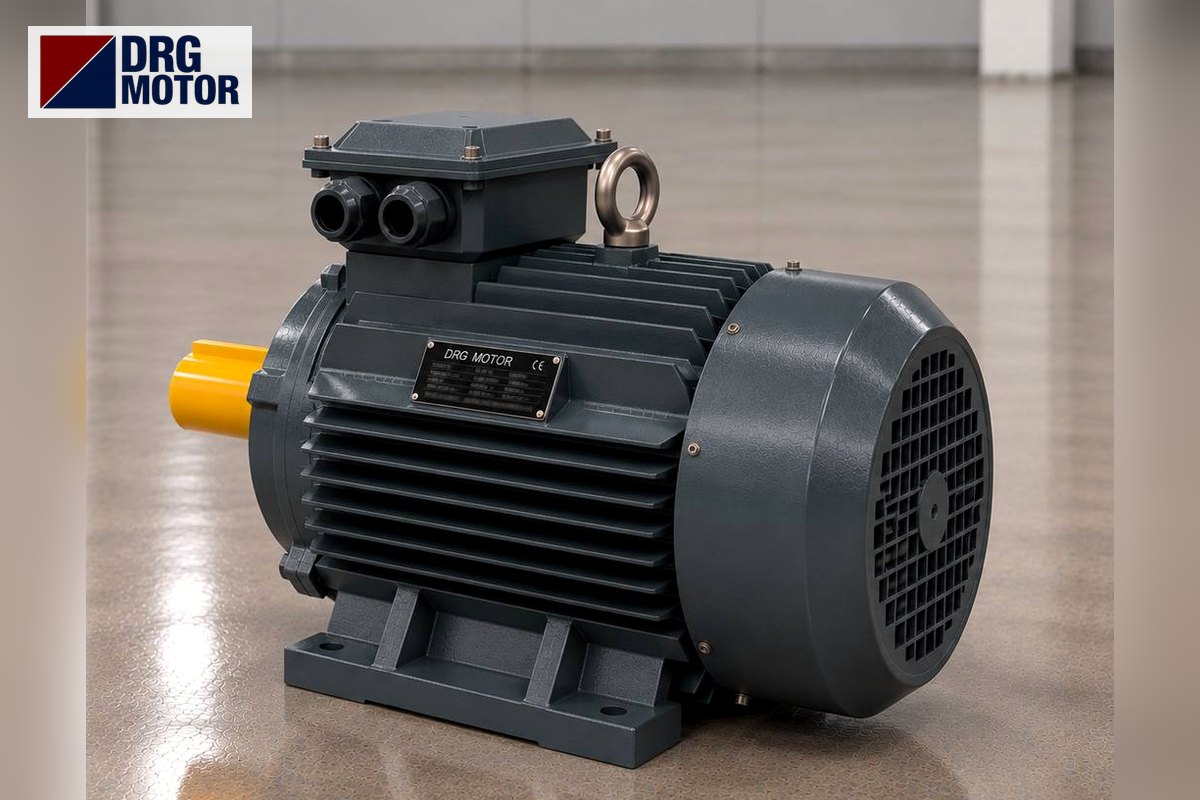

The cost of an electric motor is set not by one line item but by several factors together: first the power, then the housing material, the speed, the physical size, and the raw-material and currency conditions of the moment. In short, "how many kW" is the starting point; the rest depends on what your machine actually needs.
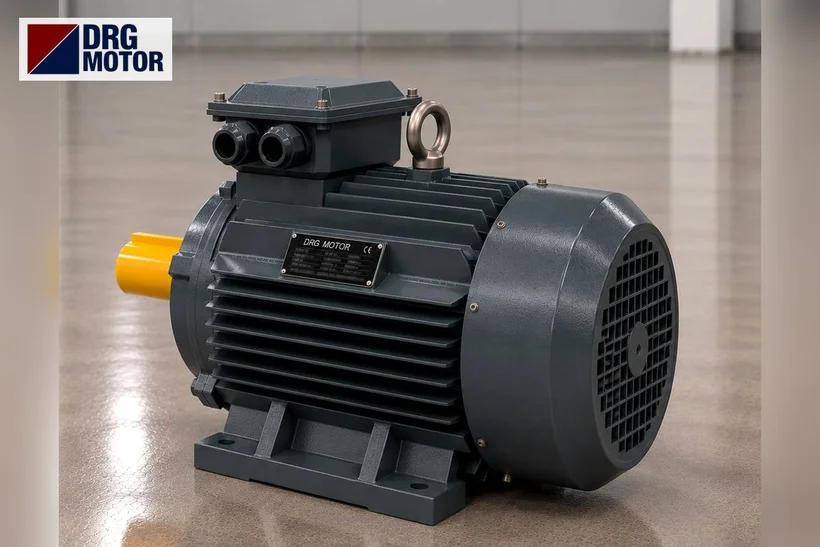
DRG Motor is a manufacturer, supplier and seller of three-phase asynchronous electric motors. You can see current figures and the electric motor that best fits your need, by power and speed, in the online electric motor shop, and review the same range together in the three-phase asynchronous electric motors category.
Power is the first factor that sets the picture
The sentence we hear most on site is: "It's a small electric motor, how much can it be?" As power grows, everything inside the motor grows with it. The core stack thickens, the copper winding increases, the bearings get larger, the housing and shaft get stronger. The gap between a 0.25 kW motor and an 11 kW one is not just a number; it is the material multiplying in sheer weight. That is why, as power rises, the figure climbs along a steeper curve rather than a straight line.
The DRG range covers this whole span: aluminium-housing electric motors from 0.25 to 11 kW, cast-iron-housing electric motors from 0.55 to 355 kW. From a benchtop machine to a heavy pump set, all are sourced under one roof.
Housing material: aluminium or cast iron?
Take two electric motors of the same power, one aluminium and one cast iron; they are not the same. An aluminium housing is light, easy to handle and sheds heat quickly; it is usually preferred at smaller and mid powers where mounting is practical. A cast-iron housing is heavy, resists vibration and impact, and gives long life in demanding settings. The workmanship and material density of a cast housing produce a different cost picture than aluminium. So the "which housing" decision feeds straight into your budget.
The choice depends entirely on where it will work. In a clean workshop, on a low-vibration machine, aluminium does the job well. In heavy industry with dust, moisture, constant load and impact, cast iron pays for itself.
Click to see current electric motor prices and order nowSEE PRICES →
Why speed and pole count matter
Saying "I want a 4 kW motor" is not enough on its own, because the same power is made in three speeds. Speed is set by the pole count: 2 poles about 3000 rpm, 4 poles about 1500 rpm, 6 poles about 1000 rpm. A low-speed (6-pole) motor delivers the same power more slowly but with higher torque, so it sits in a physically larger housing. That means at the same kW, as speed drops the motor grows, and so does its figure.
In short, set the pole count to match the speed your machine turns at. The wrong speed is one of the most common mistakes that surprise both performance and budget. If unsure, our electric motor calculator helps point the way.
Size, weight and transport
As power and speed grow, the motor's physical size (IEC frame) and weight increase. Pick up a frame-160 motor and a frame-90 motor and you feel the difference. That weight is not only material; it shows up in packing, handling and shipping too. From our İzmir base we deliver fast to all of Türkiye, including that city; for large, heavy motors it helps to settle the shipping plan together at the order stage.
Raw material and market conditions
An electric motor's housing is aluminium or cast iron, its winding is copper, its core is silicon steel. The cost of these inputs and currency moves are external factors that affect the whole sector at once. So the conditions of a given period push the overall picture up or down, independent of power and housing. For a current and binding figure, the best address is therefore the shop page, updated in real time, or a quote prepared from the request you send us.
Sample models in the same power family
Below are a few 1500 rpm (4-pole) aluminium-housing models listed by power. You can see each model's current figure and full technical data on its product page.
| Model | Power | Speed | View |
|---|---|---|---|
| DRG-112M-4 | 4 kW | 1500 rpm | DRG-112M-4 |
| DRG-132S-4 | 5.5 kW | 1500 rpm | DRG-132S-4 |
| DRG-132M-4 | 7.5 kW | 1500 rpm | DRG-132M-4 |
| DRG-160M-4 | 11 kW | 1500 rpm | DRG-160M-4 |
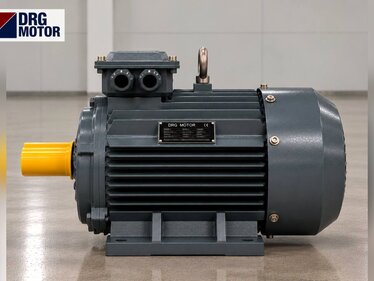
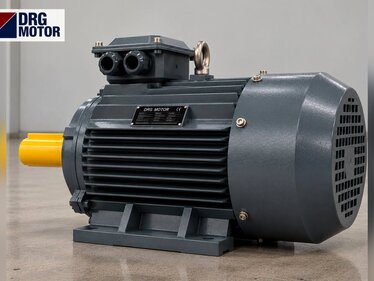
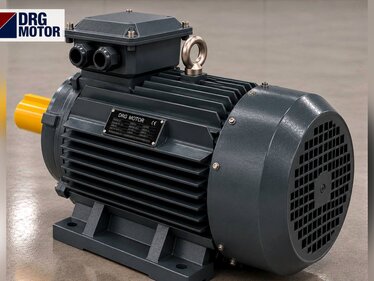
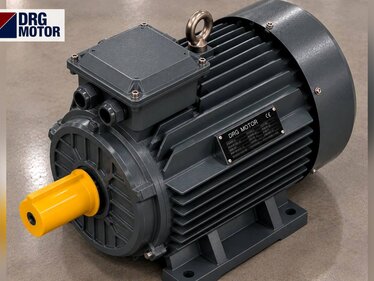
In the list you can see how the housing grows along with power; from the 4 kW frame-112 to the 11 kW frame-160, the motor becomes physically larger. That is the concrete meaning of "difference by power".
How do you learn the right figure?
The soundest way is to pin down your need and check the current list. Once you have the power, speed, housing type and shaft size, comparing on the shop takes minutes. If anything is unclear, send us your current motor nameplate and we will settle the suitable DRG model together.
Send a photo of your current motor nameplate and we will find the suitable DRG model together.Send on WhatsApp
To see current figures for the electric motor that fits your need and to orderSEE PRICES
Frequently asked questions
Why does the figure rise faster as motor power grows?
Because as power grows, the copper, steel and cast iron or aluminium inside the motor, together with the bearing, shaft and housing size, all grow together. As the material load multiplies, the figure climbs along a steeper curve rather than a straight line.
Why can two motors of the same power differ?
At the same kW, the speed (pole count) and housing material can change. A 1000 rpm motor sits in a larger housing than its 3000 rpm counterpart, and a cast-iron housing differs from aluminium. That is why "how many kW" alone is not enough.
Where can I see current figures?
For live, binding figures the online shop page is the best source. If you like, send your motor nameplate and we will settle the suitable model and current status together.
Do you deliver outside İzmir?
Yes. DRG Motor is based in İzmir and delivers fast by cargo to all of Türkiye, including that city. For large, heavy motors we plan the shipment together at the time of order.
Electric Motors Related to This Topic — Models and Current Prices
Suitability is not decided by power alone: compare the speed, voltage, mounting, shaft and fixing dimensions of your machine with the product data; if unsure, send us the nameplate of your current motor.

4 kW Three-Phase Motor 1500 rpm – DRG-112M-4 Aluminium
- 4 kW · 1500 rpm (4 poles)
- Aluminium frame · IEC 112M
- Shaft: 28 × 60 mm
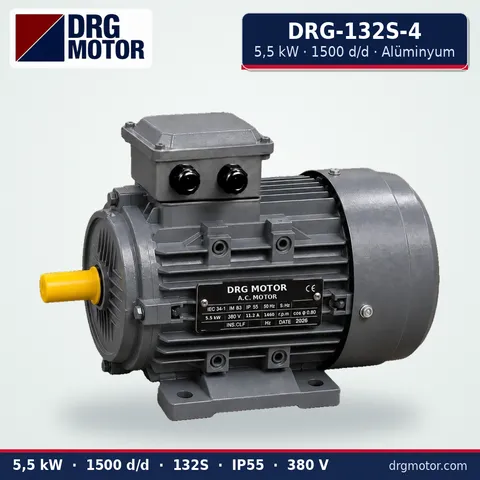
5.5 kW Three-Phase Motor 1500 rpm – DRG-132S-4 Aluminium
- 5.5 kW · 1500 rpm (4 poles)
- Aluminium frame · IEC 132S
- Shaft: 38 × 80 mm
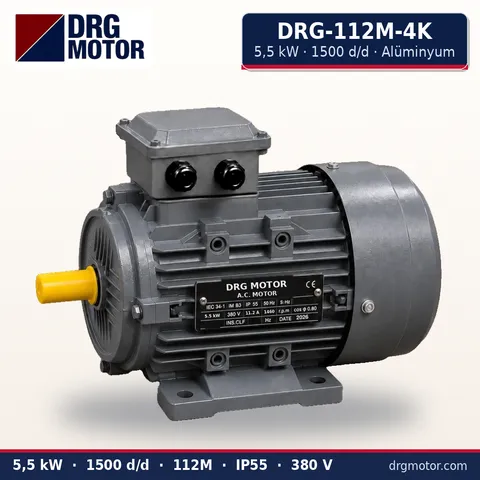
5.5 kW Compact Three-Phase Motor 1500 rpm – DRG-112M-4K Aluminium
- 5.5 kW · 1500 rpm (4 poles)
- Aluminium frame · IEC 112M
- Shaft: 28 × 60 mm
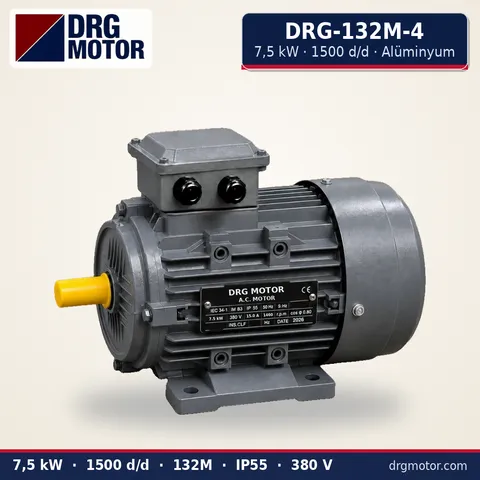
7.5 kW Three-Phase Motor 1500 rpm – DRG-132M-4 Aluminium
- 7.5 kW · 1500 rpm (4 poles)
- Aluminium frame · IEC 132M
- Shaft: 38 × 80 mm
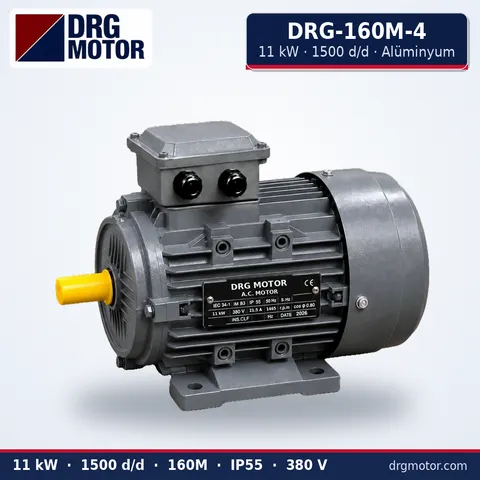
11 kW Three-Phase Motor 1500 rpm – DRG-160M-4 Aluminium
- 11 kW · 1500 rpm (4 poles)
- Aluminium frame · IEC 160M
- Shaft: 42 × 110 mm
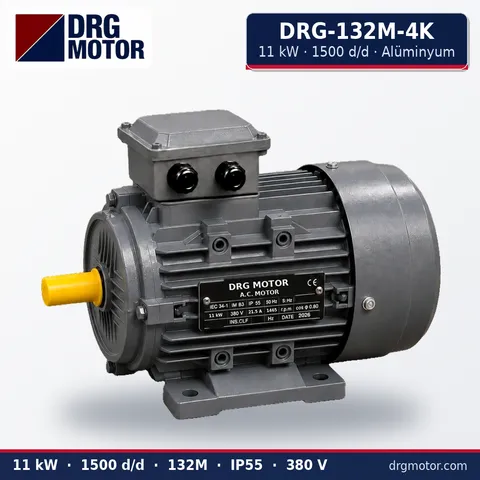
11 kW Compact Three-Phase Motor 1500 rpm – DRG-132M-4K Aluminium
- 11 kW · 1500 rpm (4 poles)
- Aluminium frame · IEC 132M
- Shaft: 38 × 80 mm