English
 Le français
 Türkçe




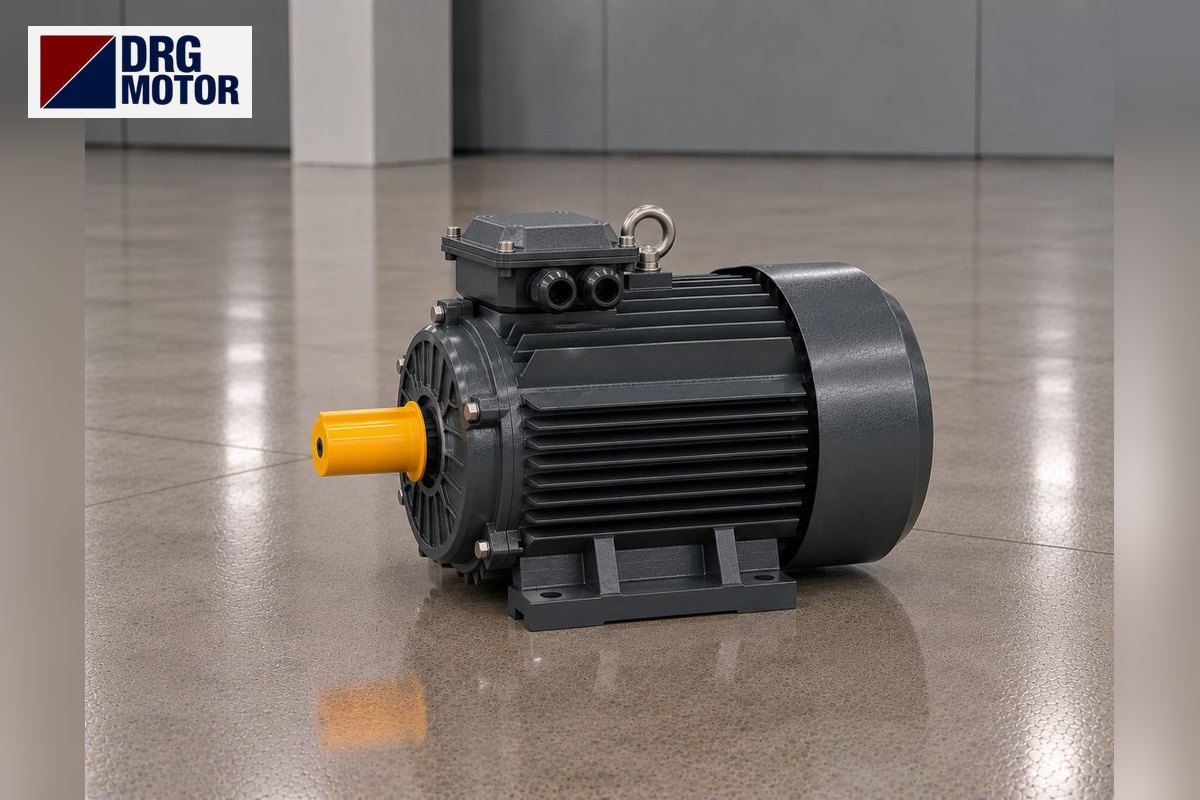

On a fibre opening machine the main motor spins the opening drum, whose surface is covered with pins or saw teeth, at high speed; compressed fibre held by the feed rollers hits these teeth, is split into small tufts and fluffs up. The real question in choosing the motor is not running power but start-up: the heavy drum, often with fibre wrapped around it, must be a load the motor can bring to speed without stalling or tripping the overload.
From workshop pillow and quilt fibre openers to bale openers in spinning mills, most of these machines use a 4-pole three-phase motor. You can browse models filtered by power and frame in our online motor store, and for light and medium-power drives see our aluminium housing electric motors page.
How Does the Opening Drum Separate Fibre?
Fibre leaves the bale as pressed, matted layers. The feed lattice brings this layer between two slowly turning feed rollers; the rollers grip the fibre firmly and present it to the drum millimetre by millimetre. The drum teeth comb the fibre off the gripped end almost as if tearing it.
The fineness of opening depends on the ratio of two speeds: the drum's peripheral speed and the feed rate of the rollers. A fast drum with slow feed gives smaller tufts and better opening, but may also shorten the fibre. Opened fibre is taken off the drum by an air stream or a stripping roller and sent to the filling unit or the next machine.
On workshop machines one motor drives the drum by belt, while a separate small motor and gearbox turn the feed rollers. On large bale openers the feed table, the opening roller and the transport fan each have their own motor.
Why Is Start-Up Hard: Inertia and Wrapped Fibre
The opening drum is usually a steel cylinder running fast; its inertia is far larger than the motor's own rotor. When the machine stops, some fibre stays on the drum, between the teeth and in the gap between cover and drum. At the next start the motor must overcome both the drum inertia and the drag of this wrapped fibre.
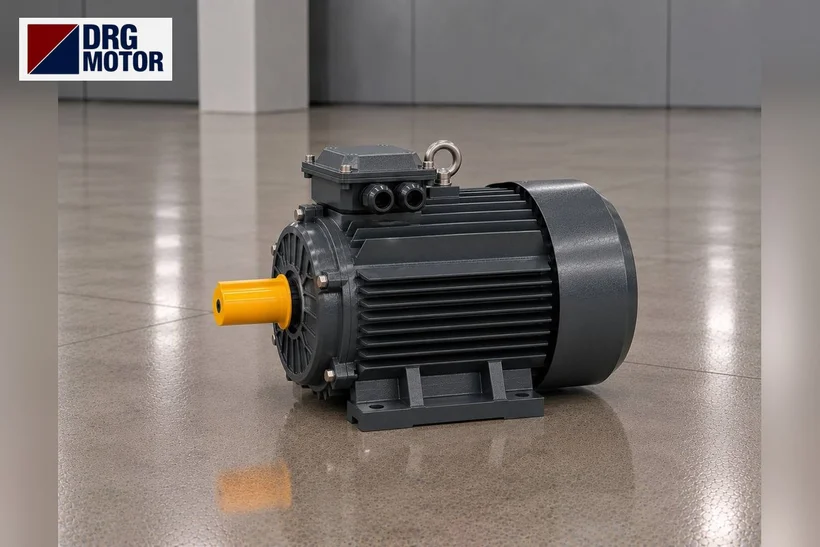
Example (assumption): drum inertia on its own shaft is 4 kg·m². With a 160 mm motor pulley and a 250 mm drum pulley, the DRG-132S-4 (1460 rpm) turns the drum at 934.4 rpm; tooth tip speed on a 500 mm drum is 24.46 m/s. Because of the pulley ratio, the drum inertia is reflected to the motor shaft as 1.638 kg·m².
The motor's catalogue rated torque is 36.0 Nm and its starting torque ratio Ts/Tn is 2.0, so about 72 Nm is available at the shaft on a direct start. If an average net accelerating torque of 54 Nm remains after friction and wrapped fibre, the drum reaches speed in about 4.6 seconds. Weigh this time together with the information on our motor starting methods page.
Click to see current electric motor prices and order nowSEE PRICES →
Star-Delta or Direct-On-Line?
DRG motors from 4 kW upwards are wound for 400/690 V; they run in delta on a 400 V supply and are therefore suitable for star-delta starting. In star, both current and torque drop to about one third. That is enough for a light drum; with a heavy drum carrying wrapped fibre, the motor may fail to reach speed in star.
| Starting method | Starting current (400 V) | Starting torque | When it fits |
|---|---|---|---|
| Direct-on-line | About 84.5 A | About 72 Nm | Supply and fuses allow it |
| Star-delta | About 28.2 A | About 24 Nm | Clean drum, feed stopped |
| Inverter | Limited by the ramp | High even at low speed | Drum speed must be adjustable |
The table values are worked out from the DRG-132S-4 catalogue ratios (Is/In = 7.9, rated current 10.7 A). In the same example, if net accelerating torque falls to 18 Nm in star, the start takes about 13.9 seconds. Depending on the overload relay class, such a long start can trip it.
The practical rule is simple: always start the machine with the feed stopped, and let the drum clear itself before stopping. If star-delta starts keep hanging, check fibre wrap on the drum, cover clearance and belt tension first; a bigger motor is the last resort.
Feed Rollers: Slow, But Prone to Choking
Feed rollers turn at anything from a few to a few tens of rpm. They are therefore usually driven by a small 6-pole motor through a worm or helical gearbox. DRG does not sell the gearbox; it supplies the motor that mounts on its input.
Example (assumption): a DRG-100L-6 (1.5 kW, 949 rpm, 15.1 Nm) is coupled to a gearbox with a ratio of 40. Output speed from n2 = n1 / i is 23.7 rpm; taking gearbox efficiency as 0.9, about 543.6 Nm is available at the output. This margin keeps the rollers from choking when the fibre layer thickens.
If feed speed is set by an inverter, the motor's own fan cools less at low frequency. On feed motors that run for long periods at very low speed, checking frame temperature by hand during the first weeks is a good habit.
Fibre Dust, Sparks and the Motor Surface
Fine lint and dust become airborne during opening and stick to the motor's cooling fins and fan cowl. A thick felt layer stops the motor from shedding heat. The IP55 frame protects the inside; blowing the outer surface clean with compressed air at the end of each shift has a direct effect on motor life.
If a piece of wire or a metal object from the bale strikes the drum teeth, sparks can fly and dry fibre can ignite. This risk is managed with the magnet and metal separator on the feed lattice, not with the motor. If the site risk assessment classifies an area as an explosive dust atmosphere, a standard IEC motor is not used there; an Ex-protected special motor is needed and such motors are not in the DRG range.
What to Check Before Replacing the Motor
On fibre openers the drum motor is usually foot-mounted on a belt tensioning slide. Within the same IEC frame the fixing dimensions are identical. Catalogue values for the DRG-132S-4:
- Power and speed: 5.5 kW, 1460 rpm
- Current: 10.7 A at 400 V, cos φ 0.83
- Starting: Ts/Tn = 2.0, Is/In = 7.9
- Frame: 132S aluminium, foot holes 216 × 140 mm
- Shaft: 38 mm diameter, 80 mm length, 10 mm key
- Winding: 400/690 V, suitable for star-delta starting
Pre-order checklist:
- Which part the motor drives: opening drum, feed roller, stripping roller or transport fan.
- The old motor's nameplate: kW, rpm, voltage, connection; if lint covers the plate, clean it and take a photo.
- Starting arrangement: direct, star-delta or inverter; the setting range of the overload relay in the panel.
- Drum and motor pulley diameters, belt type and number of belts.
- Mounting (B3, B5, B35), shaft diameter and shaft length.
- For the feed motor, the gearbox input flange and bore size.
DRG Motors Suited to Fibre Opening Machines
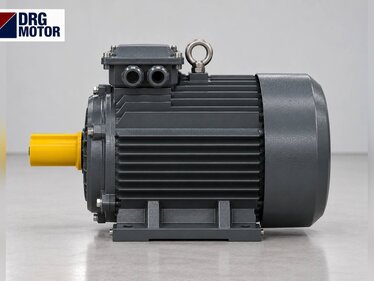
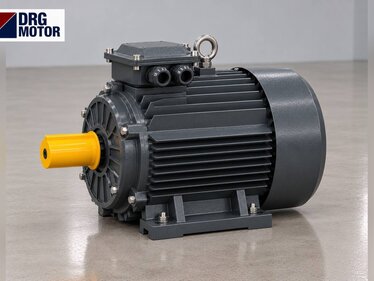
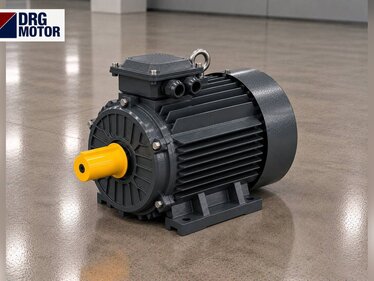
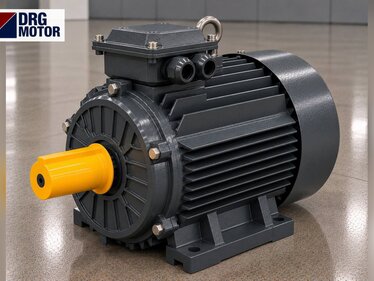
4-pole aluminium frame models for the opening drum and a 6-pole option for the feed roller gearbox. Choose the model from the removed motor's nameplate and starting arrangement.
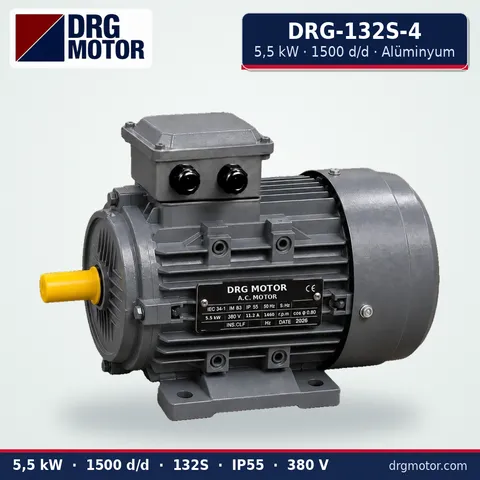
5.5 kW Three-Phase Motor 1500 rpm – DRG-132S-4 Aluminium
- 5.5 kW · 1500 rpm (4 poles)
- Aluminium frame · IEC 132S
- Mounting: B3 · B5 · B14 · B35

4 kW Three-Phase Motor 1500 rpm – DRG-112M-4 Aluminium
- 4 kW · 1500 rpm (4 poles)
- Aluminium frame · IEC 112M
- Mounting: B3 · B5 · B14 · B35
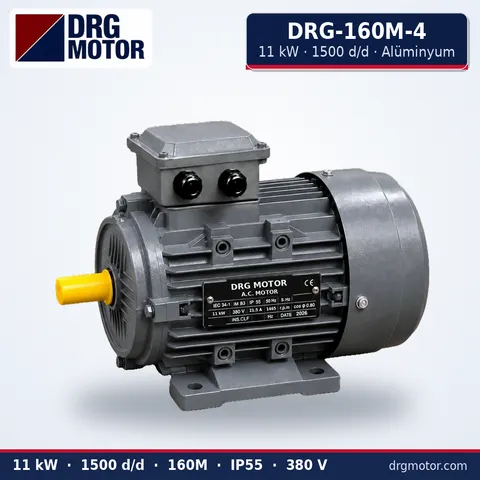
11 kW Three-Phase Motor 1500 rpm – DRG-160M-4 Aluminium
- 11 kW · 1500 rpm (4 poles)
- Aluminium frame · IEC 160M
- Mounting: B3 · B5 · B14 · B35
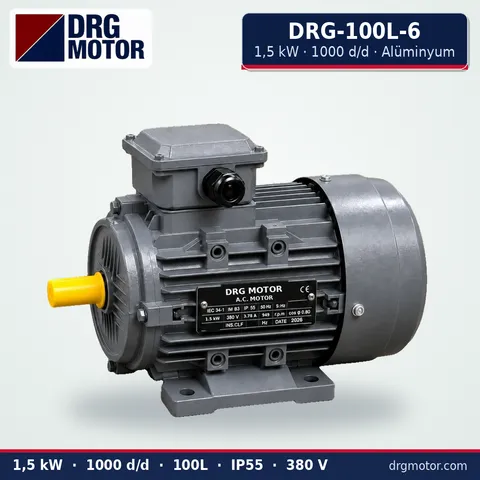
1.5 kW Three-Phase Motor 1000 rpm – DRG-100L-6 Aluminium
- 1.5 kW · 1000 rpm (6 poles)
- Aluminium frame · IEC 100L
- Mounting: B3 · B5 · B14 · B35
Click to see current prices and order these motors nowSEE PRICES →
Fibre Opening Machine Motor: Frequently Asked Questions
What kW motor does a fibre opening machine need?
On workshop pillow and quilt fibre openers the drum motor is typically a few kW; bale openers in spinning mills and wide opening lines need more. The exact value is on the machine nameplate or in the builder's catalogue.
Why won't the fibre opener motor change from star to delta?
In star, torque drops to about one third. If fibre is wrapped on the drum or the machine is started with the feed running, the motor cannot reach speed in star and a large current surge occurs at changeover. Clean the drum and start with the feed off; if the problem continues, consider a direct start or an inverter.
Can a 2-pole motor be fitted to raise drum speed?
Not recommended. Speed roughly doubles, and tooth tip speed and centrifugal force on the drum rise with it. If the drum is not balanced for that speed, bearings and frame will suffer. If a speed change is needed, work out the pulley ratio together with the machine builder.
Why does the feed roller motor keep burning out?
Common causes are rollers choking on a thick layer, long periods at very low frequency and low oil in the gearbox. Measure the motor current against the nameplate and check that the gearbox output turns freely.
DRG Motor is a manufacturer, supplier and seller of electric motors. When requesting a quotation for your fibre opener motor, include a photo of the motor nameplate, its power and speed, foot or flange mounting, shaft size and the starting arrangement (direct, star-delta, inverter). Send the details via WhatsApp or add the models to the quote list. Call +90 (542) 666 11 11 or write to info@drgmotor.com; further details are on our contact page. Current prices are in our online motor store.