English
 Le français
 Türkçe




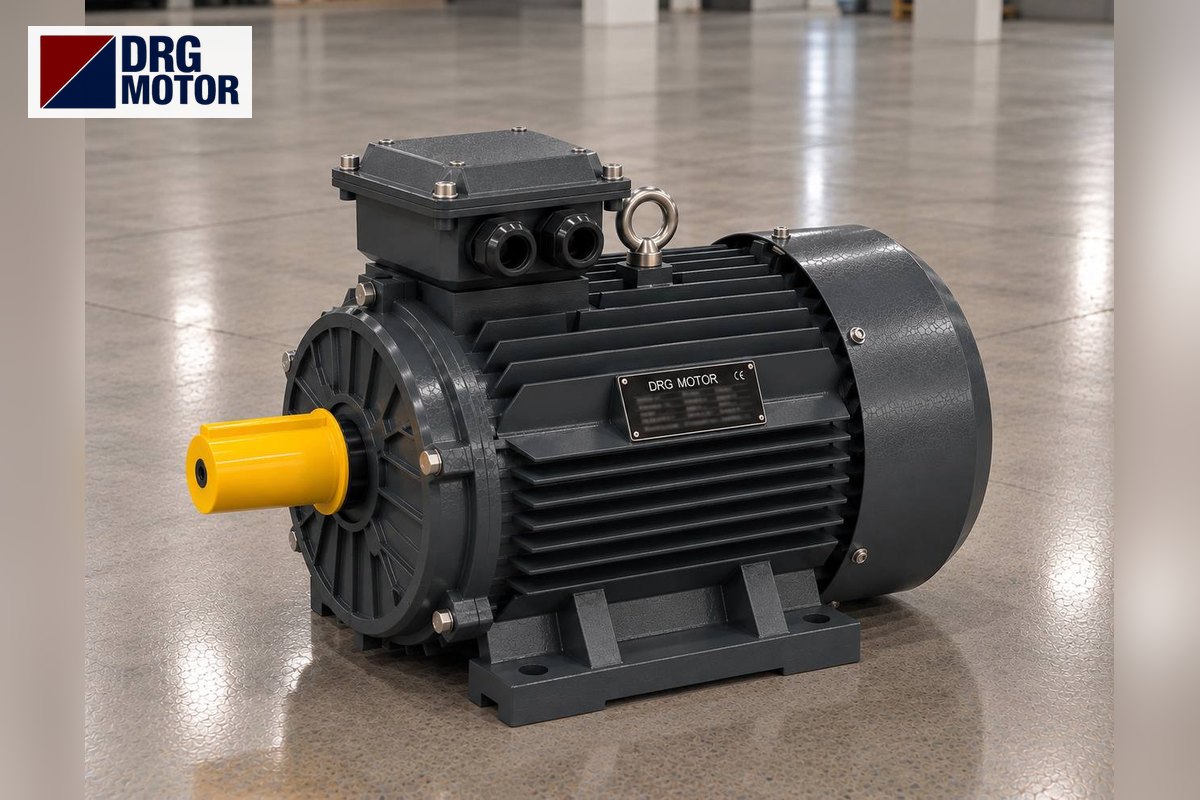

On an automatic bar screen cleaner, the motor moves the chain or arm that rakes rags, plastics, branches and other coarse debris up the bar screen in the channel, at a very low speed. The motor itself is small; what makes the load large is the high-ratio gearbox and the rake's ability to jam suddenly. So the selection is decided less by power than by torque at the gearbox output, intermittent duty and outdoor conditions.
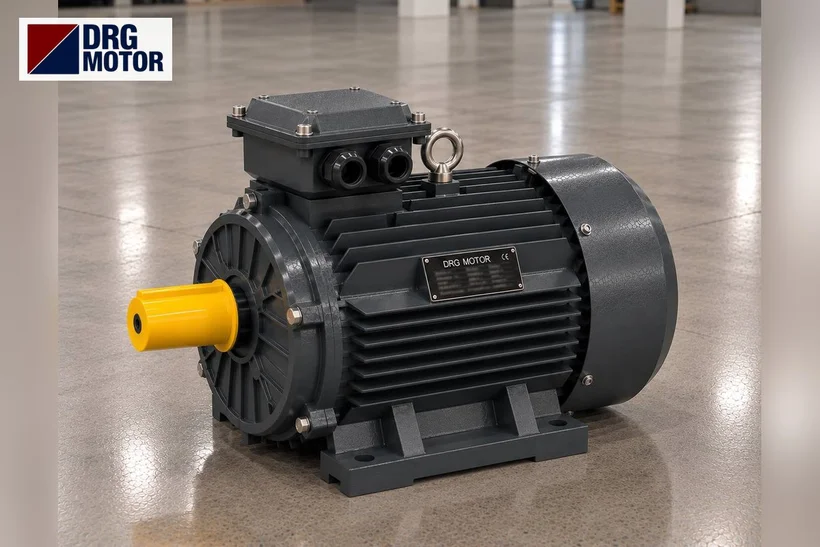
DRG Motor is a manufacturer, supplier and seller of electric motors. It supplies not the screen frame, rake chain or gearbox, but the three-phase IEC asynchronous motor that connects to the gearbox input. Small 4- and 6-pole models are on the buy electric motors online page.
Motor points across the whole treatment plant (blowers, mixers, sludge dewatering) are summarised on the wastewater treatment plant electric motors page. This article focuses only on the screen cleaning drive.
How Does a Bar Screen Cleaner Work?
When raw sewage enters the plant it first passes a coarse screen, then a fine screen. Bar spacing is a few centimetres on coarse screens and a few millimetres on fine ones. Retained debris builds up on the screen face and narrows the flow, which creates a level difference between the upstream and downstream sides.
The cleaning mechanism differs by type: on a chain rake, the rake teeth are pulled up the screen by an endless chain; on cable or arm types, the rake drops on the end of an arm, enters between the bars and rises; on a step screen, the circular motion of moving lamellae lifts debris step by step. In every case, at the top a wiper discharges the debris into a conveyor or a screw compactor.
Why Such Low Speed? A Gear Ratio Example
Rake chain speed is usually a few metres per minute. Moving too fast drops debris back before it is wiped off and increases chain wear. Reaching this speed with a 1500 rpm class motor needs a high-ratio gearbox; on most machines this is a worm or a multi-stage helical-bevel gearbox.
The calculation below is an example. Assumptions: 0.55 kW DRG-801-4 (rated 1400 rpm, rated torque 3.75 Nm, Ts/Tn 2.4), gear ratio 440, overall worm gearbox efficiency 0.6, chain sprocket diameter 300 mm.
| Quantity | Calculation | Result |
|---|---|---|
| Gearbox output speed | 1400 / 440 | ≈ 3.18 rpm |
| Chain speed | π · 0.3 · 3.18 | ≈ 3 m/min |
| Rated output torque | 9550 · 0.55 / 3.18 · 0.6 | ≈ 990 Nm |
| Chain pull | 990 / 0.15 | ≈ 6.6 kN |
| Output torque at start | 2.4 · 3.75 · 440 · 0.6 | ≈ 2376 Nm |
The table shows why a half-kilowatt motor can produce such a large force at the gearbox output. For the same reason, chain, rake and gear teeth are strained by a very large force when a jam occurs. For motors that connect to a gearbox input, see also electric motors for worm gearboxes.
Click to see current electric motor prices and order nowSEE PRICES →
Intermittent Duty: Level Difference, Timer and Number of Starts
Screen cleaners usually do not run all the time. Typical controls start cleaning on one of two conditions: when the level difference across the screen exceeds a set value, or when a timer reaches its interval. In rainy weather and during the morning load peak the machine runs often; at night it may hardly run at all.
In this duty, the number of starts is what heats the motor. Each start draws several times rated current; starts are short on small motors, but dozens per hour add up and heat the winding. In a storm the machine can switch to long uninterrupted running, so the motor must also suit long-cycle operation. Where starts are very frequent, raising the timer's minimum off time relieves the motor.
Jamming, Overload and Motor Protection
When a stone, log or piece of metal comes in front of the rake, the chain stops at once. The motor is loaded to stall torque and draws a current close to starting current. A correctly set overload relay protects the motor, but it takes a few seconds to trip, and in that time the gearbox and chain are strained. For this reason screens usually also have a mechanical shear pin or slip clutch at the gearbox output or chain sprocket.
- Set the overload relay to the nameplate current; do not raise it because it trips often.
- Frequent trips call for checking chain tension, guide rails or foreign objects, not motor power.
- Controls can be set to reverse the motor briefly on a jam and retry; the motor must stop before changing direction.
- Phase loss burns small motors quickly; consider a phase failure relay.
For overload relay and contactor selection, the overload, fuse and contactor selection page can be used.
Conditions at the Channel Head: Humidity, H₂S and Winter
The screen motor usually works above the channel, outdoors or in a poorly ventilated screen house. The air holds high humidity, wash water splash and hydrogen sulphide (H₂S) released from the sewage. Together with moisture, H₂S corrodes copper connections and unpainted metal surfaces. DRG motors are IP55 with class F insulation; the painted cast iron frame offers a tougher outer shell than aluminium in this environment.
- The terminal box gasket must be sound, cable glands tight and unused entries plugged.
- If the motor is mounted vertically (shaft down), fit a rain canopy on top and state the position on the order.
- Condensation can form in the frame during long winter stops; DRG motors are rated for −15…+40 °C ambient.
Drives that dip into the channel and run under water cannot be covered by a standard IEC motor; they need a special submersible motor. And if an explosive gas zone is defined above the channel, an Ex-protected special motor is required; these motors are not in the DRG range.
What Is Needed for Replacement or an Order
- Motor nameplate: power, speed, voltage and connection (230/400 V on small motors)
- Gearbox type and ratio; flange size at the gearbox input (B5 or B14)
- Shaft diameter and length, key; whether the motor is mounted horizontally or vertically
- Screen type (chain, arm, step), channel width and screen length
- Control: level difference or timer; approximate starts per hour
- Whether the motor is outdoors or in a screen house
On gearboxes with a small B14 flange, the flange size is confirmed when ordering. On the B5 flange, frame 80 has a 200 mm flange outer diameter, 165 mm bolt circle, 130 mm spigot and a 19 × 40 mm shaft; use these to compare with the old motor.
DRG Motors Suited to Screen Cleaning Drives
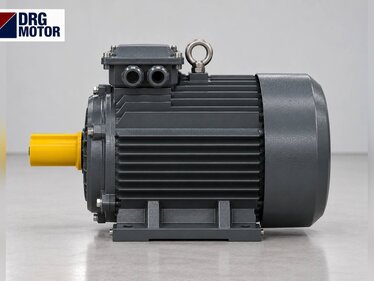
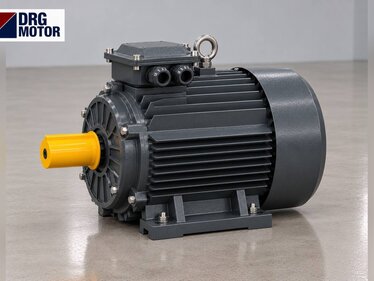
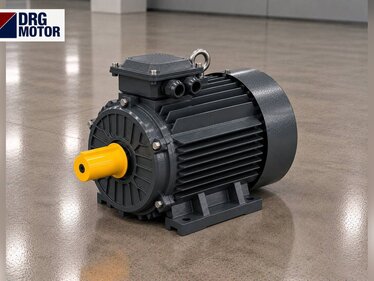
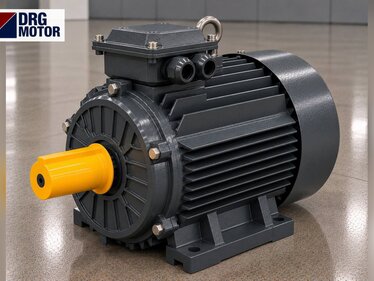
Screen rakes mostly run with 4-pole motors of 0.55–1.5 kW connected to a gearbox input. For durability in a humid, H₂S-laden environment, we selected cast iron models.
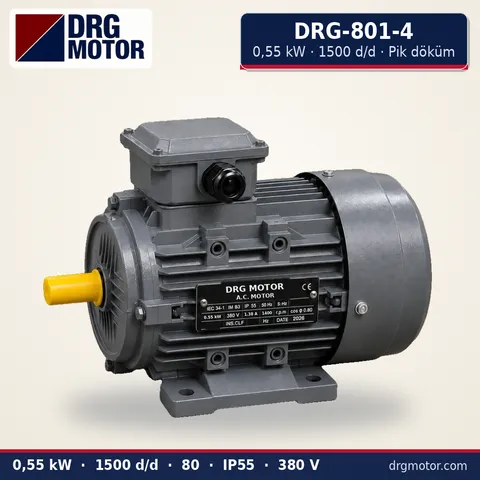
0.55 kW Three-Phase Motor 1500 rpm – DRG-801-4 Cast Iron
- 0.55 kW · 1500 rpm (4 poles)
- Cast iron frame · IEC 80
- Mounting: B3 · B5 · B14 · B35
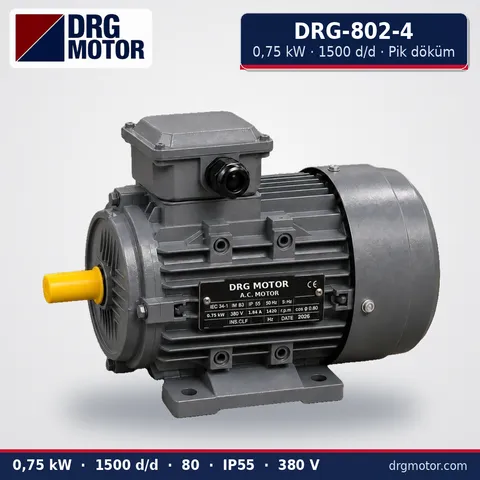
0.75 kW Three-Phase Motor 1500 rpm – DRG-802-4 Cast Iron
- 0.75 kW · 1500 rpm (4 poles)
- Cast iron frame · IEC 80
- Mounting: B3 · B5 · B14 · B35
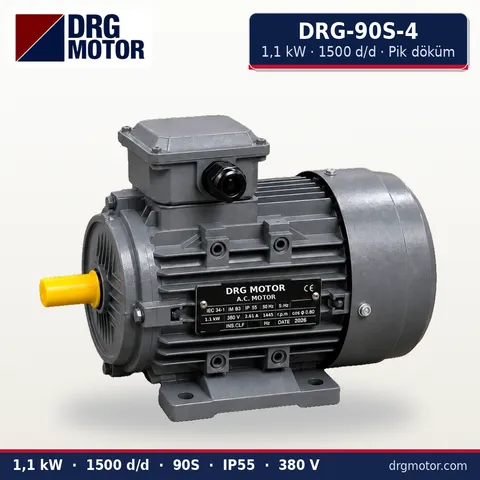
1.1 kW Three-Phase Motor 1500 rpm – DRG-90S-4 Cast Iron
- 1.1 kW · 1500 rpm (4 poles)
- Cast iron frame · IEC 90S
- Mounting: B3 · B5 · B14 · B35
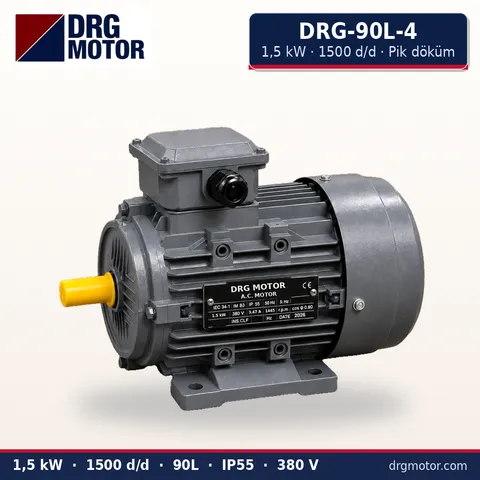
1.5 kW Three-Phase Motor 1500 rpm – DRG-90L-4 Cast Iron
- 1.5 kW · 1500 rpm (4 poles)
- Cast iron frame · IEC 90L
- Mounting: B3 · B5 · B14 · B35
Click to see current prices and order these motors nowSEE PRICES →
Screen Cleaner Motor: Frequently Asked Questions
Why does the screen cleaner motor trip so often?
The most common causes are a large object in front of the rake, a slack chain or deposits on the guide rail. Check the mechanism before upsizing the motor; a larger motor puts even more force into the chain and gearbox on a jam.
How many kW is a bar screen cleaner motor?
It depends on channel width and screen length; on many machines it stays between fractional kW and a few kW. The exact value is on the machine's nameplate.
Can a screen motor run outdoors?
An IP55 motor withstands rain and splash; still, use a rain canopy for vertical mounting and sound gaskets and glands. A standard motor is not suitable where it would be under water.
Does reversing the screen harm the motor?
Not if the direction is changed after the motor stops. Reversing while running causes a current and torque shock; leave a short delay in the controls.
You can request a quotation by sending a photo of the screen motor nameplate with power, speed, mounting (foot or flange), shaft size and gearbox details via WhatsApp, or build a quote list. Phone: +90 (542) 666 11 11 · e-mail: info@drgmotor.com · contact. For other motors in the plant see wastewater treatment plant motors, and for all models the online store.