English
 Le français
 Türkçe




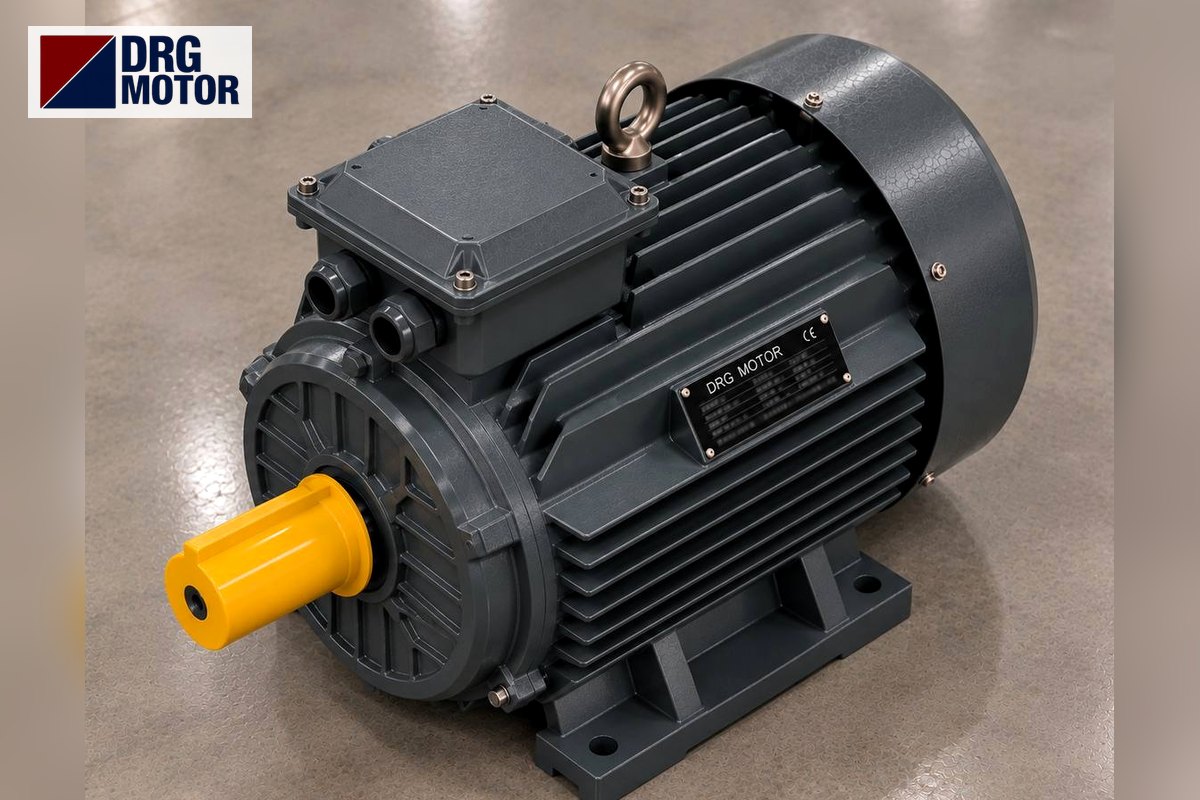

When a three-phase asynchronous motor energises and hums but its shaft does not turn, it means the motor is magnetised yet cannot produce enough starting torque to turn the shaft. The most common causes are loss of a phase, low supply voltage, overload or mechanical jamming, an incorrect star/delta connection and a starting current that cannot be met. Correct diagnosis means matching the symptom to a likely cause and comparing it against the motor's nameplate values.
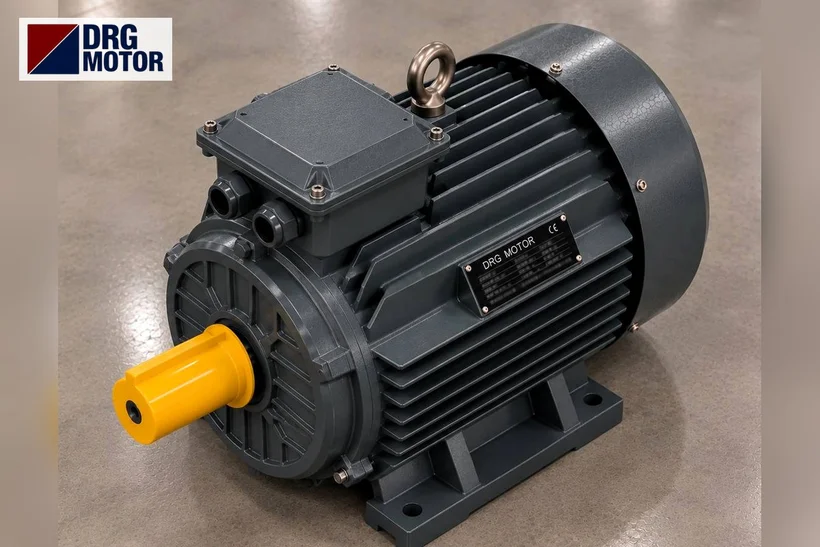
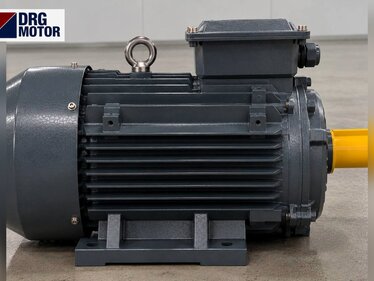
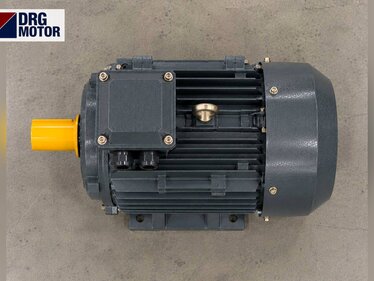
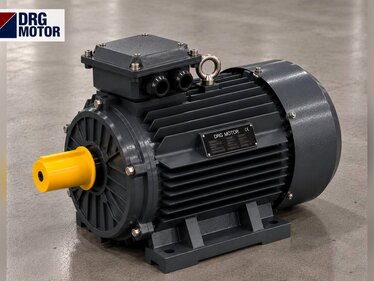
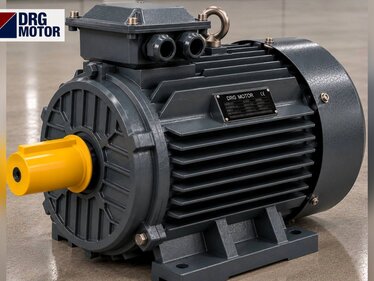
DRG Motor is a manufacturer, supplier and seller of electric motors. If a motor has to be replaced after a starting fault, you can review three-phase models of suitable power and speed in the online motor shop and the three-phase asynchronous electric motors category. The sections below explain the likely causes for information only; remember that any electrical check must be carried out by qualified personnel.
What does the humming mean?
An induction motor draws current through its windings even with the rotor at rest, and that current creates a magnetic field; the humming you hear is the sound of this energisation. In a normal start the rotating field quickly drags the rotor along and the sound becomes a running sound. If the shaft does not turn, either the rotating field never formed properly or the torque produced was not enough to overcome the load. So humming is not a fault in itself but the sign of a "motor energised but unable to start" condition.
A motor running in this state draws far more than normal current while trying to turn, and heats up quickly. Switching the supply off promptly protects both the motor and the supply circuit. Insistently keeping a stalled motor energised can damage the windings.
Loss of a phase: a single-phased motor cannot start
When one of the three phases fails to reach the motor, it is the most typical cause of the hum-without-rotation symptom. If there is a break in a fuse, a contactor contact, a terminal connection or one of the cables, only two phases reach the motor. Two-phase supply does not form a proper rotating field; the motor shudders and hums but cannot start. If the shaft, turned by hand, weakly tries to continue in that direction, this is a strong sign of a lost phase.
Confirming a lost phase requires measuring whether all three phases reach the motor terminals. Because this is a live measurement, it must be performed only by qualified electrical personnel with suitable protective equipment. Using a phase-protection relay detects a single-phasing condition in advance and disconnects the motor.
Low voltage and insufficient starting torque
The torque an induction motor produces is proportional to the square of the supply voltage. So when the voltage drops noticeably below its normal value, the starting torque weakens rapidly. Long and thin supply cables, other large loads on the same line starting at the same moment, or a voltage drop on the network side can leave the motor without the torque needed to break the load away, so it cannot start.
A similar situation arises with a connection that does not match the voltage on the motor nameplate. A cable cross-section too small for the length increases the voltage drop; tools such as the motor current chart help in choosing a suitable cross-section. Judge the exact voltage and current thresholds against the motor nameplate and the installation documentation.
Click to see current electric motor prices and order nowSEE PRICES →
Overload and mechanical jamming
Even if the motor is electrically sound, the shaft will not turn if the load on it is greater than the starting torque. A jam in the driven machine, a dry or damaged bearing, a coupling/belt misalignment or a lock-up on the gearbox side can block the motor. In such a case the motor is strained, hums and still cannot start.
Whether there is a mechanical cause is assessed by checking the shaft by hand after the supply has been switched off and the absence of voltage confirmed: if the shaft turns freely the problem is most likely electrical, if it is stiff it is mechanical. Because rotating parts are involved, this check too must be done carefully and by authorised personnel.
Incorrect star/delta connection and starting current
Three-phase asynchronous motors are connected in star (Y) or delta (Δ) according to the supply voltage; the nameplate states which connection matches which voltage. Leaving a motor that should be in delta accidentally in star reduces the voltage per phase and therefore the starting torque, so the loaded motor cannot start. In the opposite case the motor draws excessive current.
At higher powers the starting current can reach several times the rated current. That is why, above a certain power, softened starting methods such as star-delta are applied to motors. A wrongly built starting arrangement can also leave the motor stuck during the start phase. The article on which kW motor is connected in star or delta gives guidance on this. Before any connection work, switch off the supply, confirm it is de-energised and leave the work to qualified electrical personnel.
Assessing the likely causes in order
For a no-start symptom, diagnosis is narrowed down from the outside in. The following order is an assessment framework for information only; the whole procedure must be carried out with the supply off and by qualified personnel.
- Supply: confirm all three phases reach the motor; a lost phase is the most common cause.
- Voltage: assess whether the supply voltage is within its normal range.
- Connection: check that the star/delta choice matches the nameplate and voltage.
- Load: examine whether the shaft is free or there is a mechanical jam.
- Inside the motor: winding and insulation health are assessed only with suitable measurements.
When comparing values, always take the motor's own nameplate and the device documentation as the reference; thresholds set from memory can be misleading.
If the motor is to be replaced: 4-pole DRG models
If the assessment shows the motor must be replaced, choosing the new motor's power, speed and connection type according to the old motor's nameplate is the safest route. The table below lists the 1500 rpm class (4-pole) aluminium-housing DRG models with their rated torque and rated current at 400 V; the model codes link straight to the product page. The voltage of these models is 400/690 V (Δ/Y).
| Model | Power and speed | Torque | Rated current (400 V) |
|---|---|---|---|
| DRG-112M-4-AL | 4 kW / 1450 rpm | 26.3 Nm | 7.95 A |
| DRG-132S-4-AL | 5.5 kW / 1460 rpm | 36.0 Nm | 10.7 A |
| DRG-112M-4K-AL (compact) | 5.5 kW / 1460 rpm | 36.0 Nm | 10.7 A |
| DRG-132M-4-AL | 7.5 kW / 1460 rpm | 49.1 Nm | 14.3 A |
| DRG-160M-4-AL | 11 kW / 1465 rpm | 71.7 Nm | 20.4 A |
| DRG-132M-4K-AL (compact) | 11 kW / 1465 rpm | 71.7 Nm | 20.4 A |
The torque values can also be followed with T = 9550 · P / n: within the same speed class, torque grows as power rises. Where the starting current must be limited, methods such as the star-delta starting mentioned above come into play.
Send a photo of your current motor nameplate and we will find the suitable DRG model together.Send on WhatsApp
If you share the nameplate of your old motor, we can identify together the DRG model that matches the power, speed and connection type.
If you need a new three-phase asynchronous motor, review the power and speed options and current prices in the shopSEE PRICES
Frequently asked questions
The motor hums but does not turn — what is checked first?
The most common cause is a lost phase, that is, two phases reaching the motor instead of three. First the supply is switched off, the absence of voltage confirmed, and whether all three phases reach the motor terminals is assessed by qualified personnel.
What does it mean if the motor turns when rotated by hand but cannot start on its own?
This usually points to an electrical shortfall: due to a lost phase, low voltage or a wrong connection the motor cannot produce enough starting torque. If the shaft is hard to turn by hand, the cause is mechanical.
Can a wrong star/delta connection cause the motor not to start?
Yes. If a motor that should be in delta is left in star, the phase voltage and the starting torque fall, and the loaded motor cannot start. The connection must always follow the motor nameplate.
Is it harmful to keep a stalled motor energised?
Yes. A stalled motor draws high current continuously and heats up quickly, which can damage the windings. The supply should be cut as soon as the symptom appears.
Electric Motors Related to This Topic — Models and Current Prices
Suitability is not decided by power alone: compare the speed, voltage, mounting, shaft and fixing dimensions of your machine with the product data; if unsure, send us the nameplate of your current motor.

4 kW Three-Phase Motor 1500 rpm – DRG-112M-4 Aluminium
- 4 kW · 1500 rpm (4 poles)
- Aluminium frame · IEC 112M
- Shaft: 28 × 60 mm
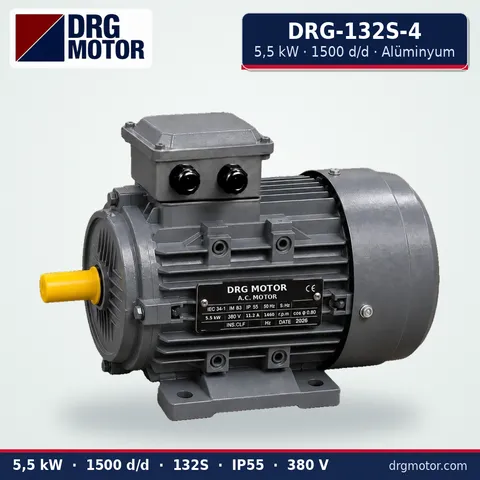
5.5 kW Three-Phase Motor 1500 rpm – DRG-132S-4 Aluminium
- 5.5 kW · 1500 rpm (4 poles)
- Aluminium frame · IEC 132S
- Shaft: 38 × 80 mm
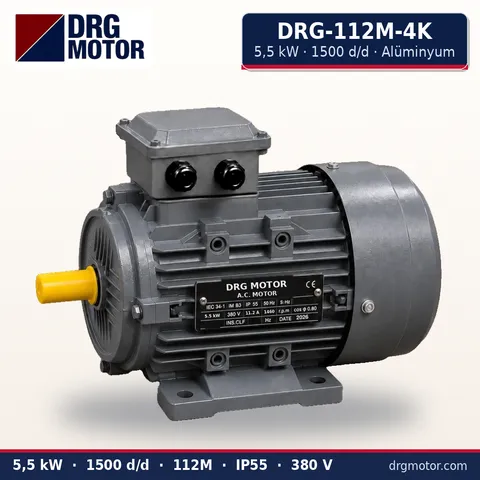
5.5 kW Compact Three-Phase Motor 1500 rpm – DRG-112M-4K Aluminium
- 5.5 kW · 1500 rpm (4 poles)
- Aluminium frame · IEC 112M
- Shaft: 28 × 60 mm
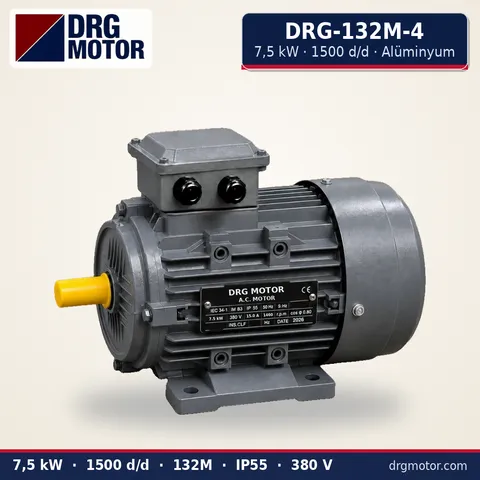
7.5 kW Three-Phase Motor 1500 rpm – DRG-132M-4 Aluminium
- 7.5 kW · 1500 rpm (4 poles)
- Aluminium frame · IEC 132M
- Shaft: 38 × 80 mm
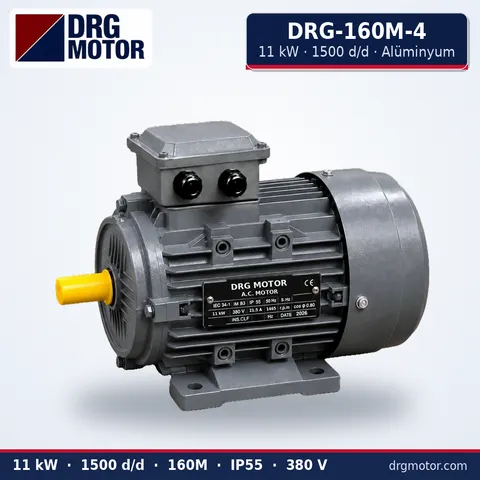
11 kW Three-Phase Motor 1500 rpm – DRG-160M-4 Aluminium
- 11 kW · 1500 rpm (4 poles)
- Aluminium frame · IEC 160M
- Shaft: 42 × 110 mm
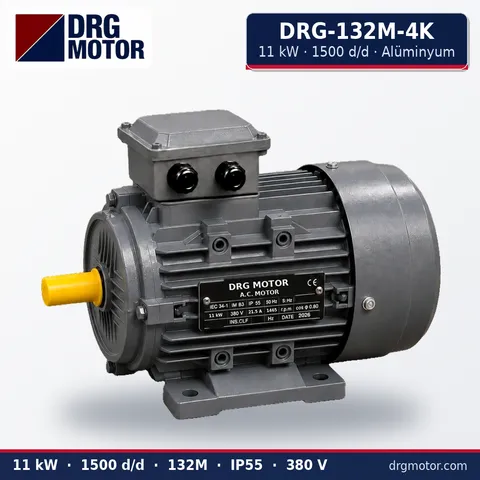
11 kW Compact Three-Phase Motor 1500 rpm – DRG-132M-4K Aluminium
- 11 kW · 1500 rpm (4 poles)
- Aluminium frame · IEC 132M
- Shaft: 38 × 80 mm