English
 Le français
 Türkçe




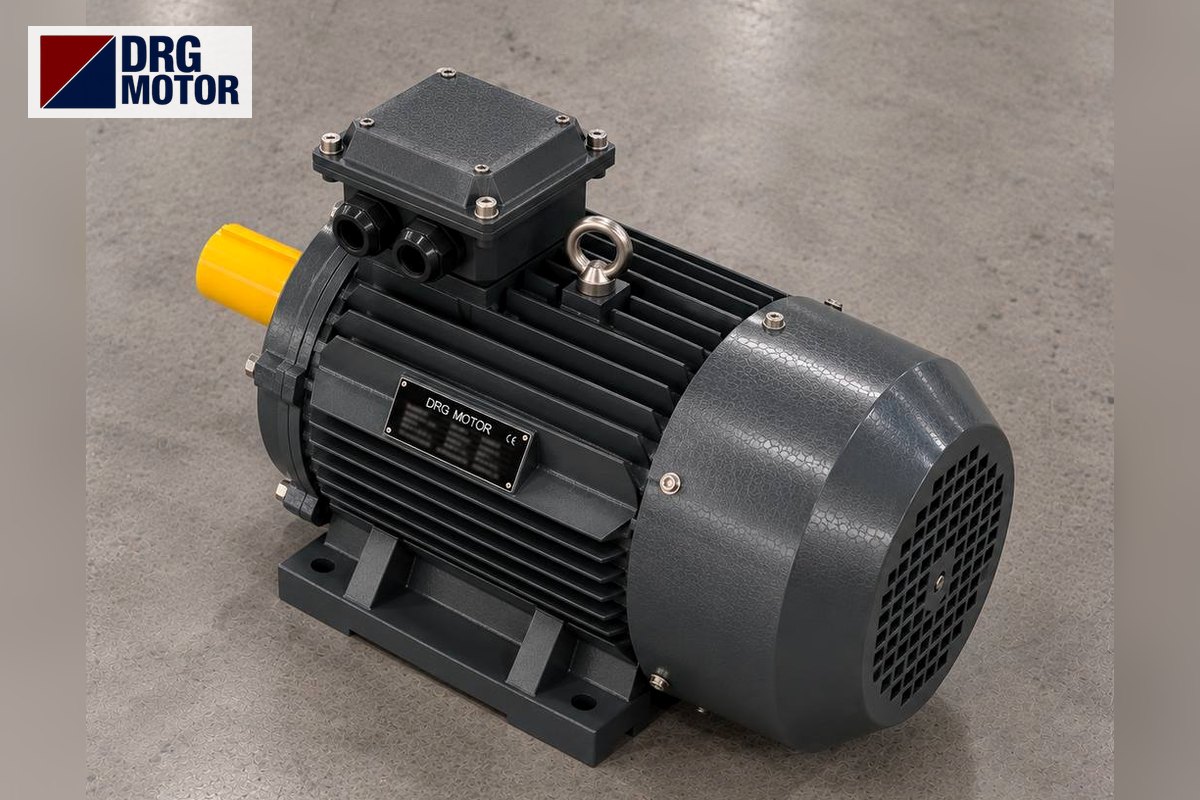

A booster pump motor that keeps running without stopping is usually a sign of the plumbing or the pressure switch, not the motor itself. Because the pump cannot reach the required pressure, the pressure switch contact never opens and the motor runs non-stop. The real cause is normally a leak, a wrong switch setting, an expansion tank that has lost its air cushion, or a blockage on the suction/discharge line; the motor is simply forced to carry this load, so it overheats and can eventually burn out.
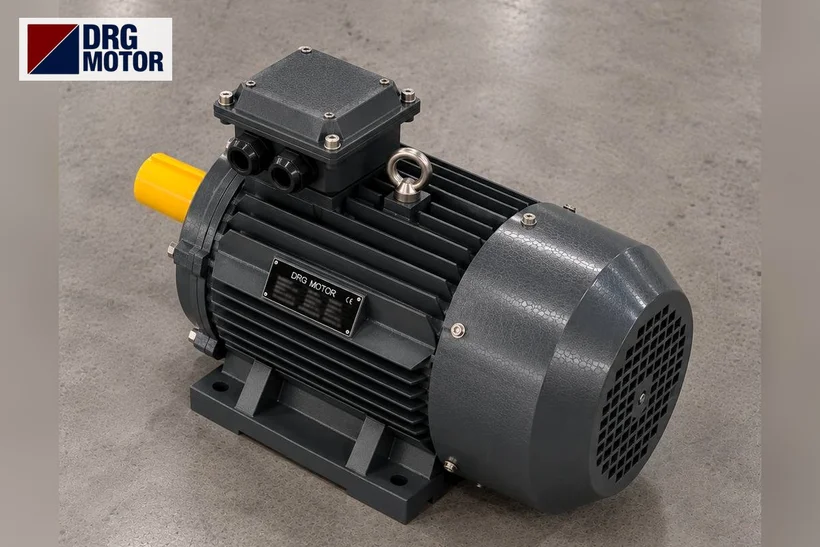
DRG Motor is a manufacturer, supplier and seller of electric motors. You can find every three-phase asynchronous model suitable for boosters by power and speed in the online motor shop, and listed together in the three-phase asynchronous electric motors category. Below we explain why the motor keeps turning without cycling, where the problem comes from, and what to check before buying a new motor. This article is informative; it is not a step-by-step field wiring or adjustment instruction.
Why does a booster pump motor run non-stop?
In a healthy booster the motor switches on when tank pressure drops to the lower limit and stops when it reaches the upper limit, so it runs and rests in cycles. If the motor turns without ever stopping, the system cannot reach the upper pressure value. There are four main reasons behind this:
- A water leak or an open point: A dripping tap, a leaking fitting or a valve left open prevents the pressure from rising. The pump stays on continuously trying to make up for the escaping water.
- Pressure switch setting or fault: If the upper cut-off pressure is set too high, or the switch contact/diaphragm is faulty, the pump never receives the "stop" signal.
- Expansion tank losing its air cushion: If the tank's pre-charge has dropped or the inner membrane has burst, the system cannot hold pressure; even a small draw-off starts the pump, and it will not stop.
- A blockage on the suction or discharge line: A stuck check valve, a clogged filter or a partly closed valve reduces the flow; the pump runs a lot but delivers little, so it cannot recover the pressure.
The key point: all four causes are on the plumbing and control side. The motor does not decide "I won't stop"; it keeps turning because the stop signal never arrives.
Click to see current electric motor prices and order nowSEE PRICES →
The problem is often the system, not the motor
When a booster will not stop, the first thought is "the motor is broken"; yet in most cases the motor is fine. The pressure switch, the expansion tank and the pipework form one working system, and if any link fails the motor takes the strain. So before removing the motor it makes sense to look, in order, at: visible leaks and drips first, then the tank pre-charge, then the lower/upper settings of the pressure switch, and finally the suction line and check valve. If you want to understand how the pressure switch is wired and how it works, you will find this check sequence in detail in our article what to check before buying a new motor when a booster starts too often.
Why does non-stop running burn the motor?
When the motor turns continuously without cycling, two things happen at once: the windings get no chance to cool, and the pump is strained because it cannot reach pressure. Accumulated heat weakens the insulation, and the prolonged strain raises the current. If protection is inadequate, this can end with the winding overheating and burning out. In other words, a problem that started in the plumbing can turn into a genuine motor fault over time. We gathered what to watch when choosing the right replacement for a burnt booster motor in our article why a booster pump motor burns out and how to choose the right motor.
What to check first: a short checklist
Before buying a new motor, reviewing the following points on a de-energised system often reveals the cause:
- Is there a visible water leak, a dripping tap or a leaking fitting?
- Is the expansion tank's pre-charge in place, or does the tank sound like an "empty drum"?
- Do the lower/upper pressure switch values match the pump's rating plate and the system need?
- Are the suction filter, check valve and valves open and clean?
- Is the motor overheating, or does the thermal/protection trip frequently?
After these checks, whether the motor is truly sound (for example its insulation resistance) must be measured only after the power is cut and the absence of voltage is verified, by qualified electrical personnel. For exact settings and thresholds, refer to the motor's rating plate and the device documentation; the explanations here are general information.
Suitable DRG three-phase motors for boosters
Home and small-business boosters most often use 2-pole (3000 rpm class) three-phase motors between 1.1 and 2.2 kW. The table below shows the power, speed and rated current at 400 V of the aluminium-housing DRG models in this class; the same powers are also available in cast iron. The model codes link straight to the product page, and the voltage on all of them is 230/400 V (Δ/Y).
| Model | Power | Speed | Rated current (400 V) |
|---|---|---|---|
| DRG-802-2-AL | 1.1 kW | 3000 rpm | 2.31 A |
| DRG-90S-2-AL | 1.5 kW | 3000 rpm | 3.06 A |
| DRG-90L-2-AL | 2.2 kW | 3000 rpm | 4.35 A |
The safest way to choose a new motor is to base it on the power (kW), speed (rpm), voltage/connection and mounting/shaft dimensions on the old motor's plate. To compare current values you can also use our motor current chart.
Send a photo of your current motor nameplate and we will find the suitable DRG model together.Send on WhatsApp
See the suitable three-phase asynchronous models and current prices to replace a booster motor that ran non-stop and burnt outSEE PRICES
Frequently asked questions
Should I replace the motor immediately because the booster won't stop?
No. In most cases the motor is sound; first check for leaks, the expansion tank and the pressure switch. Inspecting these links before removing the motor avoids an unnecessary motor change.
Which is more often to blame, the pressure switch or the tank?
Both are common causes. A tank that has lost its pre-charge is one of the most frequent reasons for a pump running very often and for long periods; a wrong setting or fault in the pressure switch can make the motor never stop.
The motor is heating up because it runs constantly — is that harmful?
Yes, it is harmful over time. A motor that runs without cycling cannot cool; the heat that builds up wears the insulation, and if protection is inadequate the winding can burn out. That is why it is important to find the source of the problem without delay.
What values should I look at when buying a new motor?
Base it on the power (kW), speed (rpm), voltage/connection and mounting/shaft dimensions on the old motor's plate. You can choose the DRG model in the same class by these values, and send us a photo of the plate to be sure.
Electric Motors Related to This Topic — Models and Current Prices
Suitability is not decided by power alone: compare the speed, voltage, mounting, shaft and fixing dimensions of your machine with the product data; if unsure, send us the nameplate of your current motor.
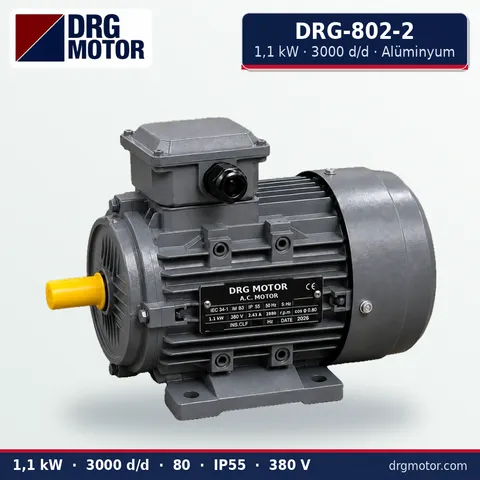
1.1 kW Three-Phase Motor 3000 rpm – DRG-802-2 Aluminium
- 1.1 kW · 3000 rpm (2 poles)
- Aluminium frame · IEC 80
- Shaft: 19 × 40 mm
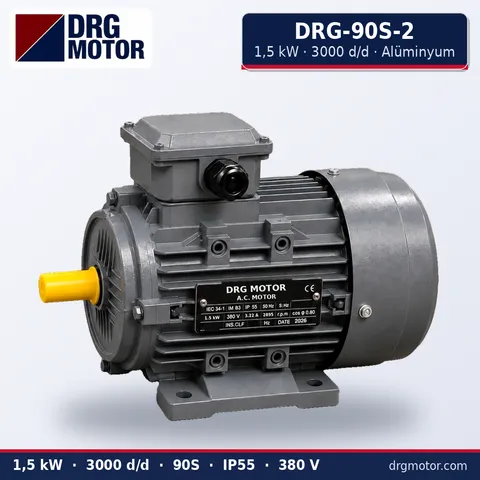
1.5 kW Three-Phase Motor 3000 rpm – DRG-90S-2 Aluminium
- 1.5 kW · 3000 rpm (2 poles)
- Aluminium frame · IEC 90S
- Shaft: 24 × 50 mm
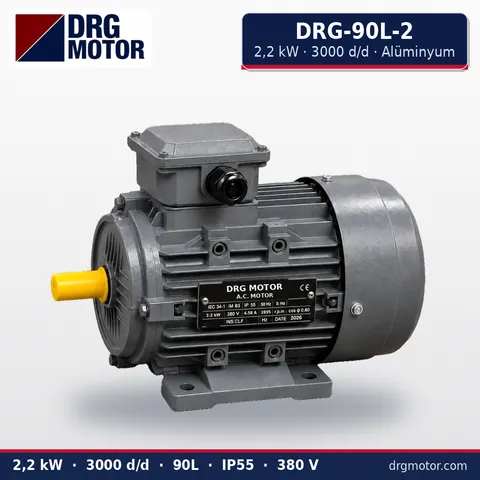
2.2 kW Three-Phase Motor 3000 rpm – DRG-90L-2 Aluminium
- 2.2 kW · 3000 rpm (2 poles)
- Aluminium frame · IEC 90L
- Shaft: 24 × 50 mm
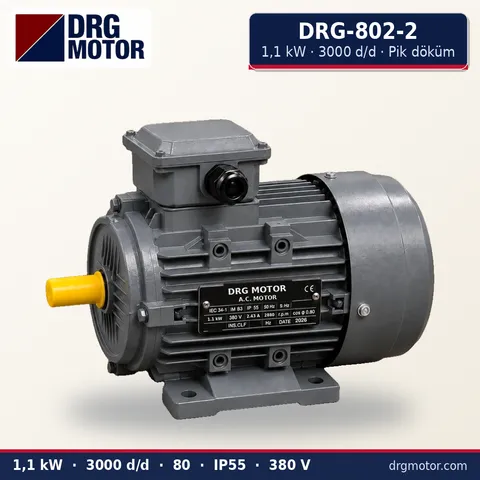
1.1 kW Three-Phase Motor 3000 rpm – DRG-802-2 Cast Iron
- 1.1 kW · 3000 rpm (2 poles)
- Cast iron frame · IEC 80
- Shaft: 19 × 40 mm
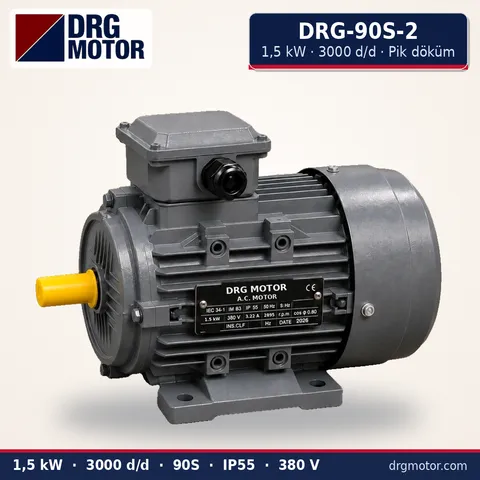
1.5 kW Three-Phase Motor 3000 rpm – DRG-90S-2 Cast Iron
- 1.5 kW · 3000 rpm (2 poles)
- Cast iron frame · IEC 90S
- Shaft: 24 × 50 mm
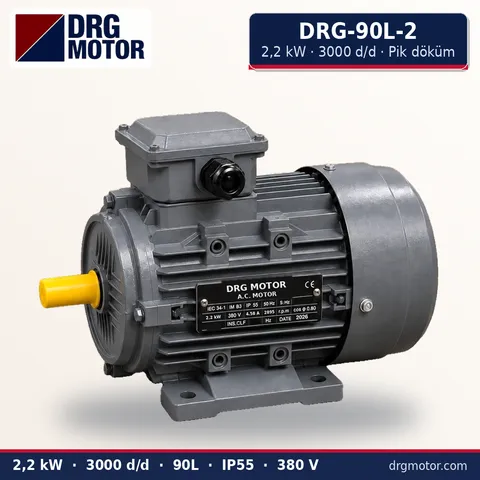
2.2 kW Three-Phase Motor 3000 rpm – DRG-90L-2 Cast Iron
- 2.2 kW · 3000 rpm (2 poles)
- Cast iron frame · IEC 90L
- Shaft: 24 × 50 mm