English
 Le français
 Türkçe

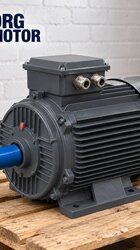
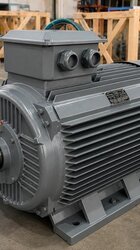
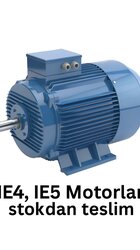
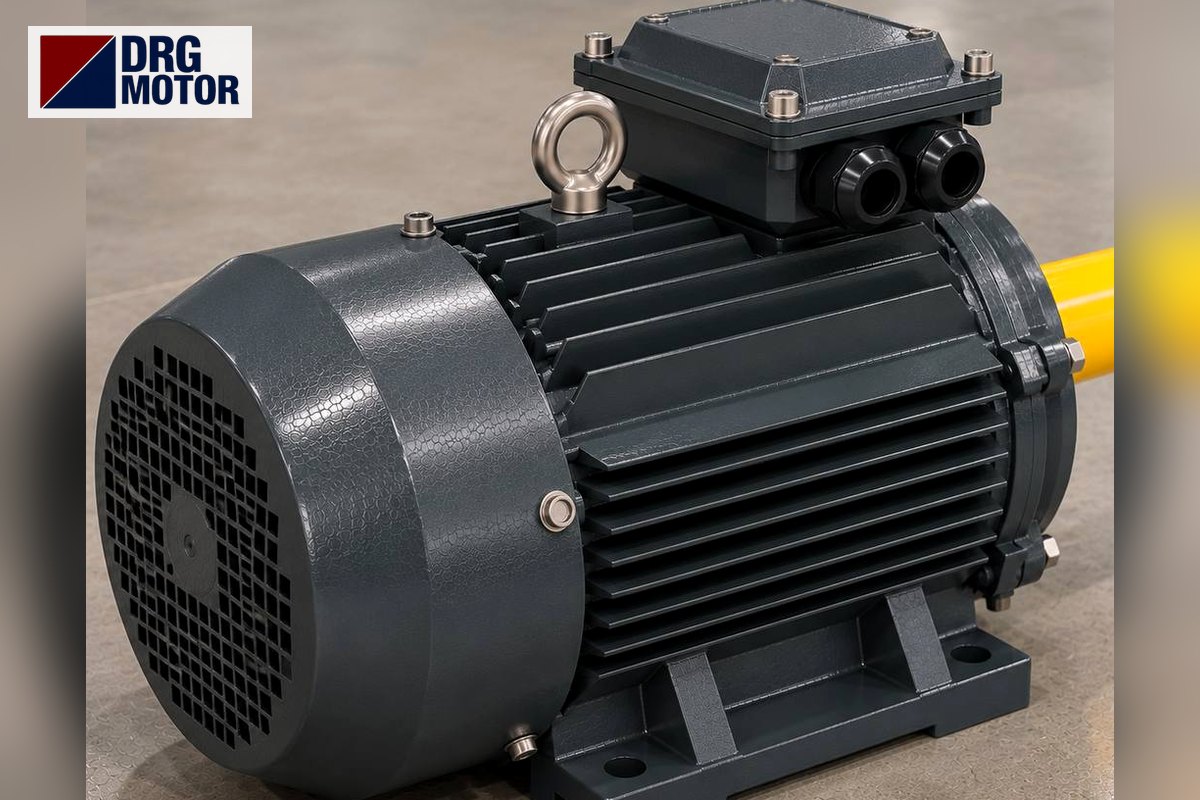

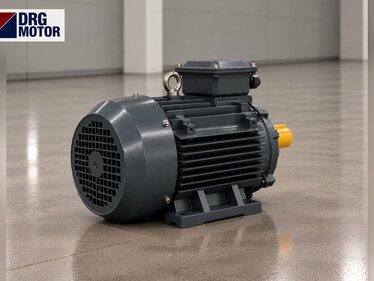
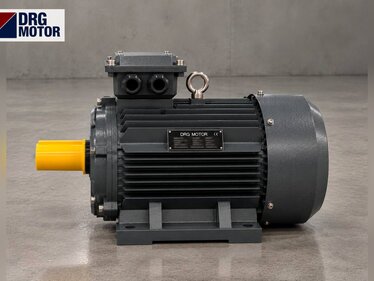
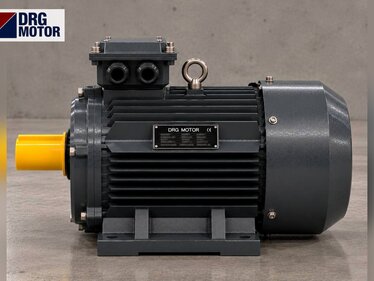
A three-phase asynchronous electric motor turns the mains current it receives into a magnetic field that rotates inside the stator; this field drags the rotor along and the shaft turns. The rotor can never quite catch the field. That small lag, called slip, is exactly why the word "asynchronous" sits in the name.
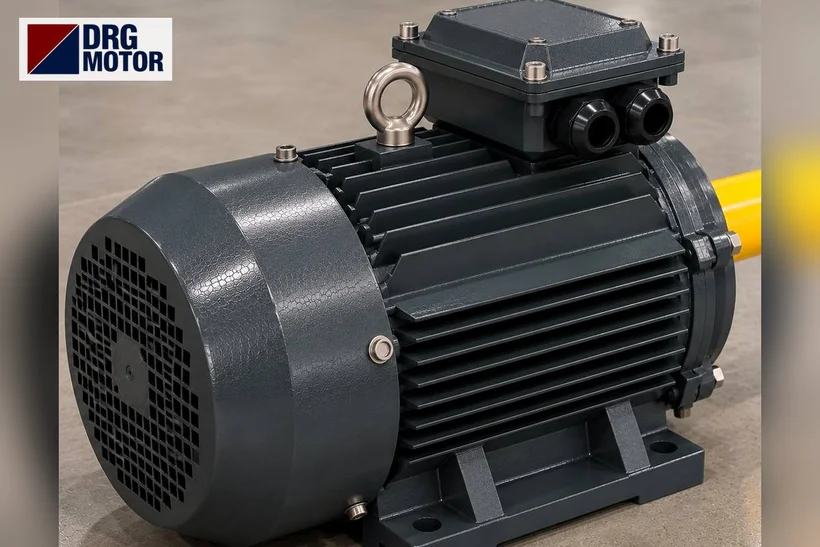
DRG Motor is a manufacturer, supplier and seller of electric motors; it is based in İzmir and ships quickly to every province of Türkiye. We explain the working principle below in plain, on-site terms. To see the same figures on real products, browse the online electric motor shop or the three-phase asynchronous electric motors category.
The trick of three phases: a turning field from a still winding
Each of the three phases carries a current shifted 120 degrees from the others; they do not peak together but rise and fall in turn. Inside the stator, three winding groups are also placed 120 degrees apart. As each phase feeds its own winding at a different instant, the peak of the magnetic field shifts from one winding to the next. Nothing physically turns, yet the field sweeps smoothly around the bore. This is the rotating magnetic field, and it is where the whole story begins.
A single phase cannot produce such a clean rotation on its own; the real value of three phases is building a field that carries direction and continuity by itself, with no extra device.
The path the energy follows
A simple flow makes the picture settle in the mind:
Mains (3 phases)  →  Stator windings  →  Rotating magnetic field
                                               │
                                     (by induction)
                                               ▼
                       Current in rotor bars  →  Force  →  Shaft turns
Notice that no wire is connected to the rotor anywhere in the chain. Energy passes into the field at the stator, then crosses to the rotor as if leaping through the air. This simplicity is the real reason the squirrel-cage asynchronous electric motor is so rugged and low-maintenance in the field: there are no wearing contacts such as brushes, commutators or slip rings.
The stator: the fixed part that builds the field
The stator is the fixed section seated inside the housing, packed from thin silicon-steel laminations. The copper windings in its slots are fed from the terminal box. This is also the first place a technician looks at the panel: connecting the three phases in the right order decides which way the field turns. Swap two phases and the field reverses, so the shaft runs the other way.
Click to see current electric motor prices and order nowSEE PRICES →
The rotor: the part that chases the field
The rotor standing inside the turning field is, in most asynchronous electric motors, a squirrel cage: packed laminations plus conductor bars short-circuited by rings at their ends. As the field sweeps past these bars it induces a voltage and a current in them. A current-carrying bar inside a magnetic field feels a force, and that force sets the rotor turning. No electricity is fed to the rotor from outside; everything happens by induction, which is why this type is also called an induction motor.
Self-starting: no extra device needed
The biggest practical convenience of the three-phase asynchronous electric motor is that it finds its direction and starts turning the moment power is applied. Because the rotating field appears before the shaft even moves, it needs no auxiliary winding or added mechanism to provide the first torque. At the instant of start-up, while the rotor is still at rest, the speed gap with the field is largest; the current drawn therefore stays high for a brief moment, then falls to its normal value as the shaft speeds up. A soft starter or drive on the panel is there to manage that first surge, not to change the principle.
Synchronous speed and the number of poles
The speed of the field depends on two things: the mains frequency and the number of poles in the stator. The calculation is simple:
Synchronous speed = 120 × frequency / number of poles (rpm)
On a 50 Hz supply, more poles mean a slower field:
| Number of poles | Synchronous speed (50 Hz) | Approx. speed under load |
|---|---|---|
| 2 | 3000 rpm | ~2900 rpm |
| 4 | 1500 rpm | ~1450 rpm |
| 6 | 1000 rpm | ~960 rpm |
An electric motor whose nameplate reads "1500 rpm" is in fact 4-pole, and its field turns at 1500 rpm. The shaft runs a little slower, around 1450 rpm. The name of that difference is slip.
Slip: the source of the word "asynchronous"
Suppose the rotor fully caught the turning field. At that moment the bars would be motionless relative to the field, the crossing would stop, the induced current would drop to zero and the force would vanish. So the rotor cannot catch the field; even if it did, the drive would die. That is why the rotor always runs a notch behind the field. The percentage gap between field speed and shaft speed is called slip.
As the load grows the rotor lags a little more, slip increases, and the motor produces more torque. At no load slip is very small and the shaft runs almost at synchronous speed. The "not synchronous" name, asynchronous, comes precisely from this small, permanent gap.
A look with real DRG figures
Let us make the same idea concrete with a few of DRG's 4-pole (1500 rpm class) models. In all of them the field turns at 1500 rpm; the shaft runs a little below that. The current values are for 400 V:
| Model | Power | Speed class | Current (400 V) |
|---|---|---|---|
| DRG-112M-4 | 4 kW | 1500 rpm | 7.95 A |
| DRG-132M-4 | 7.5 kW | 1500 rpm | 14.3 A |
| DRG-160M-4 | 11 kW | 1500 rpm | 20.4 A |
The same powers also exist in 2-pole (3000 rpm) and 6-pole (1000 rpm) versions; which one suits you depends on the speed your machine needs. You can review every power and speed option in the online electric motor shop and decide according to your need.
Make sure you have chosen the right speed and power for your machine; click to see current prices and place your orderSEE PRICES
Send a photo of your current motor nameplate and we will find the suitable DRG model together.Send on WhatsApp
Frequently asked questions
What is the difference between an asynchronous and a synchronous electric motor?
In an asynchronous electric motor the rotor always runs a little behind the turning field; without this lag it cannot produce torque. In the synchronous type the rotor turns at exactly the field speed. The most common choice in industry, robust and easy to maintain, is the asynchronous (induction) type.
Why is the shaft speed a bit lower than the nameplate figure?
The synchronous speed on the nameplate is the speed of the field. The shaft turns slower by the amount of slip. For example, in a 1500 rpm class electric motor the shaft runs around 1450 rpm under load; this is normal, not a fault.
How do I change the direction of rotation?
Swapping any two of the three phases reverses the field. When doing this, switch off the power, confirm it is de-energised, and have the connection carried out by authorised electrical personnel.
Electric Motors Related to This Topic — Models and Current Prices
Suitability is not decided by power alone: compare the speed, voltage, mounting, shaft and fixing dimensions of your machine with the product data; if unsure, send us the nameplate of your current motor.
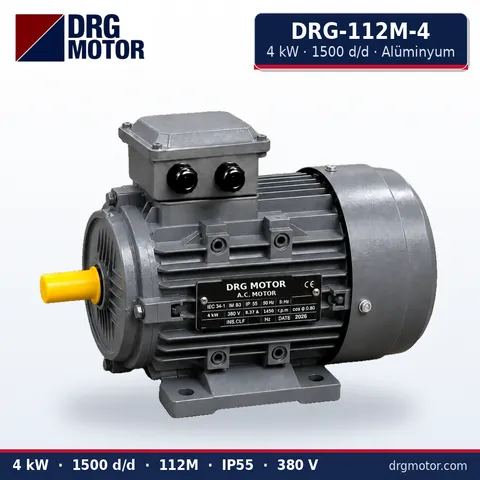
4 kW Three-Phase Motor 1500 rpm – DRG-112M-4 Aluminium
- 4 kW · 1500 rpm (4 poles)
- Aluminium frame · IEC 112M
- Shaft: 28 × 60 mm
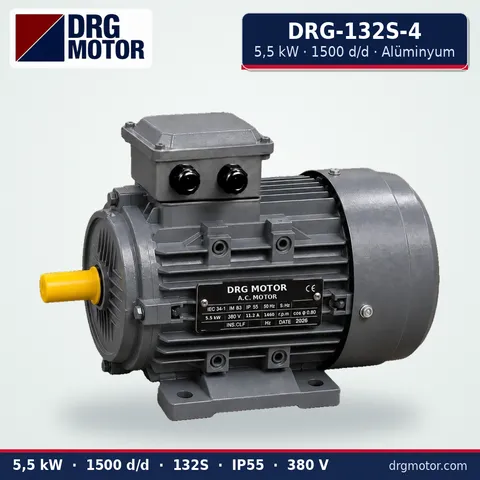
5.5 kW Three-Phase Motor 1500 rpm – DRG-132S-4 Aluminium
- 5.5 kW · 1500 rpm (4 poles)
- Aluminium frame · IEC 132S
- Shaft: 38 × 80 mm
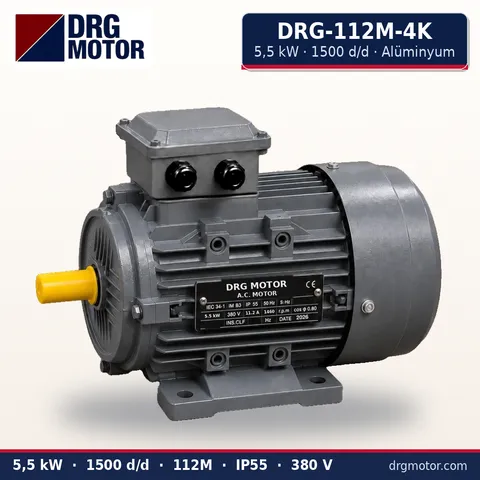
5.5 kW Compact Three-Phase Motor 1500 rpm – DRG-112M-4K Aluminium
- 5.5 kW · 1500 rpm (4 poles)
- Aluminium frame · IEC 112M
- Shaft: 28 × 60 mm
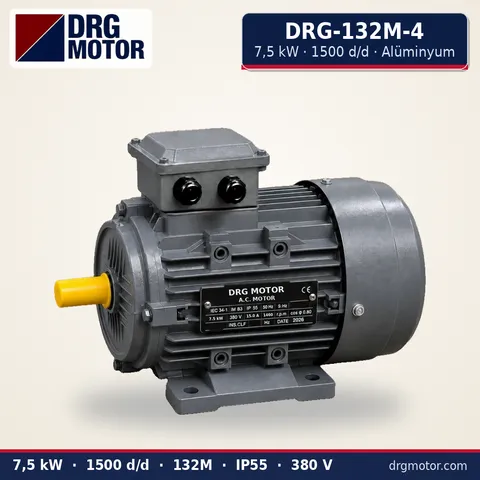
7.5 kW Three-Phase Motor 1500 rpm – DRG-132M-4 Aluminium
- 7.5 kW · 1500 rpm (4 poles)
- Aluminium frame · IEC 132M
- Shaft: 38 × 80 mm
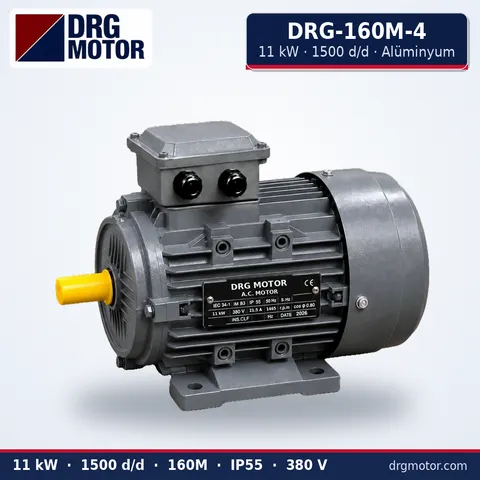
11 kW Three-Phase Motor 1500 rpm – DRG-160M-4 Aluminium
- 11 kW · 1500 rpm (4 poles)
- Aluminium frame · IEC 160M
- Shaft: 42 × 110 mm
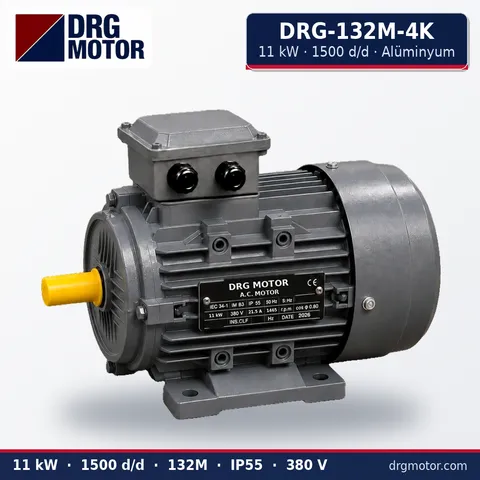
11 kW Compact Three-Phase Motor 1500 rpm – DRG-132M-4K Aluminium
- 11 kW · 1500 rpm (4 poles)
- Aluminium frame · IEC 132M
- Shaft: 38 × 80 mm