English
 Le français
 Türkçe




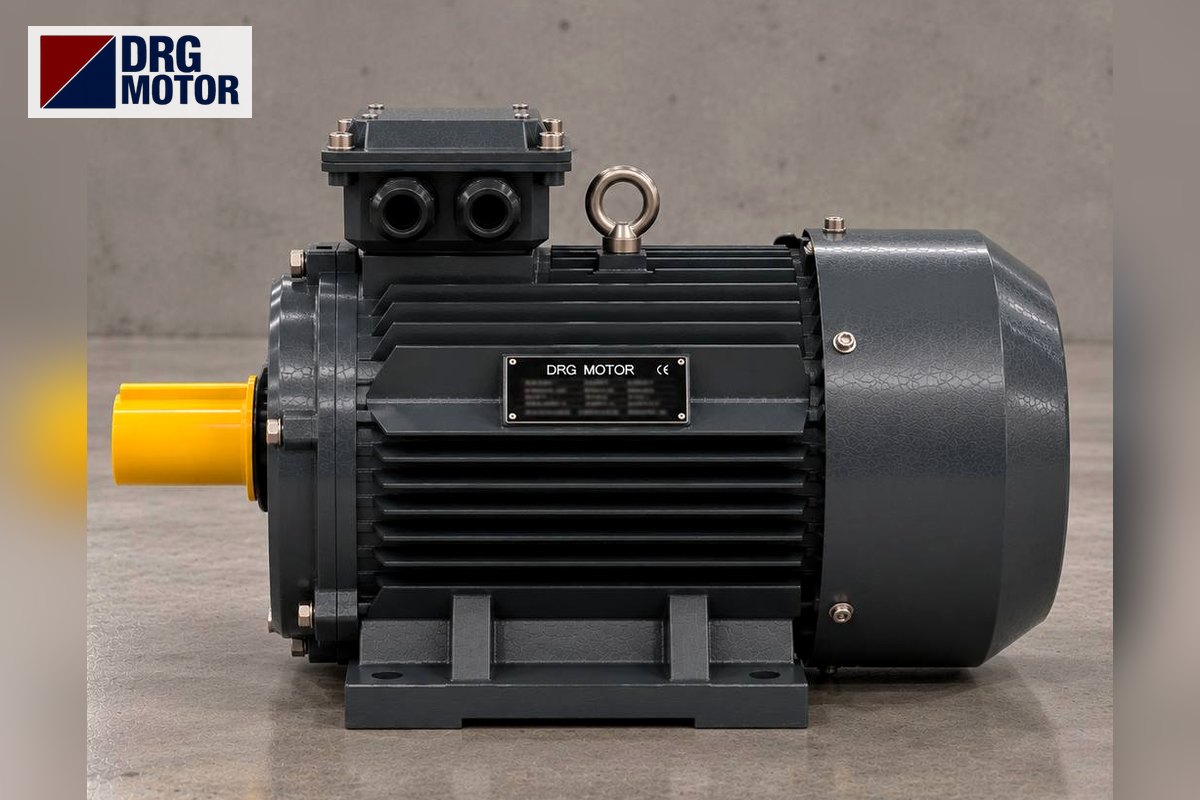

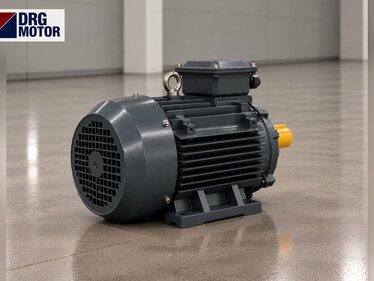
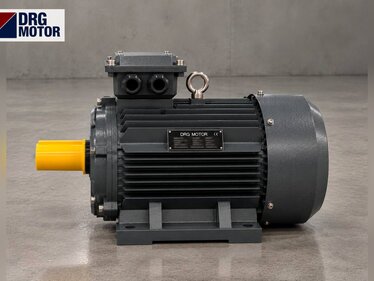
A 4 kW three-phase electric motor is roughly 5.5 HP and one of the most requested ratings in the mid-power class, running on Türkiye's 380–400 V three-phase grid. At DRG this rating is wound as 400/690 V (Δ/Y), which means it runs in delta (Δ) on a 400 V supply. The rated current at 400 V is between 7.45 and 8.99 A depending on pole count, and the speed option is 3000, 1500 or 1000 rpm.
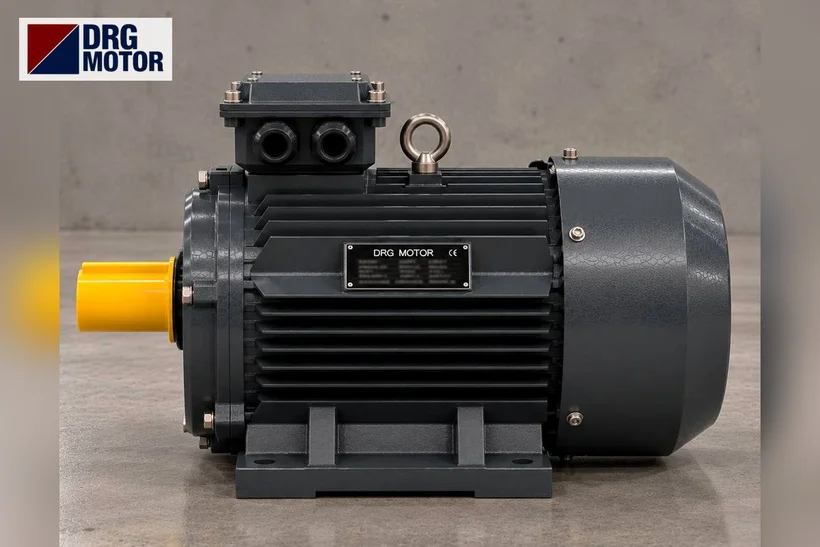
DRG Motor is a manufacturer, supplier and seller of electric motors. It is based in İzmir and ships quickly across all of Türkiye, that province included. Once you have fixed the speed and the frame, pick the right 4 kW model in the online electric motor shop and see every rating together in the three-phase asynchronous electric motors category.
Where does 4 kW do its work?
This rating covers the workshop's mid-class drive needs. In the field we see 4 kW most on compressors, medium pumps and booster sets, fans and extractors, conveyor and auger drives, hydraulic power packs and cutting/saw benches. Piston compressors tend toward the 1500 rpm four-pole model; high-flow centrifugal pumps and blowers call for 3000 rpm. Mills, mixers and slow conveyors that need high torque prefer the 1000 rpm six-pole model. So "I need 4 kW" is only half the choice — the speed your machine wants is the other half.
Why 4 kW is a connection threshold: 400/690 V and star-delta
At small ratings (say 0.75–3 kW) the plate usually shows 230/400 V and the motor is wired star (Y) on a 400 V line. 4 kW is where that habit changes: DRG's 4 kW-and-above three-phase electric motors are wound 400/690 V (Δ/Y). The two figures mean two connections — 400 V delta (Δ), 690 V star (Y) — and on Türkiye's 400 V grid this motor runs in delta. The practical point: the "star at 400 V" logic you got used to up to 3 kW is reversed at 4 kW.
This threshold also brings star-delta starting into play. 4 kW is the border where direct-on-line starting still works fine in most panels, but where star-delta starts to be considered for loads that start under load, such as compressors and large fans. Size the inrush current and panel protection accordingly. Before wiring or changing a connection, switch off the power, confirm it is dead and have the work done by qualified electrical personnel; set the link arrangement according to the motor plate and panel documentation.
Click to see current electric motor prices and order nowSEE PRICES →
One rating, three speeds: 2/4/6 poles and frame
In an asynchronous electric motor the pole count sets the speed. On a 50 Hz grid the synchronous speed follows 120·f/poles: 2 poles ≈ 3000, 4 poles ≈ 1500, 6 poles ≈ 1000 rpm. The real plate speed is a little below this; the gap is slip and it is normal. The same 4 kW moves to a larger IEC frame as the speed drops:
| Poles | Speed | Frame (IEC) | Shaft (dia×len) |
|---|---|---|---|
| 2 poles | 3000 rpm | 112M | 28x60 mm |
| 4 poles | 1500 rpm | 112M | 28x60 mm |
| 6 poles | 1000 rpm | 132M | 38x80 mm |
Note that the 2- and 4-pole 4 kW share the same 112M frame and 28×60 mm shaft, while the 1000 rpm model steps up to a 132M frame and a 38×80 mm shaft. The six-pole 4 kW is clearly larger and heavier. Plan coupling, pulley and foot holes around that frame difference.
Current and torque at 380/400 V
The rated current is the first number to check when sizing cable and the thermal relay range. At 4 kW the current rises slightly with the lower speed, because the low-speed model has a somewhat lower power factor and draws a little more. The values below are taken from DRG's real 4 kW aluminium records; the cast-iron versions give the same current:
| Model | Speed | Current (400 V) | Approx. torque |
|---|---|---|---|
| DRG-112M-2-AL | 3000 rpm | 7.45 A | ≈ 13 Nm |
| DRG-112M-4-AL | 1500 rpm | 7.95 A | ≈ 25 Nm |
| DRG-132M1-6-AL | 1000 rpm | 8.99 A | ≈ 38 Nm |
Torque is estimated with T = 9550·P/n and shows how the turning force at the shaft grows as speed drops. The 1000 rpm model's torque is about three times that of the 3000 rpm one — decisive for compressors and mills that demand high starting torque. Use the motor current chart and the cable size calculator for cable and protection.
Aluminium or cast iron?
Both frames exist at 4 kW and the electrical values (speed, current, voltage, shaft) are identical; the difference is weight and environment. The aluminium model is light and easy to move and remove — good for light workshop benches. The cast-iron (GG) model is heavier and impact-resistant — preferred on vibrating, dusty, demanding lines and on continuously loaded jobs like compressors. You can match either frame at all three speeds.
Compared with neighbours: 3 kW, 4 kW, 5.5 kW
When deciding on power it helps to think of 4 kW alongside its neighbours. The 3 kW below is still in the 230/400 V class and wired star at 400 V; 4 kW moves to 400/690 V and is wired delta — not just one power step up, but the point where the connection logic changes. The 5.5 kW above means a larger frame and higher current. If your machine is on the edge, measure the real load rather than jumping up a rating "to be safe"; an oversized electric motor draws excess no-load current, an undersized one struggles. When unsure, the electric motor calculator and the nameplate guide you.
What to confirm when ordering?
Even when 4 kW is the right power, the wrong speed or mounting type will not fit your machine. At order time fix these: speed (2/4/6 poles), foot or flange (B3 / B5 / B14 / B35), frame (aluminium / cast iron) and shaft size (28×60 mm or 38×80 mm). If you are replacing an existing electric motor, the safest route is to photograph its plate and send it; power, speed, voltage and frame are already written there. Pick the model from the online shop and ask us where you are unsure.
Frequently asked questions
How many HP is 4 kW?
About 5.5 HP. Since 1 HP ≈ 0.746 kW, 4 kW ≈ 5.36 HP; in plates and daily use it is called 5.5 HP.
Do I wire a 4 kW motor star or delta at 400 V?
Delta (Δ). DRG models of 4 kW and above are wound 400/690 V; on a 400 V grid the terminal links are set to delta. This is the opposite of the "star at 400 V" case you knew up to 3 kW.
Is star-delta starting required for 4 kW?
Not required; direct-on-line is enough in most panels. For loads that start under load, such as compressors and large fans, star-delta may be considered to reduce inrush. Leave the final choice to the panel documentation and qualified personnel.
Why is the 1000 rpm 4 kW larger?
Delivering the same power at a lower speed needs higher torque, which means a larger frame. So the six-pole 4 kW steps up to a 132M frame and a 38×80 mm shaft, while the 2- and 4-pole models stay in 112M.
To see the current price of the 4 kW three-phase electric motor that fits your speed and frame, visit the shop.SEE PRICES
Send a photo of your current motor nameplate and we will find the suitable DRG model together.Send on WhatsApp
Electric Motors Related to This Topic — Models and Current Prices
Suitability is not decided by power alone: compare the speed, voltage, mounting, shaft and fixing dimensions of your machine with the product data; if unsure, send us the nameplate of your current motor.
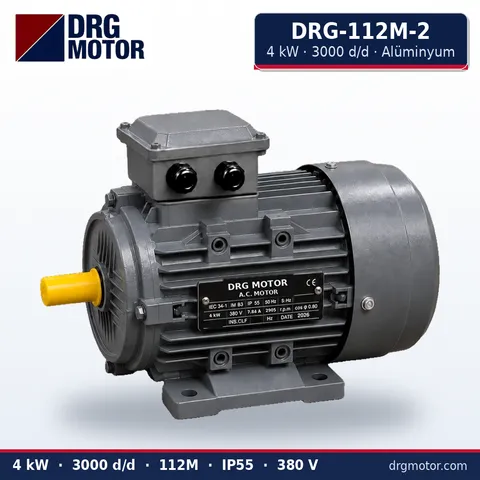
4 kW Three-Phase Motor 3000 rpm – DRG-112M-2 Aluminium
- 4 kW · 3000 rpm (2 poles)
- Aluminium frame · IEC 112M
- Shaft: 28 × 60 mm
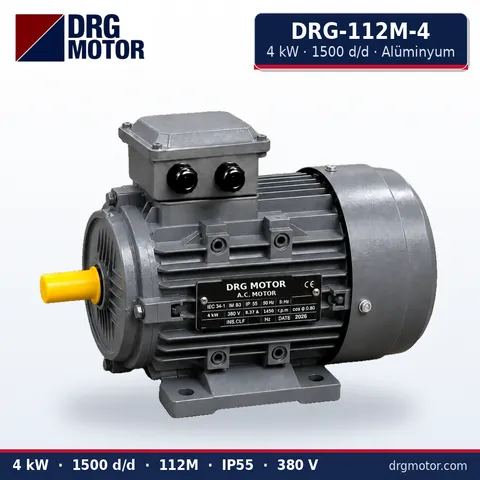
4 kW Three-Phase Motor 1500 rpm – DRG-112M-4 Aluminium
- 4 kW · 1500 rpm (4 poles)
- Aluminium frame · IEC 112M
- Shaft: 28 × 60 mm
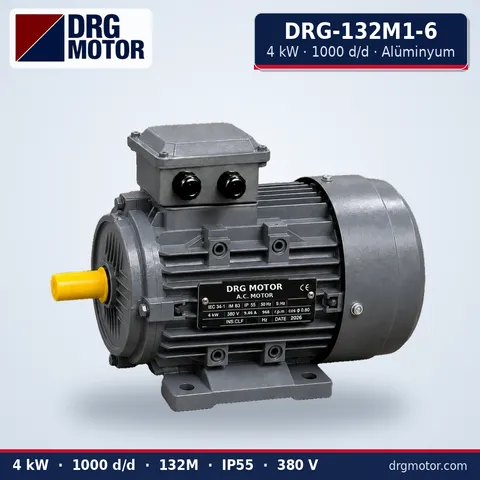
4 kW Three-Phase Motor 1000 rpm – DRG-132M1-6 Aluminium
- 4 kW · 1000 rpm (6 poles)
- Aluminium frame · IEC 132M
- Shaft: 38 × 80 mm
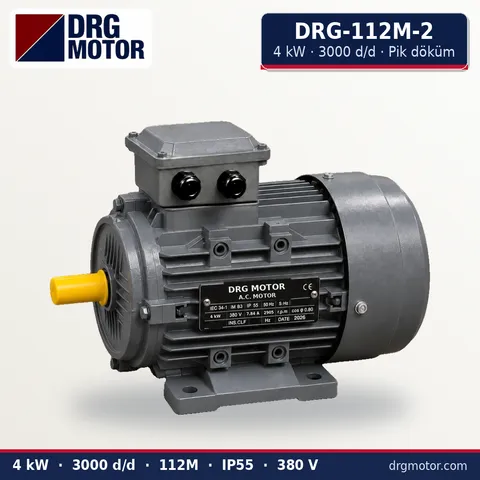
4 kW Three-Phase Motor 3000 rpm – DRG-112M-2 Cast Iron
- 4 kW · 3000 rpm (2 poles)
- Cast iron frame · IEC 112M
- Shaft: 28 × 60 mm
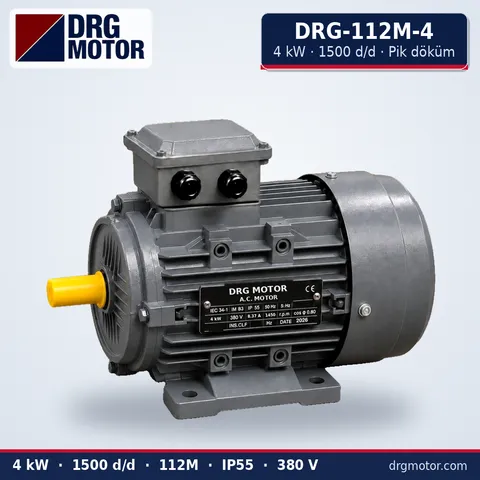
4 kW Three-Phase Motor 1500 rpm – DRG-112M-4 Cast Iron
- 4 kW · 1500 rpm (4 poles)
- Cast iron frame · IEC 112M
- Shaft: 28 × 60 mm
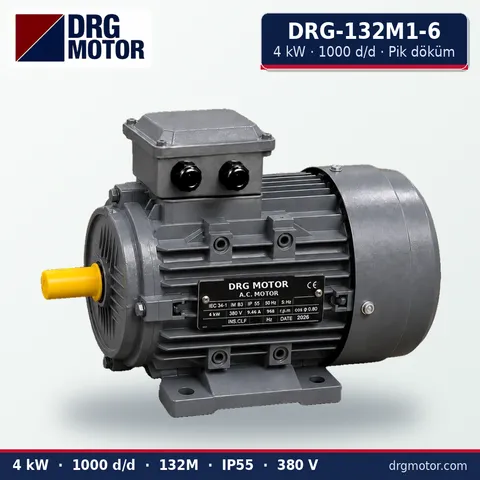
4 kW Three-Phase Motor 1000 rpm – DRG-132M1-6 Cast Iron
- 4 kW · 1000 rpm (6 poles)
- Cast iron frame · IEC 132M
- Shaft: 38 × 80 mm