English
 Le français
 Türkçe




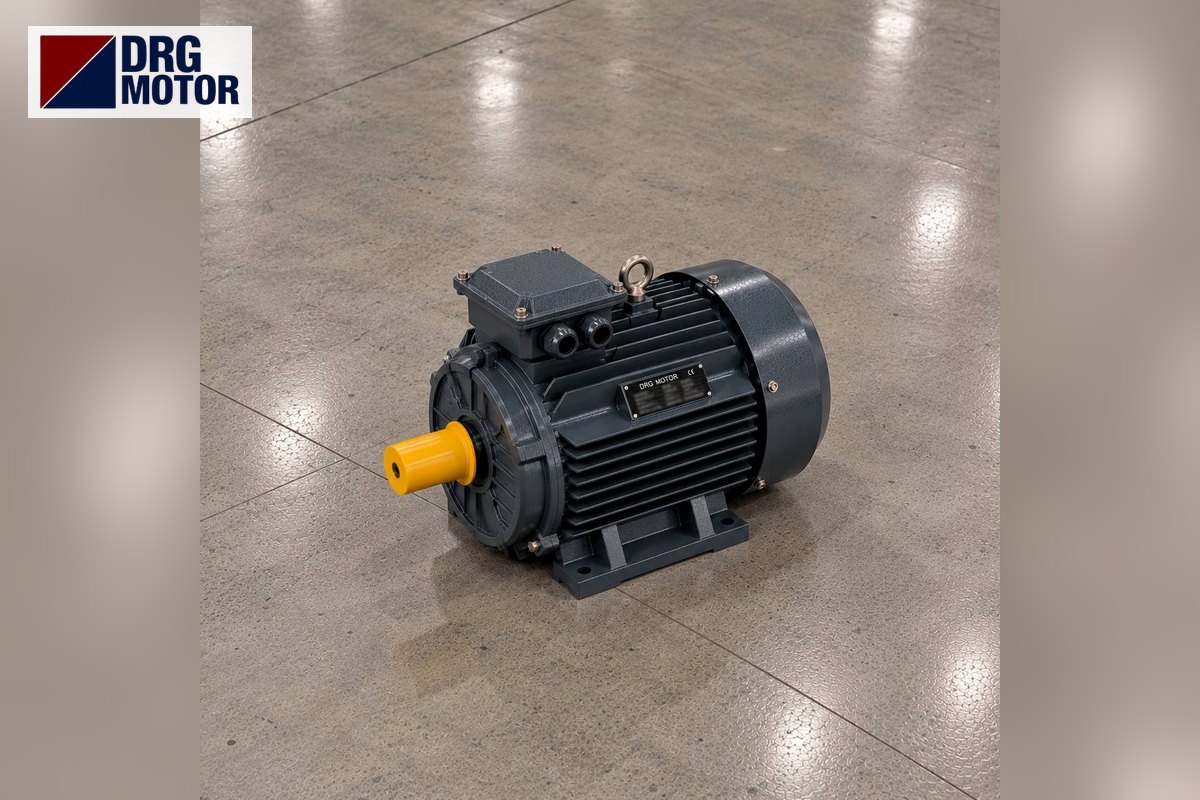

It is normal for an electric motor to run somewhat warm; a hot frame does not automatically mean a fault. But heat that you cannot touch for even a few seconds, a frame that gets very hot within minutes, or warming that comes with smell and loss of power points to a cause such as overload, undervoltage, blocked cooling, high ambient temperature or bearing friction. This article explains why three-phase asynchronous motors heat up and how to protect a motor that has not burned out yet.
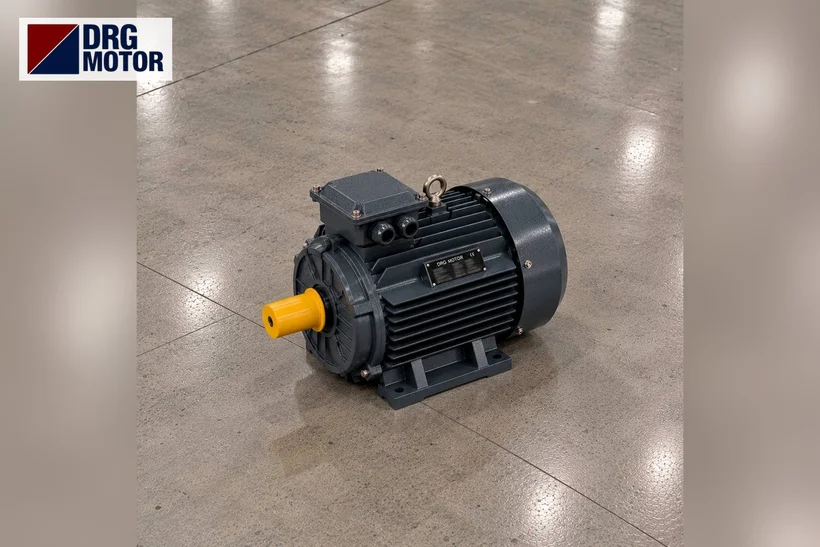
DRG Motor is a manufacturer, supplier and seller of electric motors. You can review suitable three-phase models by power and speed in the online motor shop, and see the same motors together in the three-phase asynchronous electric motors category.
Is a warm motor always a fault?
An asynchronous motor turns part of the electrical energy into heat through winding and iron losses. A healthy motor under load will therefore have a warm, even hot-to-the-touch frame, and that is expected. What matters is not the absolute temperature but whether the limit the insulation can withstand is exceeded.
DRG three-phase motors use Class F insulation, whose temperature limit is 155 °C. The frame temperature is the sum of the ambient temperature and the temperature rise produced during operation; the ambient is usually referenced at 40 °C. The same motor runs comfortably in a cool 20 °C workshop but much closer to the limit in a closed 45 °C enclosure, so this sum is what you should judge.
Why does an electric motor overheat?
Behind overheating there is almost always either an electrical issue (too much current) or a cooling issue. The most common causes and the first thing to check are summarised below.
| Possible cause | What happens in the motor | First check |
|---|---|---|
| Overload / wrong power sizing | Current rises above the rated value, winding and frame heat up | Compare running current with the nameplate value |
| Undervoltage | Current rises for the same power, torque drops, heating begins | Measure the voltage at the terminals |
| Blocked fan / dirty frame | Cooling air drops, heat builds up in the frame | Clean the fan cowl and the cooling fins |
| High ambient temperature | Heat cannot be dissipated, frame temperature climbs | Review the location and ventilation |
| Frequent start-stop | High starting current adds heat at every start | Assess start frequency and load inertia |
| Bearing friction | Mechanical friction grows, heat rises first at the bearing | Check bearing noise and local temperature |
Click to see current electric motor prices and order nowSEE PRICES →
Overload and wrong power sizing
The first cause of heating is asking the motor for more than its rated power. As the load grows the current grows too, and heat is released in the winding in proportion to the square of the current. A jammed conveyor, a misadjusted belt-pulley drive or a motor chosen too small from the start keeps the frame permanently hot. The remedy is to establish the real power demand of the application and pick a motor that matches it, with a small margin.
Poor cooling: fan, dirt and ambient temperature
DRG motors are cooled by their own rear fan (IC411). When the fan cowl is clogged with dust or debris, or the cooling fins are coated with dirt, the heat produced cannot escape and the frame temperature climbs. Likewise, placing the motor in a tight, airless bay or next to other hot equipment raises the ambient temperature. Keeping the cowl clear, cleaning the fins and leaving free air circulation around the motor directly lowers the heating.
Undervoltage and frequent starting
When the supply voltage drops below the rated value, the motor draws more current to do the same work, which means extra heating. Long, thin supply cables, a weak grid or loose connections can cause the voltage drop. Use the motor cable size calculator to check the cable cross-section and the motor current chart to compare current values.
Frequent start-stop is another major heat source. At every start the motor draws several times its rated current; an application that switches on many times per minute heats a motor that never gets enough time to cool. In high-starting applications the load inertia and the start frequency must be assessed.
Bearing friction and mechanical causes
Heating is not always electrical. A bearing that has run out of grease or reached the end of its life, misalignment from a coupling or belt, or faulty mounting that loads the shaft all increase mechanical friction. In this case the temperature rises first at the bearing and usually comes with noise and vibration. A metallic bearing noise together with local overheating is the first sign of a mechanical cause.
What to do with an overheating motor
Safety first: if the overheating is clear or comes with a smell, stop the motor, switch off the power and confirm it is de-energised. Voltage, current and insulation measurements and checking the terminal connections must be carried out by qualified electrical personnel. For threshold values such as the overload current setting or the insulation resistance, follow the motor nameplate and the device documentation rather than memorising a general figure.
If the root cause cannot be removed by reducing the load, clearing the cooling or correcting the voltage, a new motor with the correct power and speed for the application is often the healthiest solution. You can review suitable models by power and speed in the online motor shop.
1500 rpm three-phase DRG models
The table below lists the 4-pole (1500 rpm class) aluminium-frame DRG models commonly used in the medium-power range. The model codes link straight to the product page; the voltage on all of them is 400/690 V (Δ/Y). The rated current is given so you can compare it with the value you measure when judging the heating.
| Model | Power | Rated speed | Rated current (400 V) |
|---|---|---|---|
| DRG-112M-4-AL | 4 kW | 1450 rpm | 7.95 A |
| DRG-132S-4-AL | 5.5 kW | 1460 rpm | 10.7 A |
| DRG-112M-4K-AL | 5.5 kW | 1460 rpm | 10.7 A |
| DRG-132M-4-AL | 7.5 kW | 1460 rpm | 14.3 A |
| DRG-160M-4-AL | 11 kW | 1465 rpm | 20.4 A |
| DRG-132M-4K-AL | 11 kW | 1465 rpm | 20.4 A |
See current prices to choose a correctly sized three-phase model to replace an overheating motorSEE PRICES
Send a photo of your current motor nameplate and we will find the suitable DRG model together.Send on WhatsApp
Frequently asked questions
The frame is almost too hot to touch, is that normal?
A hot frame on a motor under load is not a fault on its own. But if you cannot touch it at all, if the temperature climbs quickly, or if smell, noise or loss of power comes with it, you should have the current and voltage measured.
The overload keeps tripping because the motor heats up, is the motor at fault?
A tripping overload is a sign of excess current; the cause may be overload, undervoltage, phase imbalance or blocked cooling. Review the overload setting and the root cause with qualified personnel, based on the current value on the motor nameplate.
Does a high ambient temperature really affect the motor?
Yes. The frame temperature is the sum of the ambient and the rise produced during operation. As the ambient rises you get closer to the insulation limit, so location and ventilation matter in hot, airless places.
Is stopping the motor now and then to cool it a solution?
It lowers the temperature temporarily but does not remove the root cause. The lasting fix is to correct the load, the voltage and the cooling, and if needed choose a motor with the right power for the application.
Electric Motors Related to This Topic — Models and Current Prices
Suitability is not decided by power alone: compare the speed, voltage, mounting, shaft and fixing dimensions of your machine with the product data; if unsure, send us the nameplate of your current motor.
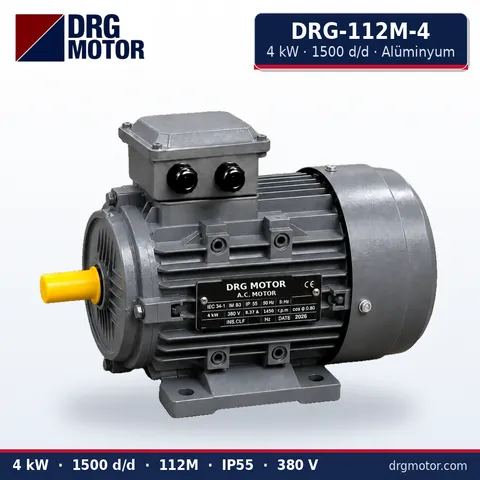
4 kW Three-Phase Motor 1500 rpm – DRG-112M-4 Aluminium
- 4 kW · 1500 rpm (4 poles)
- Aluminium frame · IEC 112M
- Shaft: 28 × 60 mm
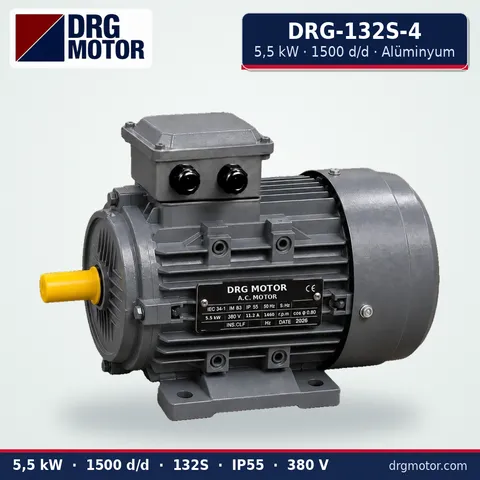
5.5 kW Three-Phase Motor 1500 rpm – DRG-132S-4 Aluminium
- 5.5 kW · 1500 rpm (4 poles)
- Aluminium frame · IEC 132S
- Shaft: 38 × 80 mm
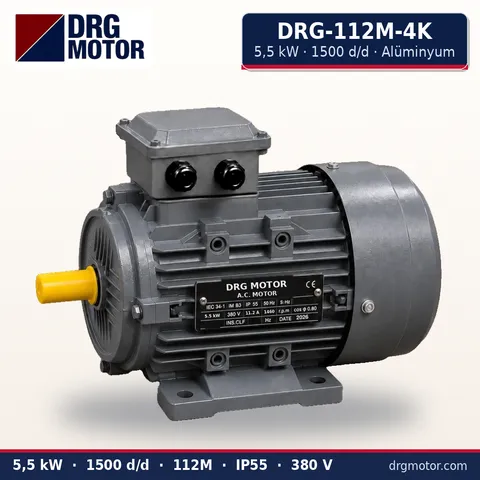
5.5 kW Compact Three-Phase Motor 1500 rpm – DRG-112M-4K Aluminium
- 5.5 kW · 1500 rpm (4 poles)
- Aluminium frame · IEC 112M
- Shaft: 28 × 60 mm
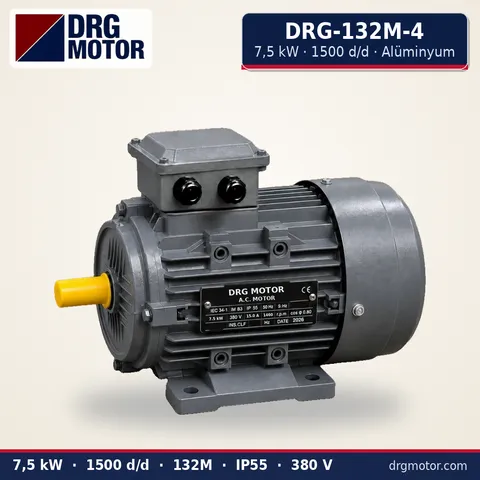
7.5 kW Three-Phase Motor 1500 rpm – DRG-132M-4 Aluminium
- 7.5 kW · 1500 rpm (4 poles)
- Aluminium frame · IEC 132M
- Shaft: 38 × 80 mm
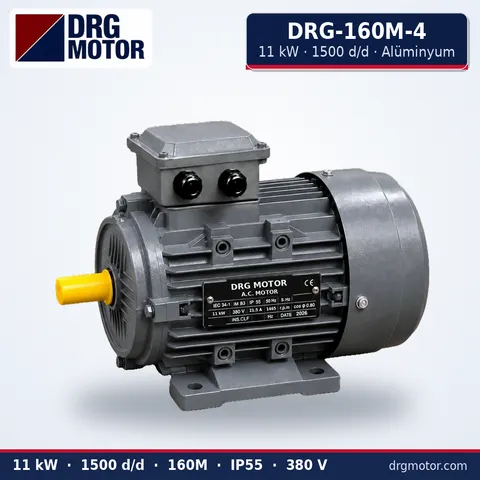
11 kW Three-Phase Motor 1500 rpm – DRG-160M-4 Aluminium
- 11 kW · 1500 rpm (4 poles)
- Aluminium frame · IEC 160M
- Shaft: 42 × 110 mm
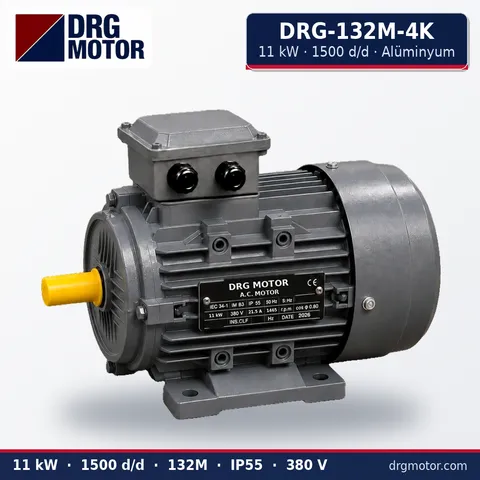
11 kW Compact Three-Phase Motor 1500 rpm – DRG-132M-4K Aluminium
- 11 kW · 1500 rpm (4 poles)
- Aluminium frame · IEC 132M
- Shaft: 38 × 80 mm