English
 Le français
 Türkçe




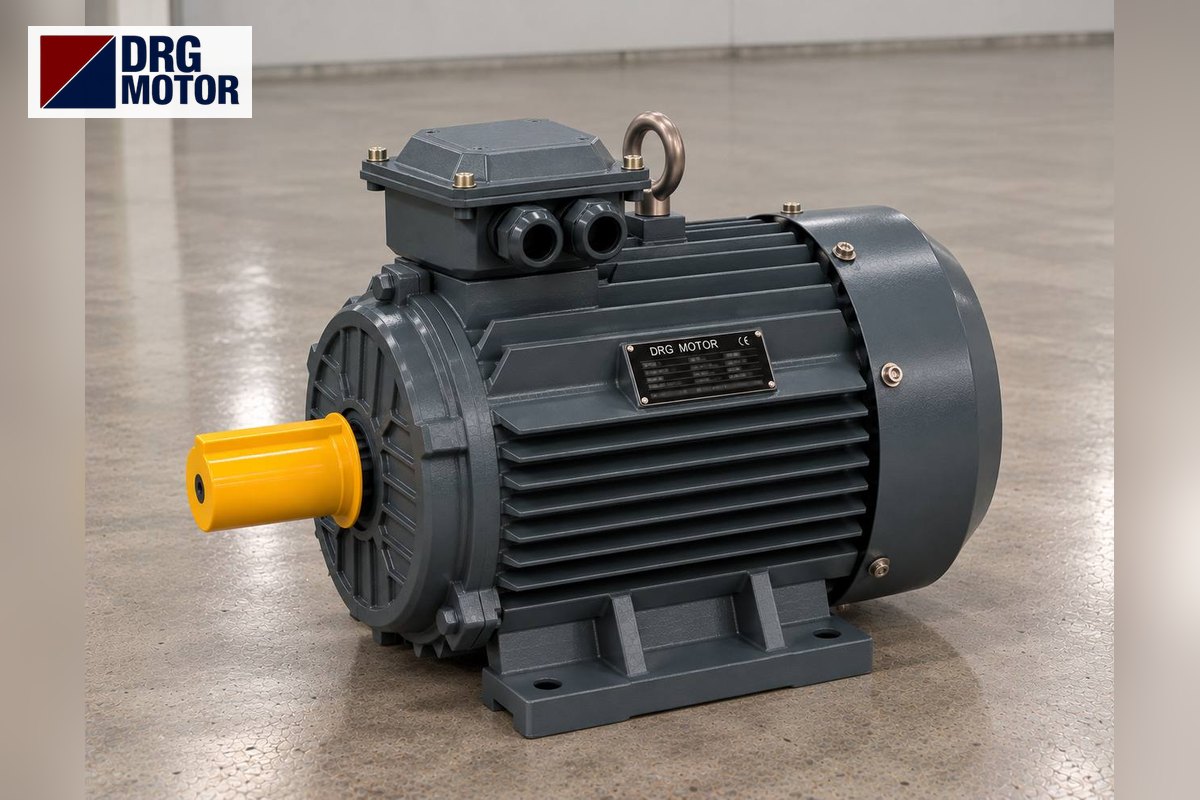

The motor of a starch separation centrifuge brings a heavy bowl up to around three thousand rpm and holds it there for hours. Two things decide the selection: the starting arrangement that will bring the bowl to operating speed (inverter, soft starter or centrifugal clutch) and the motor's position in a wet, warm hall exposed to starch dust. Power is read from the machine nameplate, not guessed.
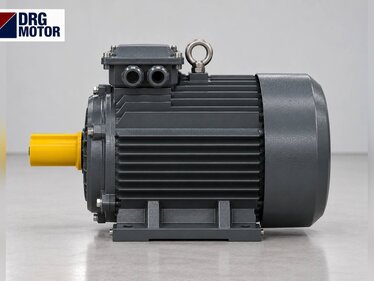
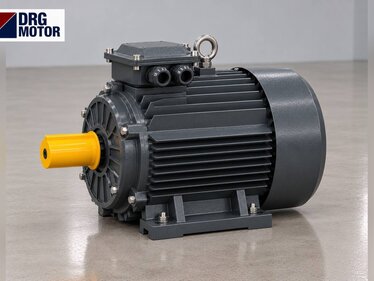
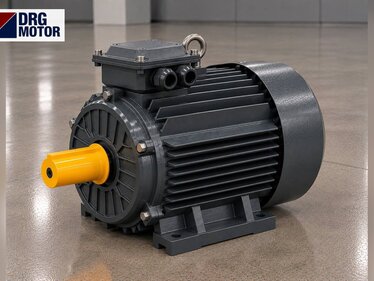
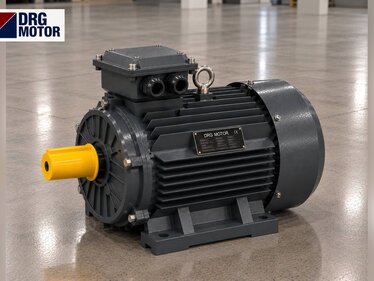
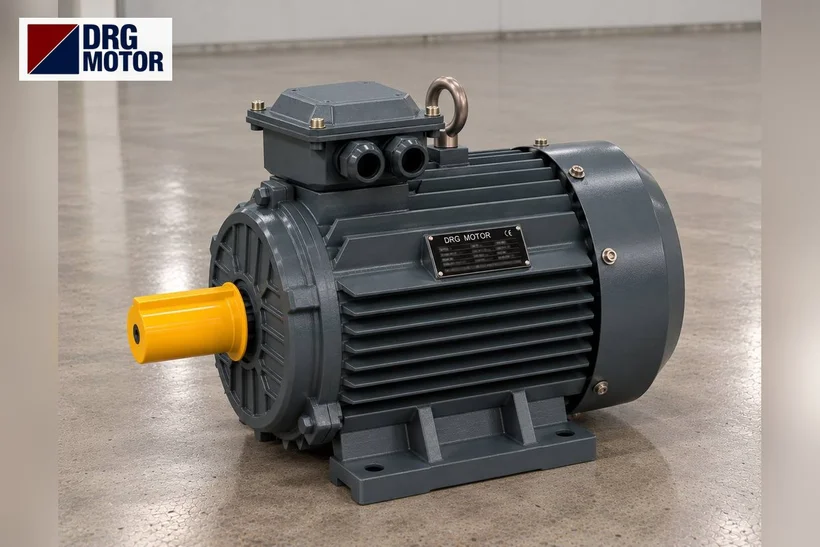
The main drive of decanters and nozzle separators is usually a belt-driven standard three-phase asynchronous motor, and this job is covered by cast iron IEC motors. 2- and 4-pole models in the 18.5–37 kW range are available in our online motor store.
Where the Centrifuge Sits in a Starch Line
In wheat starch, flour is mixed with water into a dough or batter, then a three-phase decanter (tricanter) splits it into A-starch, B-starch with gluten, and a soluble phase. In maize, the milk from steeped and cracked kernels is divided into starch and protein in nozzle disc separators. In potato, fruit juice is removed from the rasped pulp with a decanter, and the starch is washed in multi-stage hydrocyclones.
Whatever the raw material, separation relies on the density difference between starch granules and protein. Because this difference is small, a centrifugal field of several thousand g is needed inside the bowl; the motor's job is to keep that field steady. When bowl speed drops, separation deteriorates and gluten or protein ends up in the starch.
Decanter, Separator, Hydrocyclone: Drive Layouts
The machines along the line differ from a motor point of view:
| Equipment | Role in the line | Typical drive | Starting |
|---|---|---|---|
| Decanter / tricanter | A/B starch and gluten split | Main motor + scroll motor | Minutes, by inverter |
| Nozzle disc separator | Starch concentration, washing | Vertical spindle, belt or gear | Long, clutch or inverter |
| Hydrocyclone station | Starch washing stages | Feed pump motor | Short, pump load |
| Centrifugal sieve | Fibre and peel removal | Horizontal motor, belt | Medium, basket inertia |
In a decanter the main motor turns the bowl; a second, smaller motor sets the differential speed of the scroll relative to the bowl through the gearbox. In some gearbox layouts this second motor acts as a brake and feeds energy back; the two inverters are then linked by a common DC bus. In a separator the bowl is vertical; the motor may stand horizontally and drive the vertical spindle through gears or a flat belt, or be mounted vertically with the shaft up. This mounting position must always be stated on the order.
Click to see current electric motor prices and order nowSEE PRICES →
Starting: Bringing the Bowl to Three Thousand rpm
The inertia of a loaded decanter bowl is far above that of the motor rotor. With direct-on-line starting, the motor would have to draw more than 7 times rated current for minutes; the winding cannot withstand that. This is why starch decanters mostly run on inverters, while older separators use a centrifugal clutch. With a clutch, the motor reaches its own speed within seconds, and it is the clutch lining, not the motor, that heats up.
When replacing the motor on a clutch-equipped machine, star-delta or direct starting can be kept. Adding star-delta to a machine without a clutch that used to run on a soft starter is a bad idea: in star the torque falls to one third and the bowl may never accelerate. Torque and current differences between starting methods are compared on the motor starting methods and star-delta page. DRG does not sell inverters; the existing inverter must be re-parameterised with the new motor's nameplate values.
Example: pulley ratio and g-force
Example / assumption: a bowl with a 520 mm inner diameter is driven by a 30 kW 4-pole DRG-200L-4 (1475 rpm, 194.2 N·m); motor pulley 315 mm, bowl pulley 150 mm. Bowl speed is 1475 × 315 / 150 ≈ 3098 rpm, and centrifugal acceleration at the bowl wall is about 2790 g. If the bowl pulley is enlarged to 158 mm, speed drops to about 2941 rpm and acceleration to about 2513 g.
The calculation shows one thing: even at the same motor power, pulley diameter directly changes separation quality. At motor replacement the pulley and belt profile must stay as before; a change such as moving to a 2-pole motor may exceed the bowl's maximum permitted speed and is only made with the machine builder's approval.
Wet Hall, Warm Process Water, Starch Dust
The separation hall runs wet: bowl covers, nozzles and hose connections splash water constantly, and the floor is hosed down. Process water is mostly between 30 and 40 °C, and the hall air is warm and humid. An IP55 housing is protected against splashing water; however, a pressurised jet should not be aimed straight at the motor, and the terminal box lid must stay closed with its gasket.
For food hygiene the motor has no product contact, but some plants require stainless, smooth-housing motors in wet areas. Where such a specification applies, the job is not covered by a standard IEC motor and is not in the DRG range. The drying section is a different matter: dried starch dust can ignite and form an explosive dust atmosphere. Where a hazardous zone is defined around the flash dryer, milling and packing, an Ex-protected special motor is required; a standard DRG motor is not placed in these zones.
Before Replacing the Motor
Replacing a centrifuge motor affects bowl balance, pulley alignment and the commissioning sequence. Gather the following before ordering:
- Nameplate photos of the main motor and, if fitted, the scroll (backdrive) motor: kW, speed, voltage, current.
- Mounting position: horizontal foot (B3), flange (B5) or vertical, shaft up.
- Shaft diameter, length and key; motor and bowl pulley diameters, belt profile.
- Starting arrangement: inverter, soft starter, centrifugal clutch or star-delta.
- Inverter rating and whether a common DC bus is used.
- Motor position in the hall: splash line, wash hose, distance to the drying section.
- Is a thermistor or winding protection used?
On a 400 V supply, DRG motors of 4 kW and above are delta-connected with 400/690 V windings; so if the old motor ran on star-delta, the new one fits the same circuit directly. Catalogue data for the DRG-200L-4:
- Power and speed: 30 kW – 1475 rpm – 53.8 A at 400 V
- Torque: 194.2 N·m; Ts/Tn 2.0; Is/In 7.3
- Housing: 200L cast iron, IP55, class F insulation
- Shaft: 55 × 110 mm, key 16 mm; bearing 6312-C3
- B5 flange: M 350 mm, N 300 mm, P 400 mm, S 18.5 mm
DRG Motors for Starch Centrifuges
Cast iron models: 30–37 kW 4-pole for decanter main drives, 2-pole for separators turning a high-speed bowl through a belt, and a smaller 4-pole for the scroll motor; all can be inverter-driven.
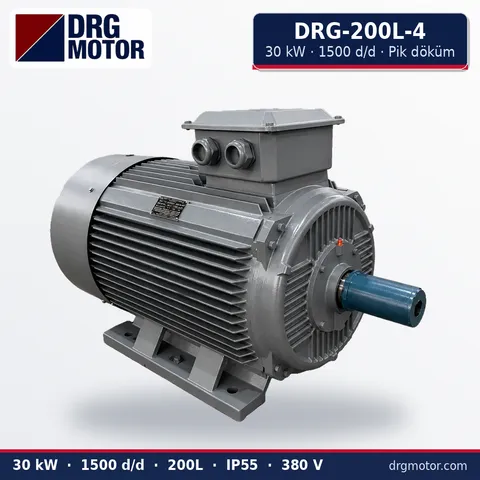
30 kW Three-Phase Motor 1500 rpm – DRG-200L-4 Cast Iron
- 30 kW · 1500 rpm (4 poles)
- Cast iron frame · IEC 200L
- Mounting: B3 · B5 · B14 · B35
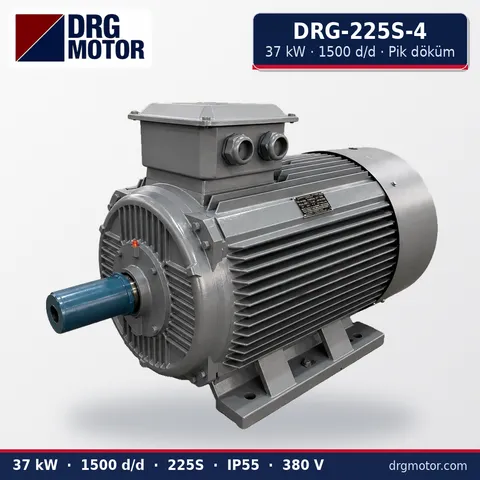
37 kW Three-Phase Motor 1500 rpm – DRG-225S-4 Cast Iron
- 37 kW · 1500 rpm (4 poles)
- Cast iron frame · IEC 225S
- Mounting: B3 · B5 · B14 · B35
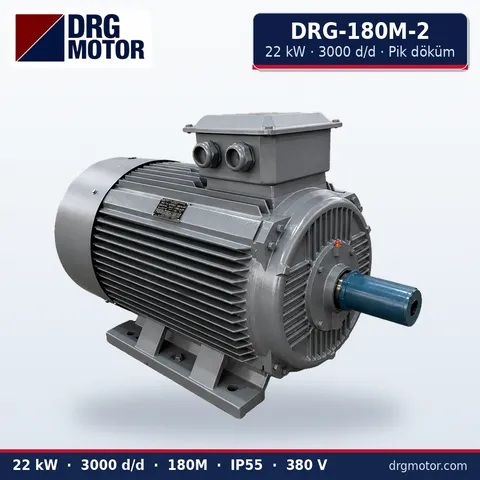
22 kW Three-Phase Motor 3000 rpm – DRG-180M-2 Cast Iron
- 22 kW · 3000 rpm (2 poles)
- Cast iron frame · IEC 180M
- Mounting: B3 · B5 · B14 · B35
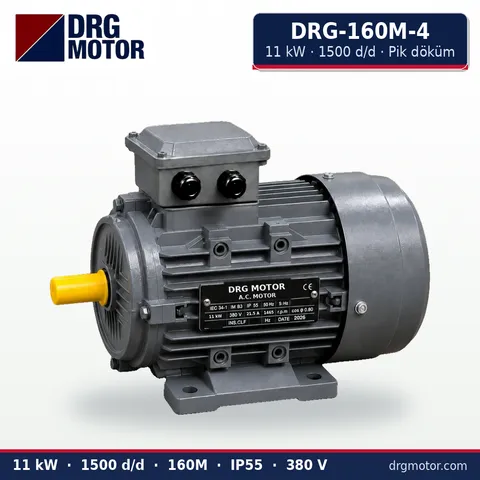
11 kW Three-Phase Motor 1500 rpm – DRG-160M-4 Cast Iron
- 11 kW · 1500 rpm (4 poles)
- Cast iron frame · IEC 160M
- Mounting: B3 · B5 · B14 · B35
Click to see current prices and order these motors nowSEE PRICES →
Starch Separation Centrifuge Motor: FAQ
Why does a starch decanter motor overheat at start-up?
If the inverter ramp is set too short, if the clutch lining is worn and slips longer, or if the machine restarts with product left in the bowl, the motor draws high current for a long time. Check the ramp time and whether the bowl was emptied first.
Can a standard motor replace a separator's vertical motor?
Yes, if dimensions and mounting position match; vertical, shaft-up operation is stated on the order and the bearing arrangement is confirmed. Motors with a separator-specific shaft end or an integrated clutch housing are not standard.
Can the decanter scroll motor also come from DRG?
Yes, if the scroll motor is a standard IEC motor. It is usually smaller than the main motor and runs on an inverter; it is matched to the power and speed on its nameplate.
Can a DRG motor be used in the drying section of a starch plant?
Not in areas with a defined hazardous dust zone; an Ex-protected special motor is required there. Standard motors can be used for fans and conveyors outside the zone.
DRG Motor is a manufacturer, supplier and seller of electric motors. So that we can prepare a quotation for your centrifuge, send a photo of the motor label, its power and speed, whether it is foot-, flange- or vertically mounted, the shaft size, pulley diameters and the starting arrangement via WhatsApp, or add the chosen models to the quote list. Phone: +90 (542) 666 11 11 · e-mail: info@drgmotor.com · contact page. Motor matches for different centrifuge types are on the industrial centrifuge electric motors page, and all models are in the DRG online store.