English
 Le français
 Türkçe




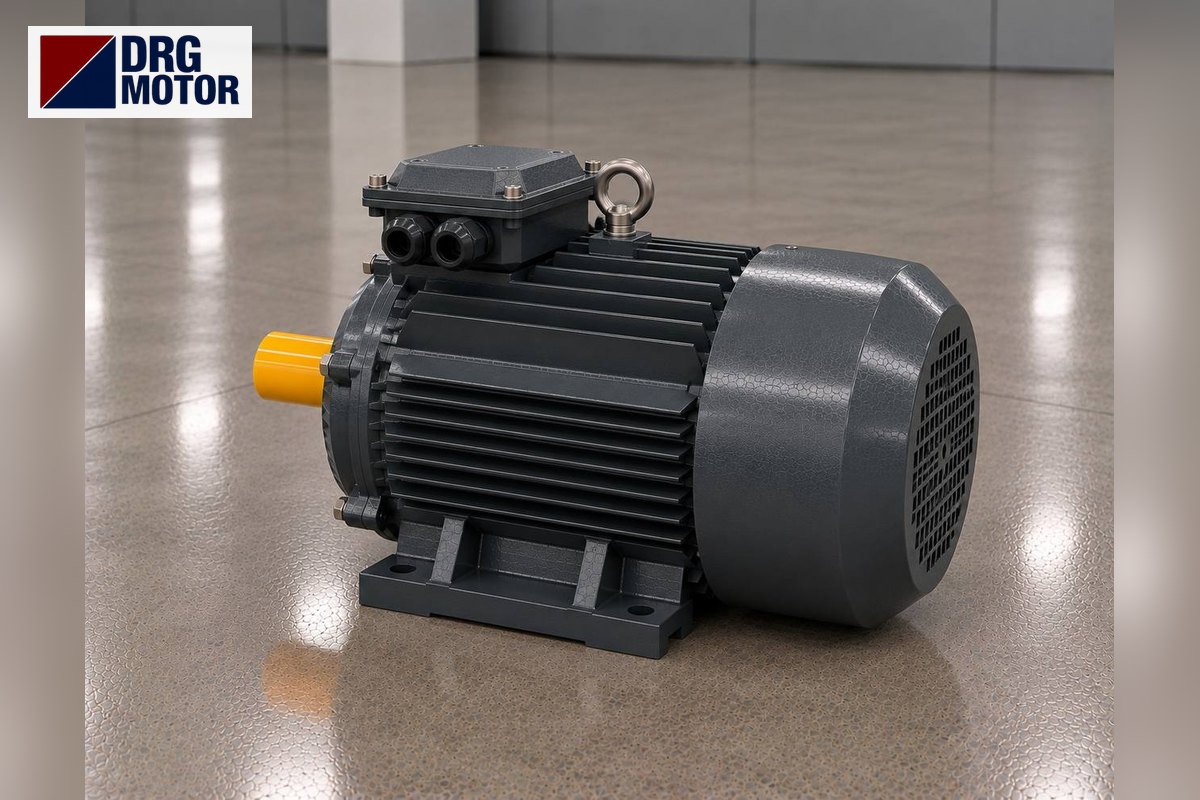

On a raising machine the main motor turns the large drum that carries a ring of wire-clothed rollers; as the fabric passes over the drum, the fine wire points of the rollers pull fibres to the surface and lift the pile. Two things decide the replacement motor: enough torque margin to bring the heavy drum up to speed without tripping the overload, and a speed that does not upset the ratio between the drum and the rollers.
On most machines the drum is driven by a 4-pole motor through a belt or a gear stage. You can filter suitable three-phase motors by power and frame in our online motor store, and for similar drives outside textiles see our general purpose electric motors page.
How Is Motion Shared on a Raising Drum?
The drum usually carries between 24 and 36 slim rollers. On half of them the wire points face the fabric's travel direction, on the other half they face the opposite way; the first are called pile rollers, the second counter-pile rollers. While the drum turns, each roller also spins on its own axis.
The intensity of raising is set by the roller's speed relative to the fabric. If the roller surface moves faster than the fabric, the wires pull the fibre; if slower, they lay it down. What the operator panel really adjusts is this difference: drum speed, pile and counter-pile roller speeds, and fabric speed.
On older machines the rollers are driven from the drum shaft through belts and gears, and one motor carries everything. Newer designs drive the drum, the pile group, the counter-pile group and the fabric feed with separate motors, each on its own inverter. Knowing which layout you have is the first step in choosing the right motor.
Drum Inertia: What Loads the Motor at Start-Up?
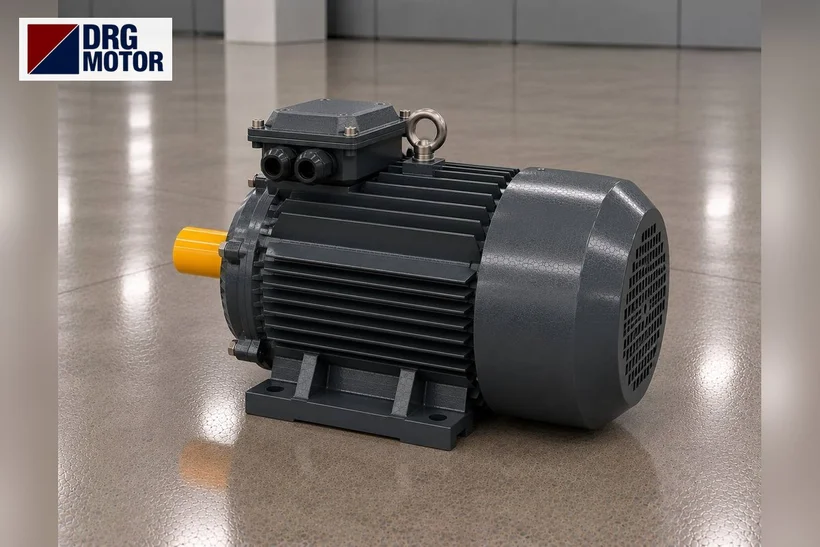
A raising drum is a steel cylinder plus dozens of rollers; what makes it hard for the motor is its inertia more than its weight. In normal running the torque needed to lift fibre is moderate, but bringing the drum from standstill to speed calls for much more torque for a short time.
Example (assumption): drum inertia 200 kg·m², working speed 90 rpm, motor at 1465 rpm. The overall ratio is 16.28, and the drum inertia is reflected to the motor shaft as 0.755 kg·m². Accelerating in 10 seconds needs 11.6 Nm for acceleration alone; if the time drops to 3 seconds, this rises to 38.6 Nm. That is more than one third of the 97.8 Nm rated torque of the DRG-160L-4, and it comes on top of the fibre load.
The energy stored in the drum is about 8.88 kJ in both cases. On an inverter-driven machine, a short stop ramp sends this energy back into the drive; if the drive trips on overvoltage, lengthen the ramp or add a braking resistor rated for the drive. DRG does not sell inverters or resistors; settings should be made by a qualified electrician.
On older direct-on-line machines, the catalogue shows the same DRG-160L-4 drawing 7.8 times rated current at start. The longer the start, the hotter the overload relay gets, which is why the drum should be started empty, without fabric threaded.
Click to see current electric motor prices and order nowSEE PRICES →
The Ratio Between Roller and Drum Speed
On multi-motor raising machines each drive has a different duty and load. The table below summarises a typical layout; the number of motors and how they are split depends on the machine builder.
| Drive | Duty | Load character | Connection |
|---|---|---|---|
| Drum | Turn the roller carrier | High inertia, moderate torque | Belt or gears |
| Pile rollers | Pull fibre with the fabric | Rises with wire pressure | Belt, gearbox |
| Counter-pile rollers | Pull fibre against the fabric | Rises with wire pressure | Belt, gearbox |
| Fabric feed | Pass fabric at steady speed | Constant torque, low power | Gearbox + motor |
Roller speed follows the pulley ratio n2 = n1 · d1 / d2. Example: with a 100 mm motor pulley and a 160 mm pulley on the roller group, an old motor rated 1440 rpm turns the rollers at 900 rpm. Fit a 1465 rpm DRG-160L-4 instead and the speed becomes 915.6 rpm; the surface speed of a 60 mm roller rises from 2.83 m/s to 2.88 m/s.
The difference looks small, but it shifts the balance between the pile and counter-pile groups on one side only. On a multi-motor machine, either replace the motors of both groups with the same model or retune the inverter frequency. You can check pulley sizes with our pulley and belt calculator.
Pile Dust, Belts and Motor Temperature
Short fibre and pile dust from the raising machine spreads all over the hall. If the motor's cooling fins and fan cowl grille clog with this dust, the motor runs hotter at the same load. IP55 protection keeps dust out of the motor but does not keep the outside clean; blowing the fins clean with compressed air between shifts is enough.
A slack drum belt slips at start-up, heats up and can reach a temperature able to ignite dust. Belt tension, pulley alignment and fibre building up inside the belt guard should be checked regularly. Motor care is no substitute for a working pile dust collection system.
Replacing the Removed Motor: Dimensions and Mounting
The drum motor is usually foot-mounted on a slide rail that tensions the belt. Within the same IEC frame number, foot holes, shaft height and shaft end do not change. Catalogue values of the DRG-160L-4 as an example:
- Power: 15 kW – 1465 rpm – 27.3 A (400 V)
- Torque: rated 97.8 Nm, starting ratio Ts/Tn = 2.2
- Frame and axis: IEC 160L cast iron; 160 mm from foot base to shaft centre
- Foot fixing: A = 254 mm, B = 254 mm, four Φ14.5 holes
- Shaft end: Ø42 mm, length 110 mm, key 12 mm
- Voltage: 400/690 V (Δ/Y), delta on a 400 V supply
Before ordering, note the following:
- Whether the failed motor drives the drum, the pile or counter-pile group, or the fabric feed.
- Nameplate data: kW, rpm, voltage and connection; if pile dust hides the plate, clean it and take a photo.
- Mounting (B3 foot, B5 flange, B35) and shaft diameter and length.
- On belt drives, both pulley diameters; with a gearbox, its input flange size.
- Whether the motor runs on an inverter, direct-on-line or star-delta.
- Whether a second motor on the machine does the same job (pile and counter-pile balance).
DRG Motors Suited to Raising Machines
15 and 18.5 kW 4-pole cast iron models for the drum, smaller aluminium frame options for roller groups and fabric feed. The exact model follows the nameplate of the removed motor.
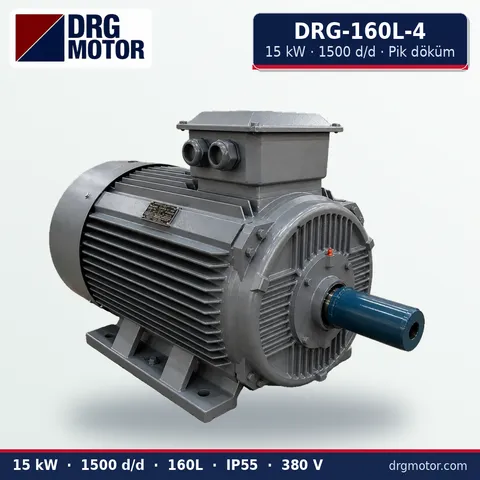
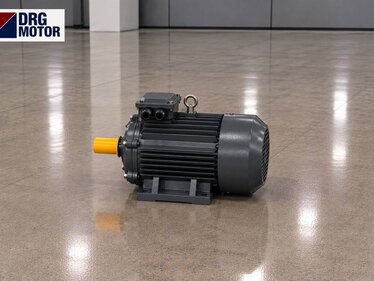
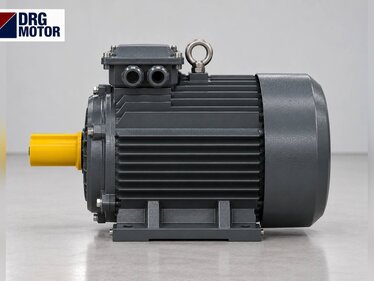
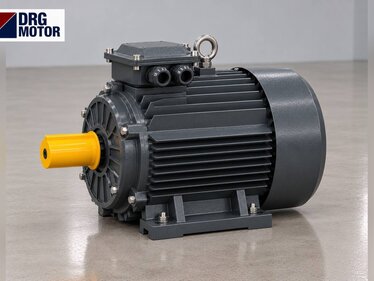
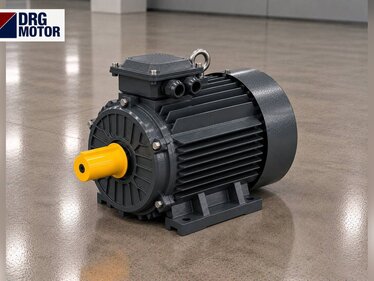
15 kW Three-Phase Motor 1500 rpm – DRG-160L-4 Cast Iron
- 15 kW · 1500 rpm (4 poles)
- Cast iron frame · IEC 160L
- Mounting: B3 · B5 · B14 · B35
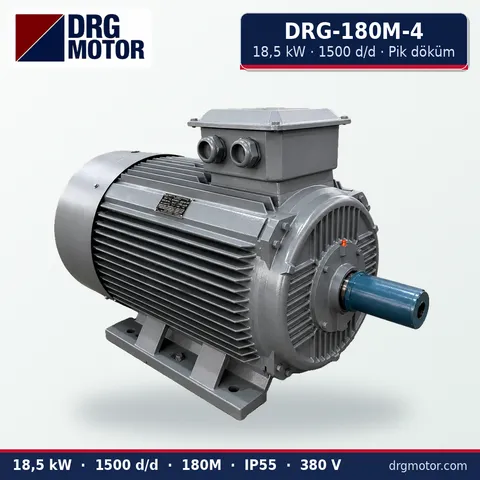
18.5 kW Three-Phase Motor 1500 rpm – DRG-180M-4 Cast Iron
- 18.5 kW · 1500 rpm (4 poles)
- Cast iron frame · IEC 180M
- Mounting: B3 · B5 · B14 · B35
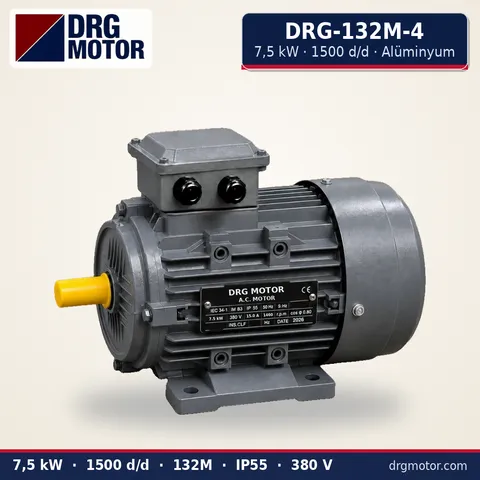
7.5 kW Three-Phase Motor 1500 rpm – DRG-132M-4 Aluminium
- 7.5 kW · 1500 rpm (4 poles)
- Aluminium frame · IEC 132M
- Mounting: B3 · B5 · B14 · B35
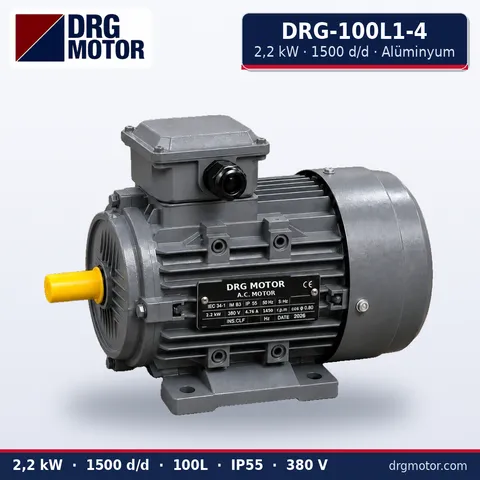
2.2 kW Three-Phase Motor 1500 rpm – DRG-100L1-4 Aluminium
- 2.2 kW · 1500 rpm (4 poles)
- Aluminium frame · IEC 100L
- Mounting: B3 · B5 · B14 · B35
Click to see current prices and order these motors nowSEE PRICES →
Raising Machine Motor: Frequently Asked Questions
What kW is a raising machine drum motor?
It depends on drum width, roller count and whether the machine has one motor or several. Small machines may use a few kW, while wide multi-drum lines can have motors above 10 kW per drum. The exact figure is on the machine nameplate or in the builder's catalogue.
Why does the drum motor trip on start-up?
The usual causes are starting with fabric threaded, a slipping belt, an inverter acceleration ramp set too short and cooling fins clogged with dust. Set the overload relay to the nameplate current; for example 33.5 A at 400 V for the 18.5 kW DRG-180M-4.
What happens if only one of the pile and counter-pile motors is replaced?
At the same frequency the new motor may turn at a slightly different speed and the balance between the groups is lost; the pile can end up flat on one face and raised on the other. Either replace both motors with the same model or measure and rematch the inverter frequency.
Can an aluminium frame motor be used on a raising machine?
Yes; aluminium frames are available up to 11 kW and are common on medium-power drives such as roller groups and fabric feed. If the drum motor sits on a heavy slide rail fixed to a vibrating frame, a cast iron frame is the sturdier choice.
DRG Motor is a manufacturer, supplier and seller of electric motors. When asking for a quotation for a raising drum or roller group, a clear plate photo, the motor's kW and rpm, foot or flange fixing, shaft diameter and the part it drives are all we need. Share them over WhatsApp or put the chosen models in your quote list. You can reach us on +90 (542) 666 11 11 or at info@drgmotor.com; every channel is listed on the contact page. Current prices of the models are shown in our online motor store.