English
 Le français
 Türkçe

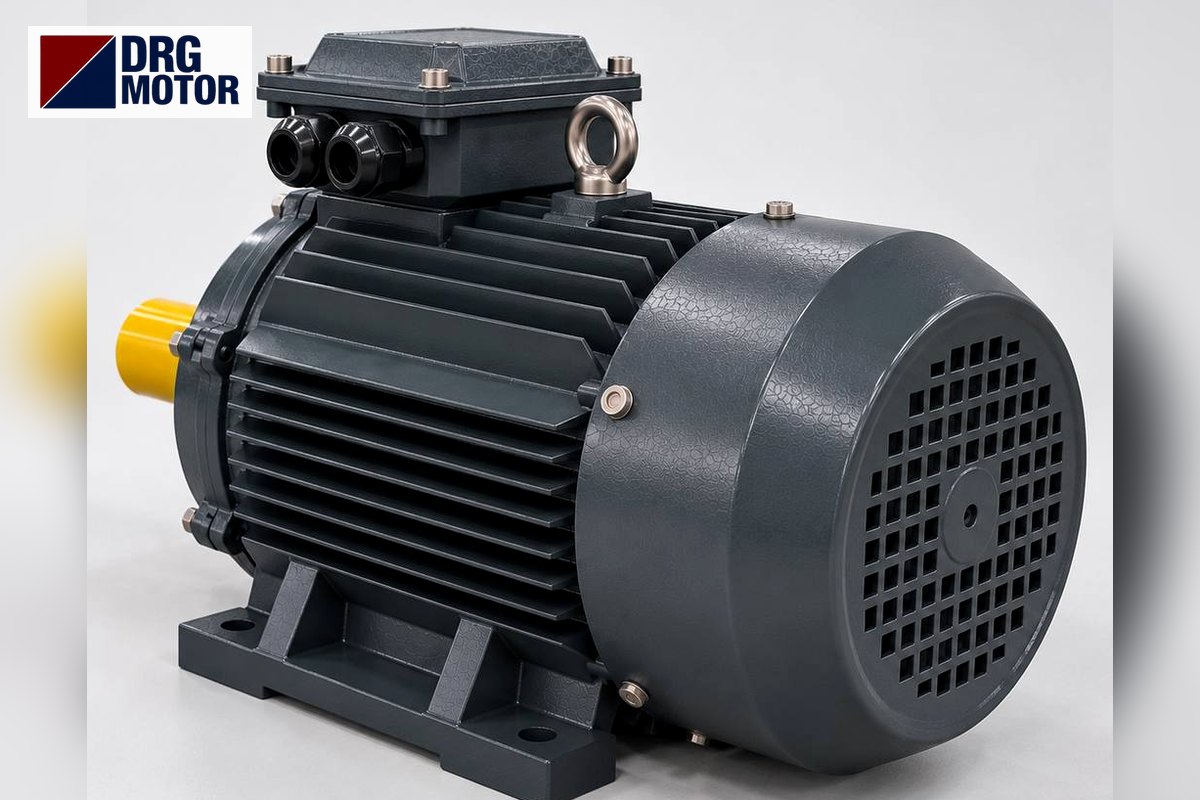

The starting method of a three-phase asynchronous motor determines how you manage the high current and torque at the moment of start-up. There are four basic methods: direct-on-line (DOL), star-delta, soft starter and variable-speed drive. The choice depends on the motor power, how hard the driven load is to start, the strength of the supply and whether speed control is needed. For small powers direct-on-line is enough, while as power grows you move to methods that limit the starting current.
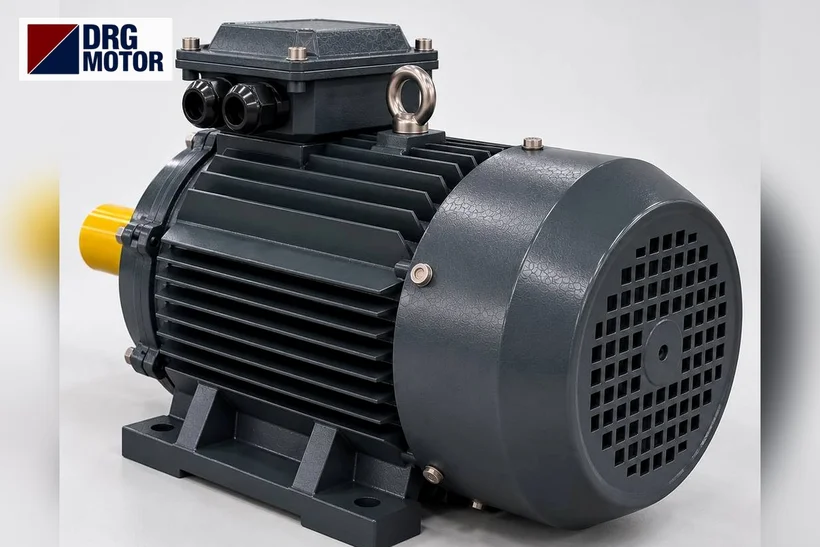
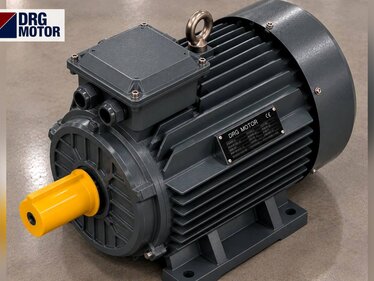
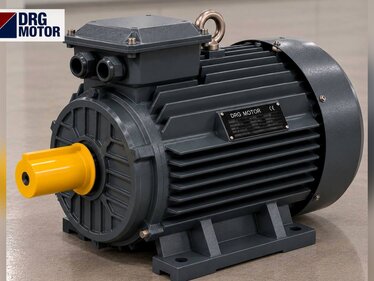
DRG Motor is a manufacturer, supplier and seller of electric motors. You can review three-phase models suited to your starting method, by power and speed, in the online motor shop and the three-phase asynchronous electric motors category. The sections below are for information only; remember that all connection and panel work must be carried out by qualified electrical personnel after the supply is switched off and the absence of voltage confirmed.
Why is starting current a problem?
A stationary induction motor draws current far above its normal running value through its windings until the shaft starts to turn; this is the starting (inrush) current. Reaching several times the rated current, it lasts a few seconds but can cause a voltage dip on the supply, affect other devices on the same line and cause unnecessary tripping of protective devices (fuses, overload relays). The larger the power, the more pronounced the effect. Starting methods were developed to bring this sudden current down to an acceptable level.
The price of limiting the current is usually that the starting torque drops as well. So the right method is not the one with the "lowest current" but the one that keeps the torque needed to move the load while holding the current reasonable. The choice is therefore always made by looking at the motor power together with the starting character of the load.
Direct-on-line (DOL)
The simplest method is direct-on-line: the motor is connected straight to full supply voltage through a contactor and energises at once. The circuit is simple, full starting torque is obtained, and it is the most common solution at small powers. On the other hand the starting current is at its highest; this is acceptable only at small powers where the supply and protection can handle that current without trouble.
In practice low-power motors (up to roughly a few kW) are mostly run with direct-on-line. As power grows the sudden current strains both the supply and the mechanics, so the softened methods below start to be preferred.
Star-delta starting
The star-delta method starts the motor first in star (Y) at a lower voltage, then switches to delta (Δ) after the speed has risen. Because the voltage across each winding is reduced in the star position, the starting current drops noticeably; the natural consequence is that the starting torque also falls. For this reason star-delta suits applications that can start at no load or light load; on a machine that starts under heavy load the motor may not accelerate enough in star.
The method is often used on motors wound 400/690 V (Δ/Y) on a 400 V supply and needs contactors and a timer relay. The article star-delta connection diagram shows the connection and transition logic. For which power suits star-delta and how it compares with a soft starter, see the star-delta vs soft starter comparison.
Click to see current electric motor prices and order nowSEE PRICES →
Soft starter
A soft starter is a device that smooths the start by electronically ramping up the voltage applied to the motor. Current and torque rise in a controlled way along a ramp, reducing both the electrical shock and the mechanical jolt. Compared with the two-step hard transition of star-delta, the start is smoother and the ramp time can be set to the application. When the start is complete, in many applications a bypass contactor engages to reduce the losses in the device.
Soft starters are common at medium and large powers where a smooth start matters, such as pumps and fans. You can review how the power circuit and bypass connection are built in the soft starter wiring diagram article. A soft starter does not change the running speed; it only manages the start (and, on most models, the stop).
Variable-speed drive (inverter)
A variable-speed drive changes the voltage and frequency applied to the motor together, so it both smooths the start and continuously adjusts the running speed. The starting current is kept limited and controlled, while strong torque can be obtained even at low speed. In this respect the drive is not just a starting method but also a speed-control solution; it is preferred in applications such as pumps, fans and conveyors where the flow or speed needs to change.
For connection, parameter and commissioning details see the frequency inverter wiring diagram article. Because insulation and cooling requirements can differ on motors fed from a drive, the selection must follow the motor nameplate and the device documentation.
Which method at which power?
The table below compares the methods in rough terms. The values show an approximate trend; exact ratios vary with the motor, load and supply.
| Method | Starting current | Starting torque | Typical use |
|---|---|---|---|
| Direct (DOL) | Highest (several times rated) | Full, high | Small power, light start |
| Star-delta | Noticeably reduced | Reduced | Medium power, near no-load start |
| Soft starter | Adjustable, ramped up | Ramped, adjustable | Medium/large power, smooth start |
| Variable-speed drive | Limited and controlled | Strong even at low speed | Where speed control is needed |
The general approach is: at small powers direct-on-line is practical. As power grows and the starting current begins to strain the supply, star-delta comes in. If a smooth, controlled start is needed a soft starter suits, and if speed adjustment is also wanted a variable-speed drive is appropriate. The exact boundary is not a single number; the motor power, the starting difficulty of the load and the capacity of the supply are weighed together. For protection and cable selection you can use tools such as the motor current chart.
Example: medium-power DRG models
In the medium-power range where the starting method becomes important, here are a few examples of 1500 rpm (4-pole) cast-iron DRG models. At these powers star-delta or a soft starter is often considered on a 400 V supply. The model codes link straight to the product page; the voltage is 400/690 V (Δ/Y).
| Model | Power and speed | Torque | Rated current (400 V) |
|---|---|---|---|
| DRG-132S-4-GG | 5.5 kW / 1460 rpm | 36.0 Nm | 10.7 A |
| DRG-160M-4-GG | 11 kW / 1465 rpm | 71.7 Nm | 20.4 A |
| DRG-160L-4-GG | 15 kW / 1465 rpm | 97.8 Nm | 27.3 A |
The torque values can be followed roughly with T = 9550 · P / n: within the same speed class, both torque and rated current grow as power rises, so the need for methods that limit the starting current grows too.
Send a photo of your current motor nameplate and we will find the suitable DRG model together.Send on WhatsApp
If you share your application's power, the load it drives and the starting arrangement, we can identify together the DRG motor model that best fits the need.
For a three-phase asynchronous motor suited to your starting method, review the power and speed options and current prices in the shopSEE PRICES
Frequently asked questions
Up to what power is direct-on-line enough?
There is no exact limit; the general trend is that direct-on-line is practical at small powers (up to roughly a few kW). The limit varies with the strength of the supply, the protection equipment and the starting character of the load.
What is the main difference between star-delta and a soft starter?
Star-delta is a two-step electromechanical method built with contactors; the transition is relatively hard. A soft starter raises the voltage electronically along a ramp, the start is smoother and the ramp time can be set.
Is a variable-speed drive needed to start every motor?
No. A drive is preferred mainly when speed control is needed; it also smooths the start. If limiting the starting current is enough, star-delta or a soft starter is sufficient for most applications.
Does the starting method cause a loss of torque?
In methods that limit the current (the star position, a low ramp) the starting torque also drops. That is why the method is chosen according to the starting difficulty of the load; for hard-starting loads care is taken that the torque stays sufficient.
Electric Motors Related to This Topic — Models and Current Prices
Suitability is not decided by power alone: compare the speed, voltage, mounting, shaft and fixing dimensions of your machine with the product data; if unsure, send us the nameplate of your current motor.
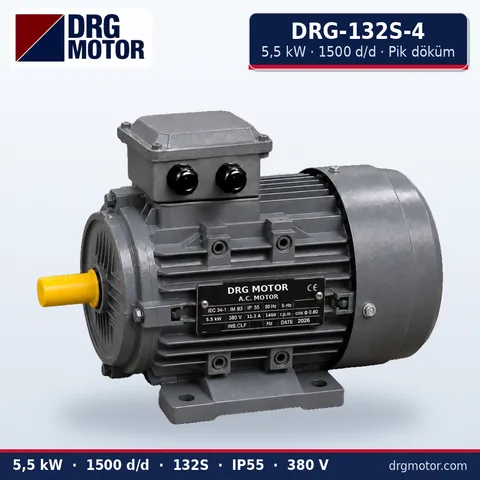
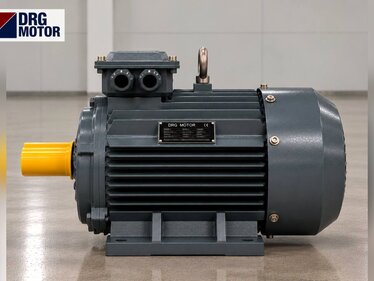
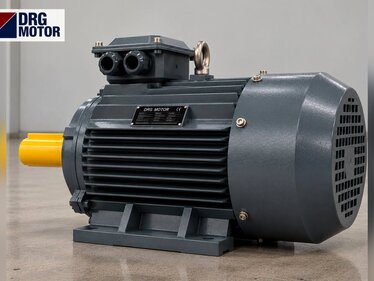
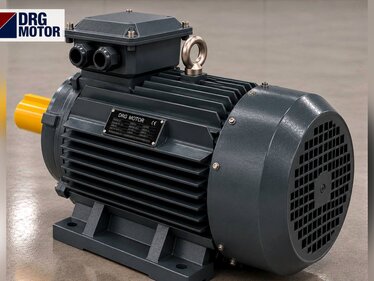
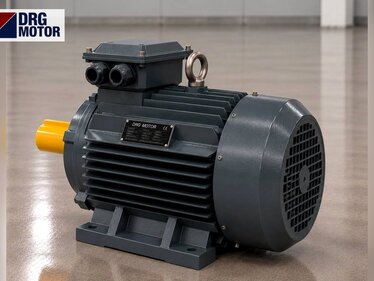
5.5 kW Three-Phase Motor 1500 rpm – DRG-132S-4 Cast Iron
- 5.5 kW · 1500 rpm (4 poles)
- Cast iron frame · IEC 132S
- Shaft: 38 × 80 mm
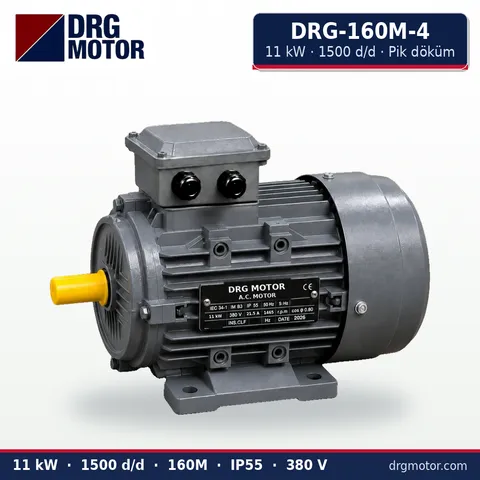
11 kW Three-Phase Motor 1500 rpm – DRG-160M-4 Cast Iron
- 11 kW · 1500 rpm (4 poles)
- Cast iron frame · IEC 160M
- Shaft: 42 × 110 mm
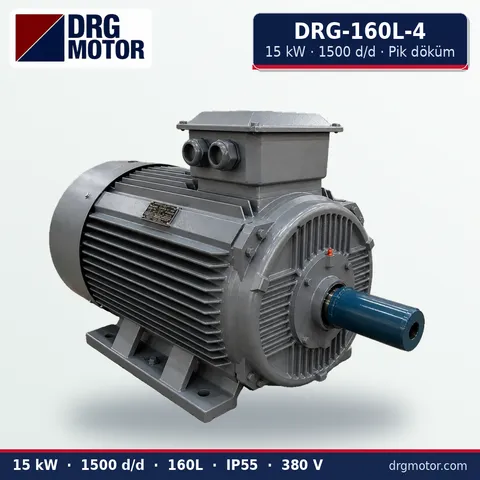
15 kW Three-Phase Motor 1500 rpm – DRG-160L-4 Cast Iron
- 15 kW · 1500 rpm (4 poles)
- Cast iron frame · IEC 160L
- Shaft: 42 × 110 mm