English
 Le français
 Türkçe




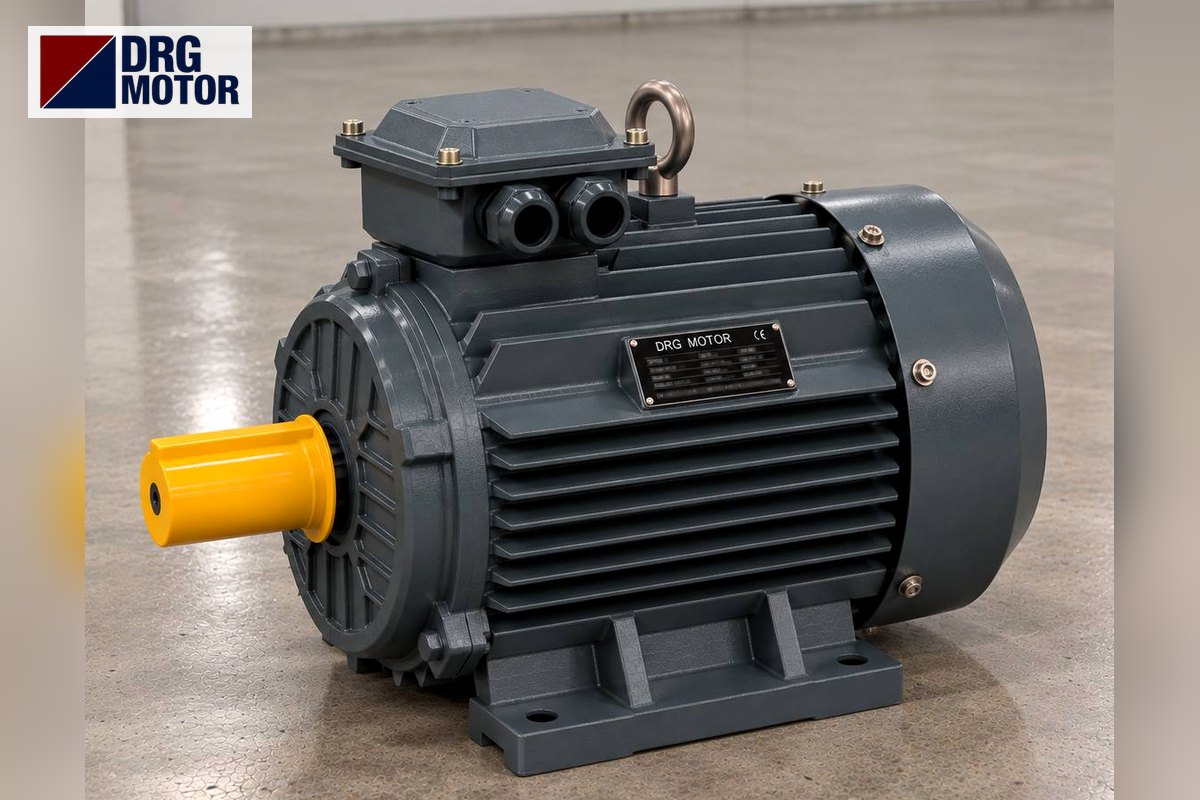

When a three-phase motor keeps blowing a fuse, it means the current drawn from the circuit has exceeded the protective device's limit. The most common causes are a short circuit, overload, loss of a phase, an incorrectly chosen fuse or cable cross-section, and high starting current. Correct diagnosis means matching the symptom to a likely cause and reviewing the protection against the motor's rated nameplate current.
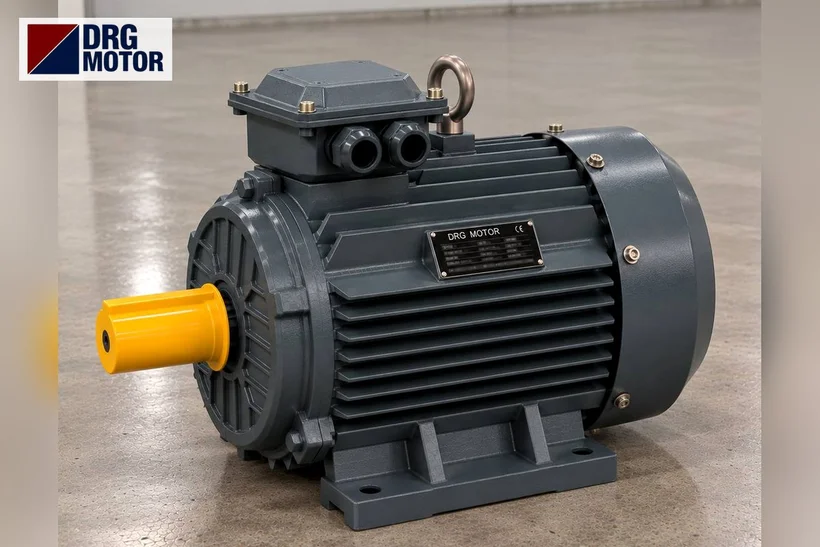
DRG Motor is a manufacturer, supplier and seller of electric motors. This article is a fault/information guide, not a field work instruction. You can review three-phase models in the right power and speed in the online motor shop and in the three-phase asynchronous electric motors category.
Why does a fuse trip? The basic logic
Fuses and thermal protection exist to shield the motor and cable from excessive current. When the current through the circuit exceeds the set limit, the protection opens. There are two distinct cases: a very high current in a very short time (short circuit) and a current slightly above rated value sustained over time (overload). A fuse clears a short circuit almost instantly, while a heat-sensitive thermal relay detects an overload after a delay. That is why the answer to "why does my fuse trip?" usually depends on "when" it trips.
Symptom → likely cause table
The table below matches the moment the motor trips its protection with a likely cause. This is a preliminary assessment; a definite diagnosis requires measurement.
| Symptom | Typical moment | Likely cause | First check |
|---|---|---|---|
| Trips instantly on power-up | Before starting | Short circuit, phase-to-phase contact, winding fault | Cable, terminal box, connection |
| Runs a few seconds, then trips | During start-up | High starting current, weak fuse type | Starting method, fuse B/C/D type |
| Trips when it heats under load | While running | Overload, mechanical friction, bearing | Load, bearing, belt-pulley |
| Hums, struggles to start, trips | At start-up | Phase loss (one phase missing) | Supply, fuses, contactor |
| Trips occasionally at a certain load | Variable | Wrong fuse/cable size selection | Rated current, cross-section calc |
Click to see current electric motor prices and order nowSEE PRICES →
Five main causes that trip the fuse on a three-phase motor
1) Short circuit
Degraded winding or cable insulation creates direct contact between two phases or between a phase and the frame. The current then jumps to very high values and the fuse trips almost instantly. On a motor that trips the moment it is energised, this is the first suspect; repeatedly trying to start it makes things worse.
2) Overload
Overload occurs when the motor is forced to draw more than its rated nameplate current. A jammed mechanism, a failing bearing, a wrongly sized pulley or a job larger than the motor's power all raise the current. As current exceeds the rated value the motor heats up and the thermal protection trips after a while. This usually appears after the motor has run for a few minutes.
3) Phase loss
If one of the three phases does not reach the motor (due to a fuse, contactor, terminal or cable), the motor tries to run on the remaining two windings. The current through those windings rises, the motor struggles, hums and overheats. Phase loss both trips the fuse and, if unnoticed, damages the winding.
4) Wrong fuse or cable cross-section
A fuse type unsuited to the motor's starting behaviour (for example one that cannot withstand the inrush) may trip needlessly. Conversely, too small a cable cross-section causes heating and voltage drop. The correct cross-section and protection are set from the motor's rated current; the motor cable size calculator and motor current chart help here.
5) High starting current
Three-phase asynchronous motors draw a starting current several times their rated current on direct-on-line start. The larger the power, the more pronounced this effect. A weak fuse or a protection without delay may trip before the motor even reaches speed. Here the solution direction is a starting method that limits the inrush (such as star-delta or soft start), or protection chosen for the start.
Correct protection: start from the rated current
Whatever the cause, the starting point of the solution is the motor's rated nameplate current. The protective device and cable cross-section are chosen from this current, and the thermal protection is set to the motor's rated nameplate current. The table below gives the approximate 400 V rated currents of 1500 rpm (4-pole) DRG models so you can see which current band you are in.
| Model | Power | Rated current (400 V) | Speed class |
|---|---|---|---|
| DRG-112M-4 (aluminium) | 4 kW | 7.95 A | 4-pole / 1500 rpm |
| DRG-132S-4 (aluminium) | 5.5 kW | 10.7 A | 4-pole / 1500 rpm |
| DRG-132M-4 (aluminium) | 7.5 kW | 14.3 A | 4-pole / 1500 rpm |
| DRG-160M-4 (aluminium) | 11 kW | 20.4 A | 4-pole / 1500 rpm |
As you can see, the rated current rises with power, so protection and cable cross-section must grow with it. Compact-frame options are also available at the same power. You can check general values with the electric motor calculator. If you are replacing a motor and the new one's rated current differs from the old one, review the protection accordingly.
Safety: before measuring or intervening
Before starting any electrical fault tracing, switch off the power, verify the absence of voltage with a suitable device, and have measurement and wiring work carried out only by qualified electrical personnel. Set values such as the thermal protection current from the motor nameplate, not by guesswork. If the fuse keeps tripping, do not force the motor; fitting a larger fuse before finding the cause removes the protective function and increases risk. This article is general information, not a step-by-step field instruction.
Send a photo of your current motor nameplate and we will find the suitable DRG model together.Send on WhatsApp
Once you have clarified your motor's power, speed and rated current, you can compare the most suitable three-phase model and current options through the shop.
See the three-phase asynchronous motor models in the power and speed you need, and current options, in the shopSEE PRICES
Frequently asked questions
The fuse trips while running but not at start-up — why?
This pattern usually points to overload. The motor reaches speed, but when it exceeds rated current under load it heats up and the thermal protection trips after a while. Have the load, mechanical friction, bearings and belt-pulley setting checked.
Is it the fuse or the thermal relay tripping — does it matter?
Yes. The fuse mainly reacts to short circuits and coarse overcurrent, while the thermal relay detects a sustained overload. Knowing which one trips narrows down the cause: an instant trip suggests a short circuit, a delayed trip an overload.
I fitted a new motor and the fuse tripped immediately — what could it be?
Often a connection error (star/delta not matching the voltage), a missing phase, or a fuse-type/cable-size mismatch. Have the connection verified against the motor nameplate by qualified personnel, and compare the protection value with the motor's rated current.
Is fitting a larger fuse the solution?
No. Enlarging the fuse without removing the cause means the protection no longer protects the motor and cable. The tripping cause must be found first; protection should always be chosen to match the motor's rated current.
Electric Motors Related to This Topic — Models and Current Prices
Suitability is not decided by power alone: compare the speed, voltage, mounting, shaft and fixing dimensions of your machine with the product data; if unsure, send us the nameplate of your current motor.
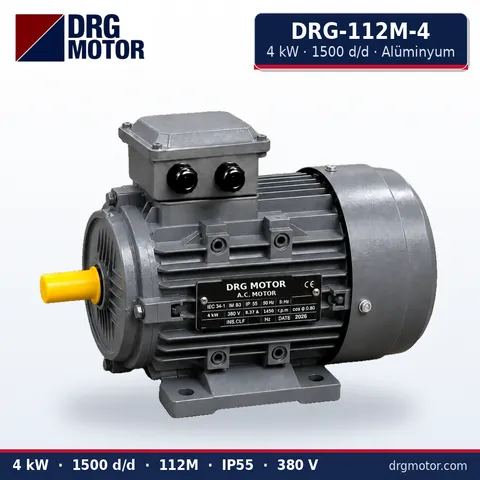
4 kW Three-Phase Motor 1500 rpm – DRG-112M-4 Aluminium
- 4 kW · 1500 rpm (4 poles)
- Aluminium frame · IEC 112M
- Shaft: 28 × 60 mm
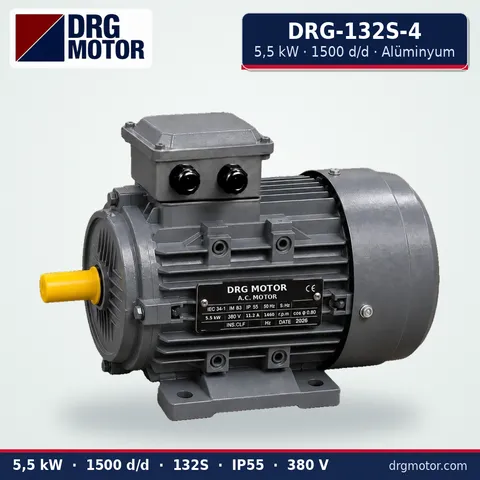
5.5 kW Three-Phase Motor 1500 rpm – DRG-132S-4 Aluminium
- 5.5 kW · 1500 rpm (4 poles)
- Aluminium frame · IEC 132S
- Shaft: 38 × 80 mm
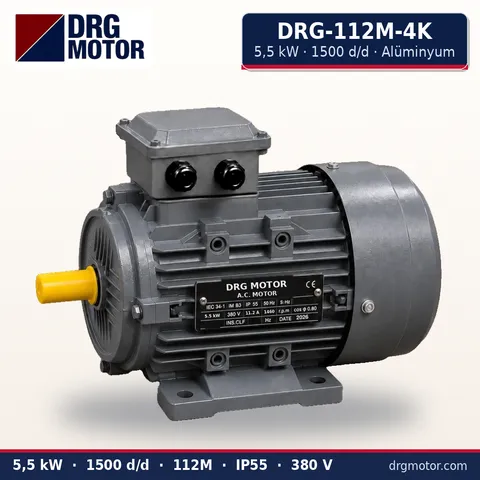
5.5 kW Compact Three-Phase Motor 1500 rpm – DRG-112M-4K Aluminium
- 5.5 kW · 1500 rpm (4 poles)
- Aluminium frame · IEC 112M
- Shaft: 28 × 60 mm
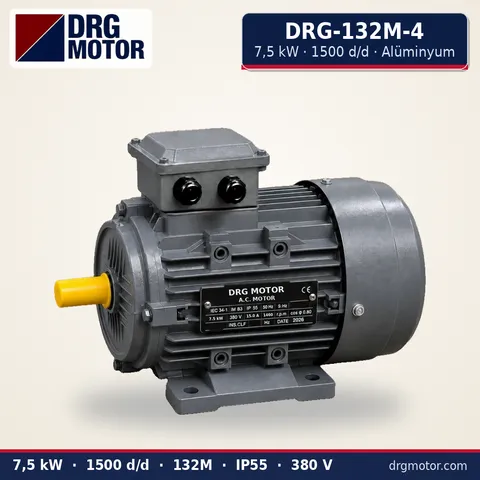
7.5 kW Three-Phase Motor 1500 rpm – DRG-132M-4 Aluminium
- 7.5 kW · 1500 rpm (4 poles)
- Aluminium frame · IEC 132M
- Shaft: 38 × 80 mm
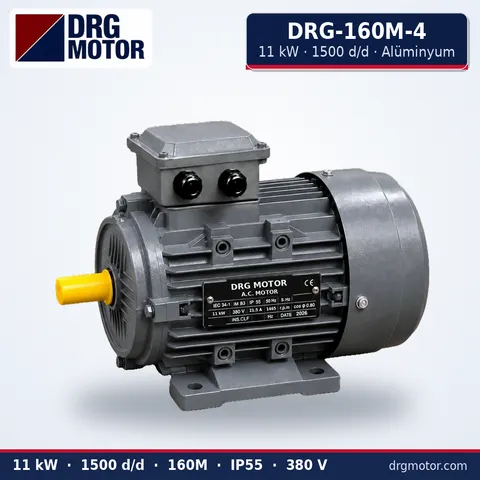
11 kW Three-Phase Motor 1500 rpm – DRG-160M-4 Aluminium
- 11 kW · 1500 rpm (4 poles)
- Aluminium frame · IEC 160M
- Shaft: 42 × 110 mm
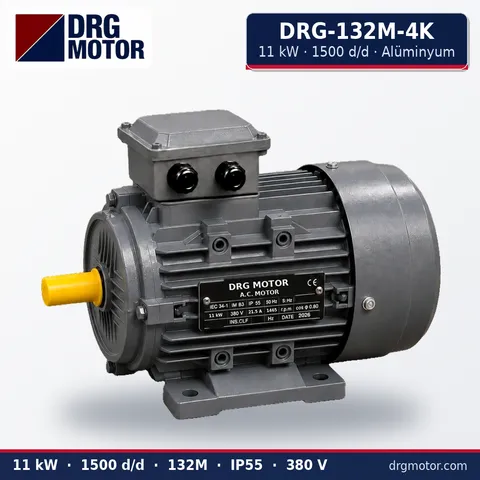
11 kW Compact Three-Phase Motor 1500 rpm – DRG-132M-4K Aluminium
- 11 kW · 1500 rpm (4 poles)
- Aluminium frame · IEC 132M
- Shaft: 38 × 80 mm