English
 Le français
 Türkçe




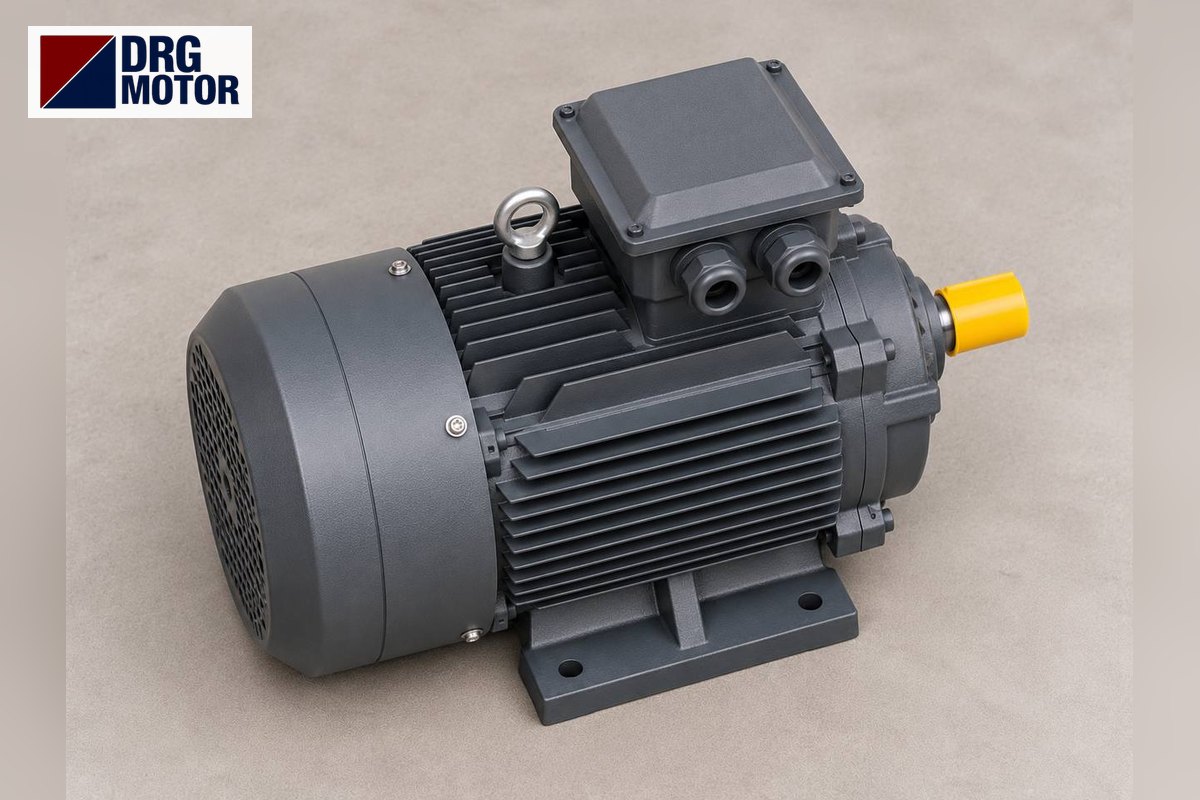

When renewing a 3 kW WAT electric motor, if power, speed and voltage are not checked together, the new motor will either not turn the machine at the required speed or not suit the existing panel arrangement. This article explains how to read these three values on the nameplate, why the 3 kW threshold matters for the voltage design, and which figures to compare with DRG MOTOR options.
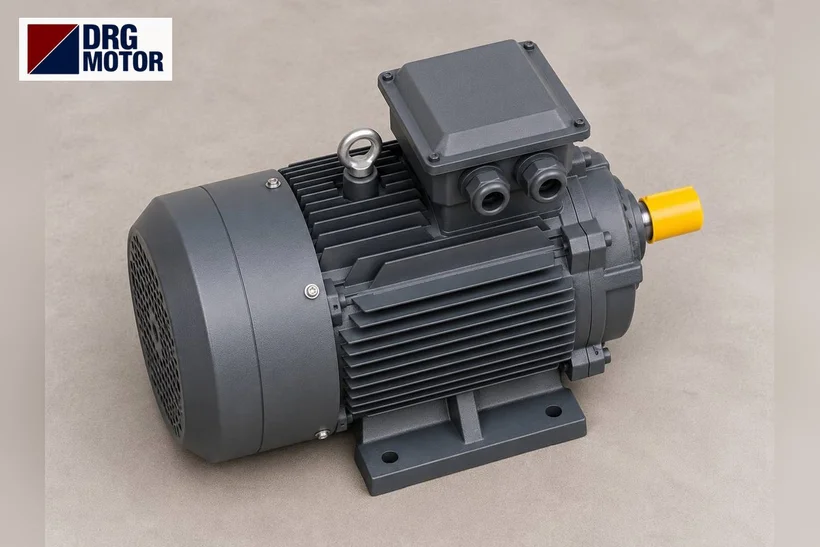
Power: "3 kW" on its own is not enough
The same 3 kW means very different shaft torque in different speed classes. In DRG MOTOR data, the rated torque of the 3 kW 2-pole DRG-100L-2 is 9.9 Nm, the 4-pole DRG-100L2-4 has 19.8 Nm and the 6-pole DRG-132S-6 has 29.6 Nm. So choosing a replacement for a 3 kW motor by power alone may not meet the torque and speed the machine needs; speed class, frame and shaft must be assessed along with kW.
It also matters whether the existing motor actually ran at full load or kept tripping the thermal overload. In an application with overload trips, fitting a motor of the same power may not solve the problem; the load and failure cause should be examined first.
Speed: rated value versus speed class
In the WAT catalogue, 3 kW motors have rated speeds of about 2890–2930 rpm at 2 poles and 1445 rpm at 4 poles. These are on-load speeds; the motors belong to the 3000 and 1500 rpm classes respectively. In DRG MOTOR data, the same classes show 2895 rpm (DRG-100L-2) and 1450 rpm (DRG-100L2-4). In pumps, fans or belt drives a few rpm difference is usually tolerated, but on precise dosing or synchronised lines it should be assessed separately.
If your nameplate also has a 60 Hz line, take care: the WAT catalogue gives factors of about 1.15 for power and 1.2 for speed when a 50 Hz motor runs at 460 V 60 Hz. On a 50 Hz supply, the 50 Hz line values are the reference.
Voltage: why is 3 kW the threshold?
In the standard design of the WAT catalogue, 2-, 4- and 6-pole three-phase motors up to 3 kW are given as 230 VΔ/400 VY and those above 3 kW as 400 VΔ/690 VY. In the DRG MOTOR online shop, models up to 3 kW are listed as 230/400 V and those of 4 kW and above as 400/690 V; any special voltage or different frequency requirement must be stated separately. Whether a motor suits the existing supply must be determined by checking the nameplate voltage, frequency, manufacturer tolerances and connection arrangement together. This matters because:
- Even if the output stays the same, the nameplate voltages and Δ/Y connections of the old and new motor must be compared separately. The example here applies to standard 230/400 V models. For motors with a different voltage or of special manufacture, suitability must be assessed separately.
- If the next step (4 kW) is considered for extra margin, the motor moves to the 400/690 V design and runs in delta (Δ) on a 380 V supply. If a starting arrangement exists (e.g. star-delta), its suitability may change.
Any change to the connection or protection arrangement must be assessed and carried out by competent technical staff; this article gives no wiring instructions.
Current and DRG options
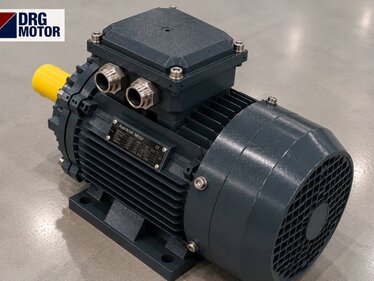
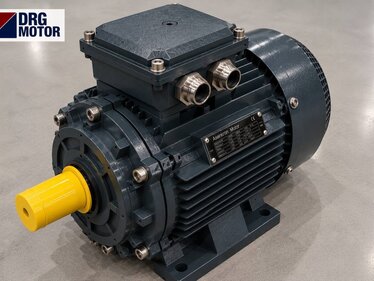
DRG Motor is an electric motor manufacturer, supplier and seller. DRG options that can be assessed for a 3 kW WAT electric motor, with rated current at 400 V:
- DRG-100L-2 – 3 kW, 3000 rpm class, 2895 rpm, 230/400 V, 5.71 A at 400 V, frame 100L, shaft 28×60 mm
- DRG-100L2-4 – 3 kW, 1500 rpm class, 1450 rpm, 230/400 V, 6.02 A at 400 V, frame 100L, shaft 28×60 mm
- DRG-132S-6 – 3 kW, 1000 rpm class, 968 rpm, 230/400 V, 6.84 A at 400 V, frame 132S, shaft 38×80 mm
WAT standard 3 kW 2 and 4-pole types (Q3H100L2D, Q3H100L4D) come with frame 100 and a 28×60 mm shaft, but WAT's compact Q3H90L2E has frame 90 and a 24×50 mm shaft. If your nameplate code shows the compact type, the dimensional difference needs separate review. The motor current chart can be used to compare currents; the full range is in the DRG MOTOR electric motor shop and general industrial use on the general purpose electric motors page.
If you tell DRG MOTOR your nameplate details and the starting arrangement in the panel, power, speed and voltage are reviewed together for the assessment.
Frequently asked
The motor kept overheating; would 4 kW solve it?
It may or may not. Overheating may come from overload, low voltage, phase imbalance or poor cooling. Increasing power without finding the cause can create new problems, especially since the voltage design also changes.
Is it a problem if the nameplate current differs from the DRG motor's?
Motors of the same power can show small differences in rated current. Protection settings should be reviewed by competent staff against the new motor's nameplate current.
I have a 230 V three-phase supply; can a 3 kW motor be used?
230/400 V motors are designed to run in delta on a 230 V three-phase supply; the suitability of your supply and panel arrangement must be assessed on site by competent staff.
Information to send
- WAT nameplate photo and full type code
- Power, 50 Hz rated speed and current on the nameplate
- Voltage design on the nameplate (230/400 V or 400/690 V) and supply voltage
- Present starting method (direct, star-delta, soft starter, inverter)
- Frame number, mounting arrangement and shaft size
- Machine type, load condition and any failure/overheating history
Send this information via WhatsApp (+90 542 666 11 11), the quote list, by phone or to info@drgmotor.com so the options can be assessed technically together with the operating conditions. Other channels are on the contact page.
See current prices of DRG MOTOR electric motors and order online in our storeSEE PRICES →
Technical Sources
- WAT Motor Sanayi ve Ticaret A.Ş. — WAT Product Catalogue (Turkish edition) — IM tr 24.0 — Electrical connection and voltage & frequency, PDF page 12 (printed page 10); IE3 three-phase aluminium motors, electrical data 50 Hz, PDF pages 38–39 (printed pages 36–37); IE3 three-phase aluminium motors, dimensions B3, PDF pages 44, 46 (printed pages 42, 44); IE3 three-phase cast-iron motors, electrical data 50 Hz, PDF page 76 (printed page 74).